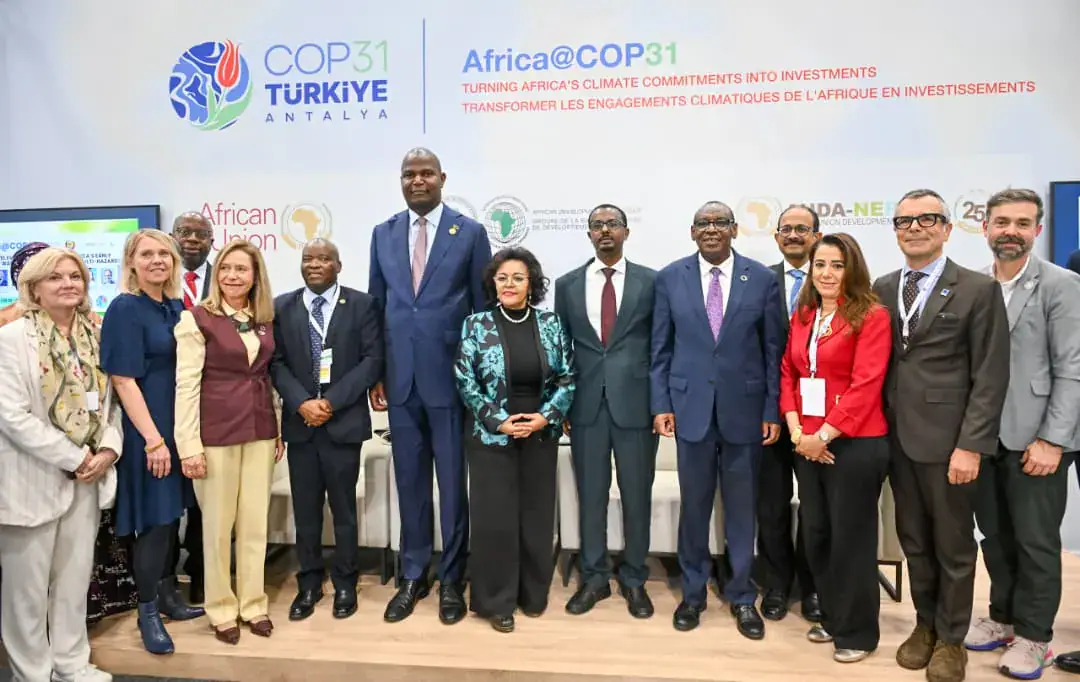
The UN Economic Commission for Africa (ECA) recently hosted a COP31 side event, emphasizing the need for African-led climate transition. At the session, the ECA urged that climate finance for Africa be predictable, debt-free, and decided locally. This call to action aims to address the disproportionate impact of climate change on Africa, despite the continent contributing less than 4% of global emissions. Africa's climate transition requires a comprehensive approach that prioritizes local decision-making and financial sustainability.
The continent faces significant challenges in accessing reliable and affordable electricity, with Sub-Saharan Africa now housing 86% of the world's population without electricity. This number has increased from 49% in 2010, highlighting the urgency of addressing the region's energy needs. The ECA's flagship COP31 session in the Africa Pavilion focused on who will fund and decide Africa's climate transition. Panelists stressed that Africa requires roughly $277 billion annually to meet its climate plans, but only about 11% of that amount is currently secured.
The terms of climate finance are as critical as the volume, with only $3-4 of every $100 of global climate finance reaching Africa. Furthermore, 42% of Africa's external debt is owed to private creditors on market terms, which risks deepening debt burdens. Borrowing to adapt to a crisis it did not cause may exacerbate the issue. Speakers called for finance that is predictable, adequate, accessible, and free from debt traps. They also highlighted that Africa faces a "double penalty" of climate costs and borrowing.
Experts emphasized that a "just transition" must be defined by the most vulnerable communities. Decisions made far from these communities often increase costs and miss local needs. Case studies from Seychelles, Burkina Faso, and Uganda demonstrated how debt-for-climate swaps, commune-level accounts, and parish-level climate committees can channel funds directly to communities. These examples illustrate the potential for innovative financing mechanisms to support climate resilience and adaptation.
The South Africa's Just Energy Transition Partnership was cited as a model for tracking every rand of finance and aligning it with mapped needs. However, early exclusion of small businesses and farmers was noted as a concern. The ECA announced a post-COP31 review in mid-December and a March convening of African finance, planning, and environment ministers with global climate funds. The goal is to close financing and equity gaps before COP32.
The ECA's call for an African-led climate transition emphasizes the need for local ownership and decision-making. This approach aims to ensure that climate finance is used effectively and efficiently, addressing the unique needs and challenges of African communities. By prioritizing local decision-making and financial sustainability, Africa can make progress towards a just and equitable climate transition.
The final message from the COP31 side event stressed that a transition designed in Africa but decided elsewhere cannot be called just. Delivery, not pledges, will determine equity. The ECA's efforts aim to promote a more inclusive and sustainable approach to climate finance, one that prioritizes the needs and perspectives of African communities.
Key points
- The UN Economic Commission for Africa urges predictable, debt-free climate finance for Africa.
Reporting sources
- ECA Calls for African‑Led Just Transition at COP31 Forum · kenya-today.com