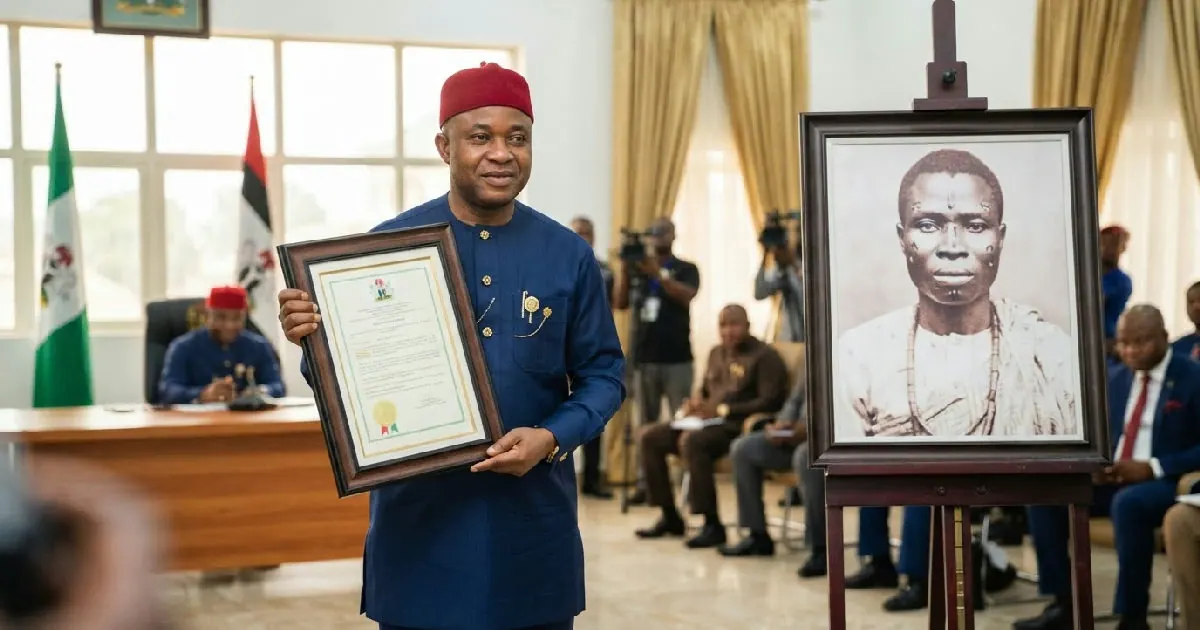
On 1 January 2026, Ebonyi State Governor Francis Ogbonna Nwifuru granted a posthumous pardon to Nwiboko Obodo Onyike, a figure infamous for leading the Odozi Obodo Society, a group linked to over 200 colonial-era murder cases in the 1950s. This decision has sparked considerable debate and controversy, re-evaluating a figure long associated with a dark period of extra-judicial killings. The pardon, alongside seven others, has thrust Obodo's contested legacy back into public discussion.
Nwiboko Obodo established the Odozi Obodo Society among the Izzi people around Abakaliki during the 1950s. Initially, the organization functioned as a body for community discipline, aiming to maintain order. However, its role gradually transformed from a communal arbiter to a formidable, coercive power, exercising its own punitive powers, holding trials, and imposing penalties outside of established local courts. This accumulation of authority allowed Odozi Obodo to exert significant control over individuals and entire villages.
The Odozi Obodo Society developed an organized system of discipline and punishment, with branches convening meetings, determining guilt, and levying substantial fines on individuals. Compulsory levies were also imposed on adult men in selected communities, with money collected divided between Nwiboko Obodo and the members responsible for enforcement. Resistance to these demands often carried severe consequences, including death, with some recruits compelled to participate in executions themselves.
By the late 1950s, the Odozi Obodo Society's activities had triggered a massive police investigation, revealing the immense scale of the organization's reach. Police uncovered 200 murders attributed to the society in Abakaliki Division, occurring over several years. The investigation led to widespread arrests, including Nwiboko Obodo himself, with 475 people facing charges related to the 200 murder cases. Of those, 83 were convicted of murder and sentenced to death.
Nwiboko Obodo was arrested, prosecuted for murder, and ultimately convicted and sentenced to death. His case, known as Nwiboko Obodo & 5 Ors v The Queen, reached the Federal Supreme Court in 1958, becoming a significant part of Nigerian criminal jurisprudence. His conviction signaled the collapse of the widespread authority he had commanded, transforming him from a local leader into a figure etched in colonial Abakaliki's history of crime and authority.
Governor Francis Ogbonna Nwifuru cited Section 212 of the Constitution of the Federal Republic of Nigeria to grant the pardons, framing the act as part of a broader programme of mercy and reconciliation for Ebonyi State. The posthumous pardon aimed to clear Obodo's name, restore dignity to his memory, and bring peace to his family and community, fundamentally challenging the entrenched narrative of his culpability.
The posthumous pardon of Nwiboko Obodo reveals a deeper truth about Nigeria's ongoing struggle with historical justice and reconciliation. It demonstrates how contemporary governments grapple with legacies formed under vastly different colonial administrations, underscoring the fluid nature of historical narratives. The pardon challenges a fixed understanding of crime and punishment during periods of profound societal change and power dynamics.
Key points
- Governor Francis Ogbonna Nwifuru granted a posthumous pardon to Nwiboko Obodo, leader of the colonial-era Odozi Obodo Society.
- The Odozi Obodo Society was linked to over 200 colonial-era murder cases in the 1950s.
- The pardon has sparked debate and re-examined Nwiboko Obodo's legacy, highlighting Nigeria's ongoing struggle with historical justice and reconciliation.