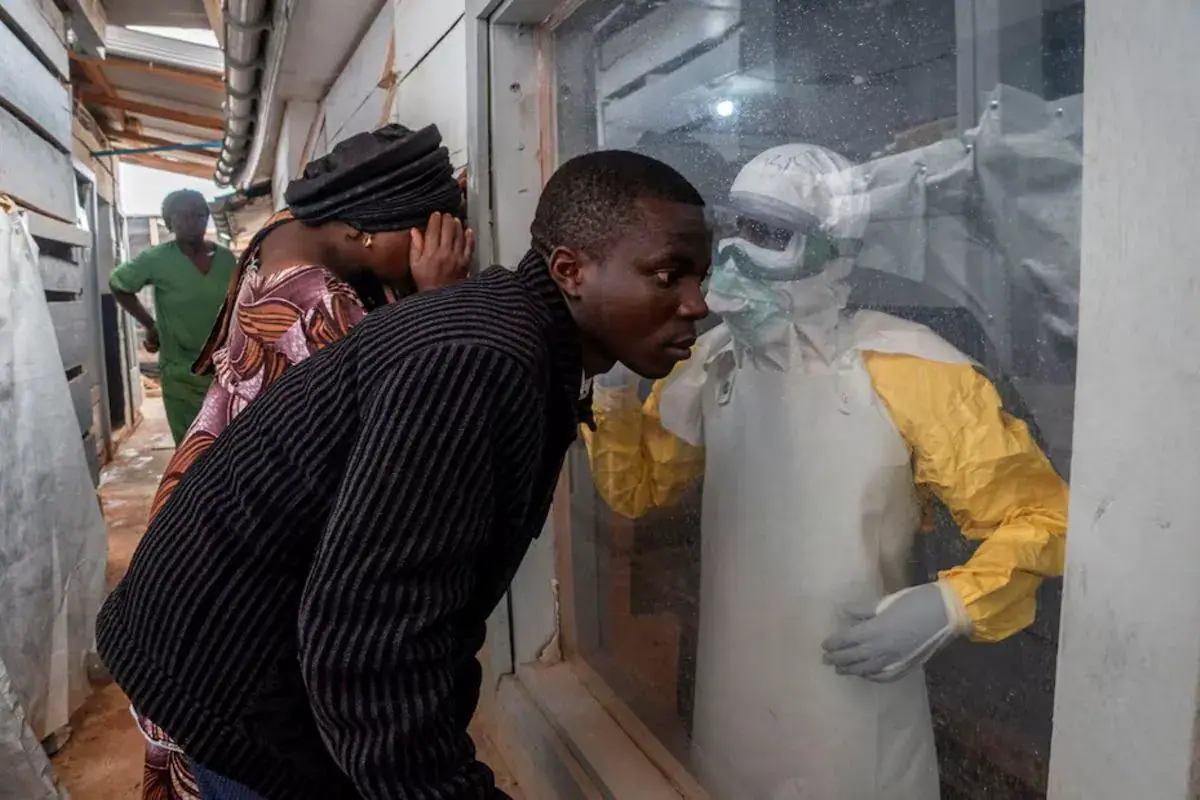
Jerkis Mahamba, a 29-year-old Ebola survivor, has been working at an Ebola ward in Butembo, eastern Democratic Republic of Congo, providing comfort to children isolated with the disease. Mahamba contracted Ebola in September and recovered after 18 days of treatment at the same centre, giving him immunity to the strain of the virus. He now works with young patients, offering them emotional support and companionship when their parents are not allowed to touch them.
Mahamba's experience as an Ebola patient allows him to connect with the children, who often need a hug, someone to talk to, or to be rocked back to sleep. He introduces himself, shares his story, and encourages the children not to lose hope. Mahamba's work is crucial, as it helps alleviate the stress and fear that comes with being isolated with a highly infectious disease. His efforts have a positive impact on the children's mental well-being.
Mahamba is not alone in his work. Many Ebola survivors have been hired by Médecins Sans Frontières (MSF) to work in the hospital, supporting patients and dispelling misinformation about the outbreak. Some survivors work as patients' friends, playmates, and supporters, while others take on important jobs cleaning and disinfecting rooms and equipment. Their role is vital in the fight against the disease.
The Ebola outbreak in Congo has been marked by violence and misinformation, with unfounded rumours that the epidemic is part of a foreign plot or that health workers are spreading the disease. Dr Toussaint Selemani, head of the MSF-run centre, highlights the importance of survivors in combating fear and stigma. Their testimony helps encourage people with symptoms to seek care promptly at a treatment centre.
Mahamba's work extends beyond the hospital. He visits villages and far-flung communities, showing people photos of himself when he was ill and encouraging them to protect themselves. His personal story helps build trust and credibility, which is essential in areas where misinformation and fear are prevalent.
The use of Ebola survivors as ambassadors is a key strategy in the fight against the disease. Their involvement helps restore hope to patients and their families, who often feel stressed and afraid. By sharing their experiences, survivors can encourage people to seek medical attention if they develop symptoms, which is critical in controlling the outbreak.
As the Ebola outbreak continues, the role of survivors like Mahamba will remain crucial. Their efforts to comfort and support patients, as well as dispel misinformation, are essential in the fight against the disease. With the help of survivors, health workers can build trust and provide effective care to those affected by the outbreak.
Key points
- Ebola survivors are providing emotional support to children isolated with the disease in Congo.
- Survivors are helping to dispel misinformation and stigma around the outbreak.
- The use of survivors as ambassadors is a key strategy in the fight against the disease.