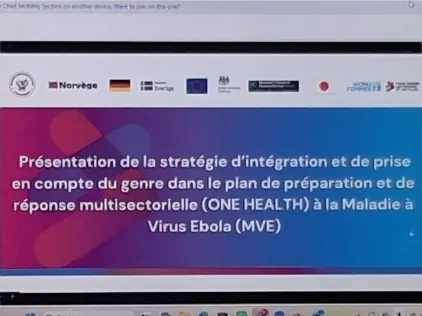
The Democratic Republic of Congo has taken a significant step in its fight against the Ebola outbreak by presenting a strategy to integrate gender into the response efforts. The strategy, launched on September 22, 2026, in Kinshasa, aims to place women and girls at the center of the response to accelerate the end of the Ebola outbreak. The initiative is led by UN Women, in collaboration with the Congolese government and other stakeholders.
According to Catherine Odimba, representative of UN Women, the strategy has six priority areas, including strengthening gender accountability in the response to Ebola and supporting the effective integration of gender equality principles. The goal is to promote women's leadership and participation in the response efforts, particularly through women-led organizations and young women's groups. This approach aims to enhance the protection, empowerment, and resilience of women and girls in the face of Ebola.
The strategy also seeks to promote coordination between humanitarian, development, and peace efforts to ensure a more coherent and inclusive response to Ebola. Odimba emphasized that the 17th epidemic of Ebola requires a gender-sensitive approach, as women and girls are disproportionately affected by the outbreak. Their protection, expertise, leadership, and participation in decision-making processes are crucial to the effectiveness and success of the response efforts.
UN Women has already made significant progress in its response to Ebola, with initial interventions providing a foundation for its future efforts. These interventions include coordination, data collection, and analysis, as well as leadership from women's organizations, advocacy, technical expertise, and initial financial resources. These efforts have enabled UN Women to develop a comprehensive approach to supporting women and girls affected by Ebola.
The strategy to integrate gender into the Ebola response is critical, as women and girls are often the most affected by the outbreak. By placing them at the center of the response efforts, the DRC and its partners aim to address the specific needs and challenges faced by women and girls in the context of Ebola. This approach also seeks to promote gender equality and empower women and girls to take an active role in the response efforts.
The presentation of the strategy marks an important milestone in the DRC's response to Ebola. The country has been experiencing an outbreak of the disease since August 2026, with multiple cases reported in various provinces. The government, in collaboration with international partners, has been working to contain the outbreak and provide support to affected communities. The integration of gender into the response efforts is a critical component of this approach.
The DRC's efforts to integrate gender into the Ebola response have been welcomed by stakeholders, who recognize the importance of a gender-sensitive approach in addressing the outbreak. The strategy is expected to enhance the effectiveness and impact of the response efforts, ultimately contributing to the elimination of Ebola in the country. Key stakeholders will continue to support the implementation of this strategy, ensuring that women and girls are at the forefront of the response efforts.
Key points
- The DRC has launched a strategy to integrate gender into the Ebola response, focusing on women's empowerment and protection.
- The strategy aims to promote women's leadership and participation in the response efforts, particularly through women-led organizations and young women's groups.
- The approach seeks to address the specific needs and challenges faced by women and girls in the context of Ebola, promoting gender equality and empowering them to take an active role in the response efforts.