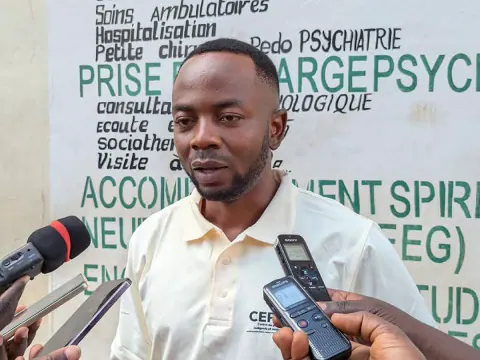
The Ebola outbreak in the Democratic Republic of Congo has been identified as a contributing factor to mental health issues in Butembo, a city in the North Kivu province. According to Kasereka Mulavi Bénédicte, a psychologist at the Centre de Protection des Indigents et des Malades Mentaux (CEPIMA), the outbreak has led to increased cases of mental health problems due to denial and fear. The psychologist made these remarks on the occasion of World Mental Health Day, celebrated on October 10th.
The community's denial of the Ebola outbreak has been cited as a major factor in the rise of mental health issues. Many people in the community are unsure about the reality of the epidemic, leading to anxiety and fear. As a result, psychologists like Bénédicte are working to raise awareness about the existence of the disease and provide support to those affected. The CEPIMA has adapted its approach to address the mental health needs of patients during this epidemiological period.
To ensure the safety of patients and staff, the CEPIMA has integrated a triage service into its operations. Before providing psychiatric care, patients are now screened for Ebola symptoms to determine if they require specialized treatment. If a patient shows symptoms of Ebola, they are immediately transferred to a specialized treatment center. This approach aims to prevent the spread of the disease while providing essential mental health services.
The World Mental Health Day was celebrated under the national theme "La voix, un changement pour une bonne santé mentale" (The Voice, a Change for Good Mental Health). In Butembo, the CEPIMA marked the occasion with various activities, including a eucharistic celebration and de-traumatization sessions for people with mental health issues. These events aimed to raise awareness about mental health and provide support to those affected.
The Ebola outbreak in the DRC has had a significant impact on the country's healthcare system. The North Kivu province, where Butembo is located, has reported 25 new confirmed cases of Ebola. The Congolese government and international organizations are working together to contain the outbreak and provide support to affected communities. The situation remains challenging, with concerns about the spread of the disease and the impact on mental health.
The CEPIMA's efforts to address mental health issues in Butembo are crucial in the context of the Ebola outbreak. The center's approach to integrating triage services and providing specialized care for patients with mental health issues is a positive step towards addressing the psychological impact of the outbreak. As the situation continues to evolve, it is essential to prioritize mental health support for affected communities.
The DRC's healthcare system faces significant challenges in responding to the Ebola outbreak and addressing mental health issues. The government and international organizations must work together to provide resources and support to healthcare facilities like the CEPIMA. By prioritizing mental health and providing essential services, the DRC can mitigate the impact of the Ebola outbreak on the mental health of its citizens.
Key points
- The Ebola outbreak in the DRC has been linked to an increase in mental health issues in Butembo, with denial and fear being major contributing factors.