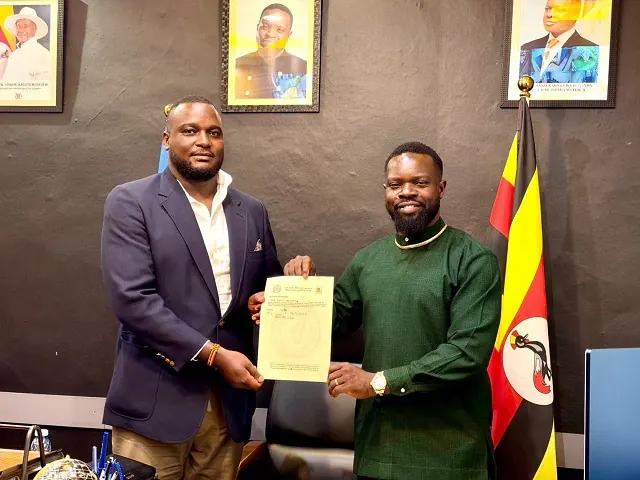
Benard Feni, founder and chief executive officer of Euro Gold Refinery Uganda Ltd, has been appointed to the Board of Directors of Malaria Free Uganda, a national initiative aimed at eliminating malaria as a public health threat. The appointment was made by Health Minister Dr Chris Baryomunsi for a three-year term starting September 1, 2026. Feni's inclusion on the board recognizes his leadership and professional experience, as well as the potential contribution of private-sector players to Uganda's development priorities.
Malaria Free Uganda was established to support the Ministry of Health by mobilizing resources and coordinating private-sector participation in the national malaria response. The initiative encourages businesses, civil society organizations, and community leaders to contribute to malaria prevention and control. One of its priorities is to establish an End Malaria Fund or foundation to finance interventions under the national malaria strategic plan. This fund aims to address financing gaps, improve the availability of essential malaria commodities, and strengthen accountability for commitments towards Uganda's goal of eliminating malaria by 2030.
Uganda continues to face a substantial malaria burden, with the disease affecting households, health facilities, and the wider economy. The World Health Organisation's World Malaria Report 2025 estimated 282 million malaria cases and 610,000 deaths globally in 2024. Uganda was among five countries that accounted for more than half of malaria cases worldwide, along with the Democratic Republic of the Congo, Ethiopia, Madagascar, and Nigeria. The WHO African Region accounted for about 94% of cases and 95% of deaths, with children under five years old being among the most vulnerable.
Malaria is caused by parasites transmitted through bites from infected female Anopheles mosquitoes. Although the disease is preventable and treatable, delayed diagnosis and treatment can lead to severe illness and death, particularly among young children and pregnant women. Uganda has implemented interventions, including the distribution of insecticide-treated mosquito nets and indoor residual spraying in selected districts. However, sustaining these interventions requires continued financing, reliable supplies of medicines, and effective coordination among stakeholders.
The WHO has reported partial resistance to artemisinin-based antimalarial medicines in Uganda, highlighting the need to monitor treatment effectiveness and ensure adherence to national treatment guidelines. Malaria Free Uganda's proposed financing mechanism aims to provide an additional avenue for businesses and stakeholders to contribute through financial support, technology, supplies, training, and community networks. As a non-executive director, Feni will contribute to the board's strategic direction, support resource mobilization, and oversee accountability for funds committed to the initiative.
The board is expected to provide strategic oversight, mobilize domestic resources, strengthen advocacy, and develop partnerships to support malaria prevention and control programs. It will also oversee the initiative's budgets, resource commitments, and the performance of its secretariat. The position is voluntary and non-remunerated, although reasonable expenses incurred while performing official duties are reimbursed. The secretariat will handle day-to-day operations, financial reporting, and tracking of commitments.
The appointment of Benard Feni to the Malaria Free Uganda board brings on board a seasoned professional with experience in leadership and private-sector engagement. His contributions are expected to enhance the initiative's efforts to eliminate malaria as a public health threat in Uganda. The board is scheduled to meet four times a year, in addition to an annual strategy retreat and other meetings when required.
Key points
- Benard Feni appointed to Malaria Free Uganda board to support efforts to eliminate malaria.
- Malaria Free Uganda initiative aims to mobilize resources and coordinate private-sector participation in the national malaria response.
- Uganda faces a substantial malaria burden, with the disease affecting households, health facilities, and the wider economy.