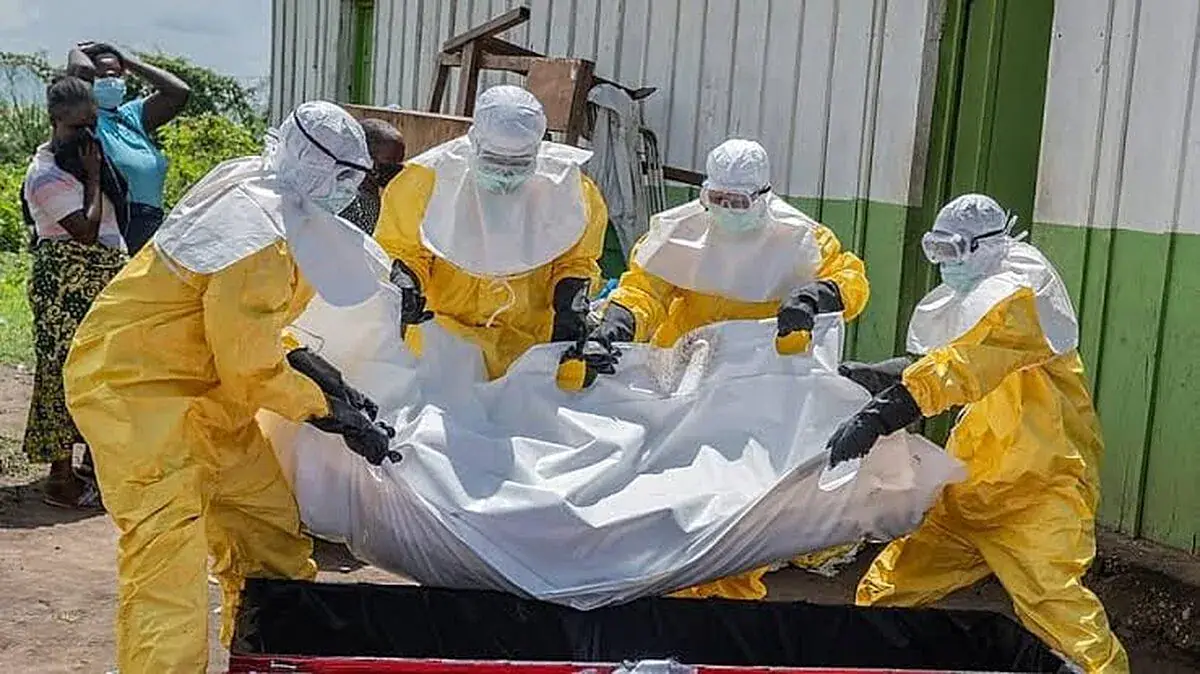
The Ebola outbreak in the Democratic Republic of Congo has taken a toll on healthcare workers, with 29 Médecins Sans Frontières (MSF) workers infected and three deaths reported. According to MSF, the infected workers were mostly contaminated within their own communities, rather than in treatment centers. This highlights the risks faced by healthcare professionals, even when directly involved in fighting the epidemic.
The national data also reports several hundred infected healthcare workers, with dozens of deaths since the crisis began. MSF recently published a report, "Ebola: Behind the Mask," featuring testimonials from team members. These workers shared their difficult experiences, working conditions, and the human impact of the epidemic, which has not spared their own families.
Dr. Sylvain Radjabu Lubangi, 35, a former caregiver at the Ebola treatment center in Bunia, Ituri province, shared his personal experience of being infected while caring for patients. After recovering, he decided to continue his work with patients, which now allows him to better understand the physical and psychological suffering of infected individuals.
Dieudonné Tchuma Longa, 29, an MSF health promotion agent in Mongbwalu, Ituri, also shared his testimony. Despite his work educating communities about the dangers of the disease and ways to protect themselves, he faced the tragic loss of eight family members, including his father and son, due to Ebola.
Alice Alyerunga, a nurse supervisor at the Mongbwalu treatment center, described a particularly challenging period for medical teams. In the first three weeks of care, no patients survived, and around 100 patients succumbed to the disease. The arrival of the first recovered patient brought hope and relief to the caregiving staff.
Insecurity is another significant obstacle to the response in parts of Ituri, according to Samson Balidja, an MSF team member. The presence of around a dozen armed groups in the region disrupts healthcare interventions, prevents teams from accessing populations, and causes civilian displacement, complicating prevention and epidemiological surveillance activities.
The different testimonies highlight the heavy human toll paid by response actors. MSF notes that the risk of contamination within Ebola treatment centers remains generally limited due to rigorous infection prevention and control measures. However, healthcare workers are not immune when returning to their communities of origin, which are also affected by the virus circulation.
Key points
- 29 MSF workers infected, 3 dead in DRC Ebola outbreak
- Healthcare workers face risks of infection within their communities
- Insecurity hampers response efforts in Ituri region