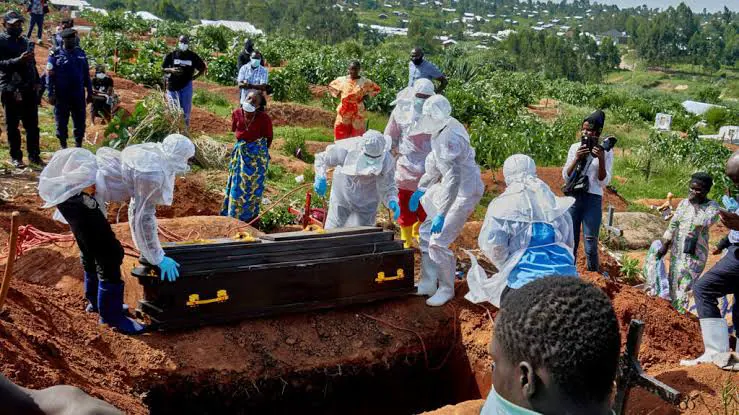
The Ebola outbreak in the Democratic Republic of Congo has claimed over 4,000 lives since June 2023, with a total of 8,300 cases reported. The outbreak, caused by the Bundibugyo strain of Ebola, has spread to seven provinces in the country, including Ituri, North Kivu, Haut-Uélé, Tshopo, South Kivu, Sud-Ubangi, and Bas-Uélé. The World Health Organization (WHO) has reported that the outbreak is the second deadliest in history, after the 2014-2016 outbreak in Guinea, Liberia, and Sierra Leone that killed over 11,000 people.
According to the Congolese health ministry, 4,018 people have died from Ebola since the outbreak began in June 2023, while over 2,000 people have recovered. The ministry has also reported that the outbreak is ongoing, with new cases still being reported, particularly in the North Kivu province. The WHO has stated that the outbreak is decreasing, especially in the Ituri province, where it originated.
The Bundibugyo strain of Ebola is a rare and deadly form of the virus, with no specific treatment or vaccine available. However, the WHO has reported that a vaccine, Ervebo, which was used to combat the Zaire strain of Ebola during the 2014-2016 outbreak, may be effective against the Bundibugyo strain. The Congolese government has received a shipment of 16,520 doses of the vaccine, which is part of a larger consignment of 50,120 doses.
The outbreak has been exacerbated by the country's ongoing conflict and instability, which has made it difficult for health workers to access affected areas. The WHO has called for increased support and resources to combat the outbreak, including funding, personnel, and equipment.
The Congolese government has taken steps to contain the outbreak, including deploying health workers to affected areas and establishing treatment centers. The government has also launched a public awareness campaign to educate people about the risks of Ebola and the importance of seeking medical attention if symptoms occur.
The international community has also responded to the outbreak, with several countries and organizations pledging support and resources to combat the disease. The WHO has also activated its Incident Management System to coordinate the response efforts and provide technical assistance to the Congolese government.
The situation remains critical, with the risk of further spread of the disease remaining high. The WHO and other health organizations are continuing to work with the Congolese government to contain the outbreak and provide support to affected communities.
Key points
- The Ebola outbreak in the Democratic Republic of Congo has claimed over 4,000 lives since June 2023.
- The outbreak is caused by the Bundibugyo strain of Ebola, with no specific treatment or vaccine available.
- The World Health Organization is working with the Congolese government to contain the outbreak and provide support to affected communities.