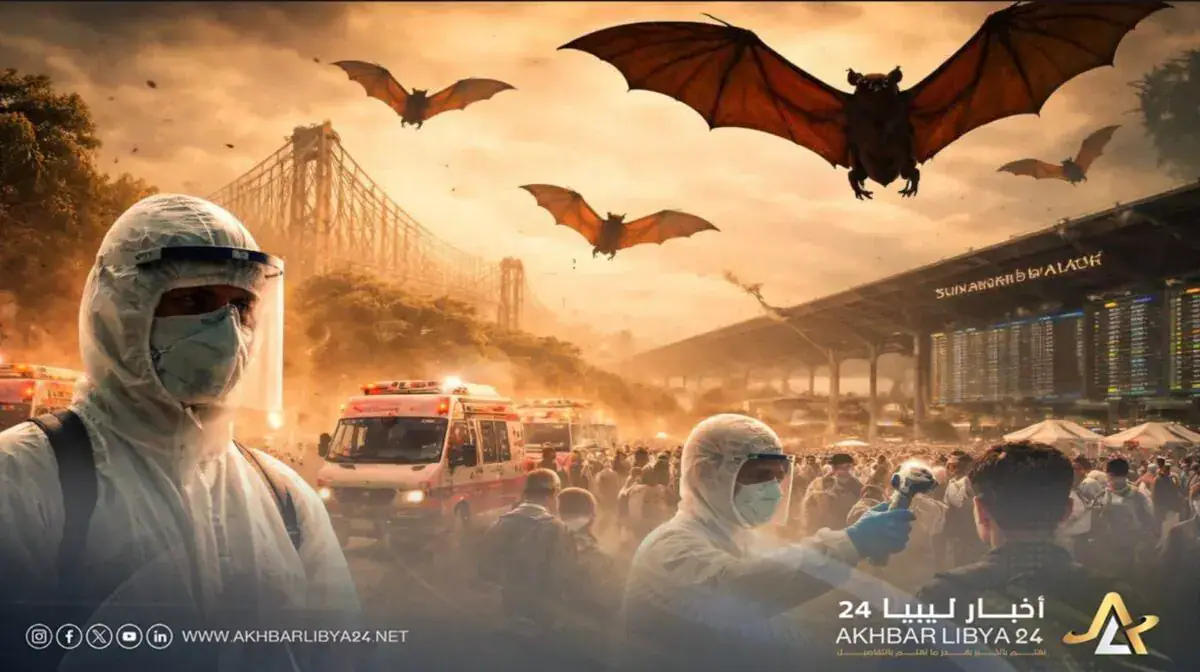
The Ebola outbreak in the Democratic Republic of Congo has continued to spread, with the total number of confirmed cases now exceeding 12,000 and the death toll rising to nearly 5904, according to government data released on Thursday. The ongoing outbreak, which began in May, has become one of the largest and deadliest on record, posing significant challenges to the country's healthcare system. Efforts to contain the outbreak have been hindered by ongoing conflict and limited access to affected areas.
The current outbreak is attributed to the rare Bundibugyo strain of the Ebola virus, for which there are currently no approved vaccines or treatments. This has made early detection, isolation of infected individuals, and contact tracing crucial in limiting the spread of the disease. The strain was first identified in the Ituri province in northeastern Congo in May and has since spread to eight of the country's 26 provinces.
The rapid spread of the outbreak has been attributed to delays in detecting cases, as well as the impact of ongoing conflict and pressure on the healthcare system. These factors have hindered the efforts of medical teams to reach affected areas and track the transmission of the virus. As a result, the outbreak has become the second-largest and deadliest on record, surpassed only by the 2014-2016 West African epidemic.
According to data from the Africa Centres for Disease Control and Prevention, only 15% of new cases can be linked to known contacts of infected individuals. This suggests that the majority of transmission chains remain unknown, making it difficult to contain the outbreak. An analysis of satellite imagery by Reuters has also raised concerns that the official death toll may be lower than the actual number of fatalities in some of the most affected areas.
The World Health Organization and other international partners have been working to support the Congolese government's response to the outbreak, including providing medical supplies, training healthcare workers, and conducting contact tracing. However, the ongoing conflict and insecurity in some areas have made it challenging to reach all affected communities.
The Congolese government has established a number of Ebola treatment centers and isolation units to care for infected individuals and prevent further transmission. However, the country's healthcare system faces significant challenges, including limited resources, inadequate infrastructure, and a shortage of trained healthcare workers.
The international community continues to monitor the situation and provide support to the Congolese government's response efforts. The situation remains fluid, and the risk of further spread of the disease remains high.
Key points
- Over 5900 deaths and 12,000 cases reported
- Ongoing conflict and limited access hindering response efforts
- No approved vaccines or treatments available for Bundibugyo strain
Reporting sources
- إيبولا يفتك بأكثر من 5900 شخص في الكونغو وسط تفشٍ متواصل للعدوي · Akhbar Libya 24