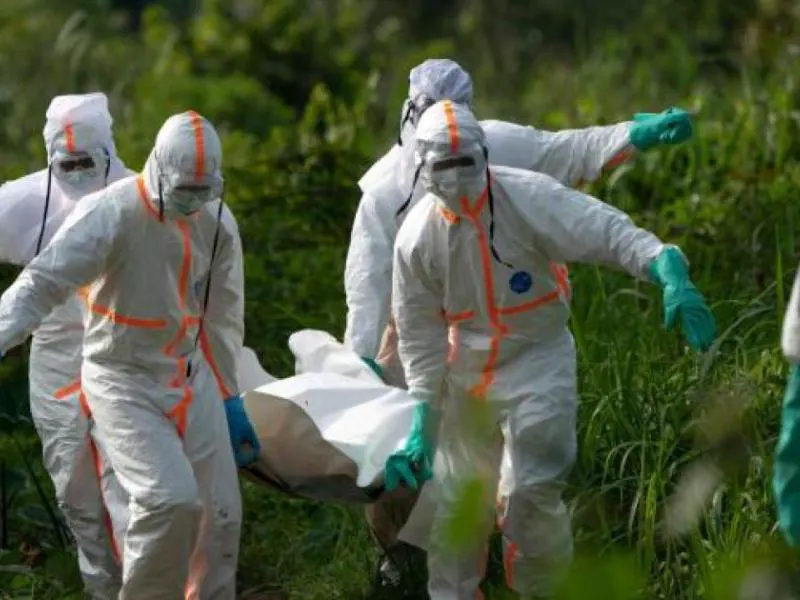
The Ebola epidemic in the Democratic Republic of Congo (DRC) has been ongoing for four months, with the government and its partners struggling to contain the outbreak. Médecins Sans Frontières (MSF) has warned that it would be a mistake to believe that the epidemic is under control, despite some positive indicators. According to MSF, the disease is spreading to new areas, complicating efforts to control it.
MSF has reported that while some Ebola treatment centers are receiving fewer patients, new cases are emerging and spreading to areas that are not well-prepared to handle the disease. The organization has expressed concern that the epidemic is not receding, but rather moving to new areas, with the Sud-Ubangi province becoming the seventh province to be affected. The North-Kivu province now accounts for nearly half of all new confirmed cases.
The DRC is currently facing its 17th Ebola epidemic, caused by the Bundibugyo virus. The outbreak was declared in May 2026 in the Ituri province and has since spread to several provinces, affecting over 60 health zones. According to health authorities and partners, seven provinces are now affected, making this a national health crisis. The epidemic is occurring in a challenging context, marked by insecurity, population displacement, and limited healthcare capacity.
MSF has deployed personnel and resources to support the response to the epidemic, including rapid response teams that support early case detection, patient care, and contact tracing. However, the organization has emphasized that it cannot respond to the epidemic alone and that a significant increase in support from UN agencies, particularly the World Health Organization (WHO), is urgently needed.
The epidemic has so far reported over 7,200 confirmed cases and 3,500 deaths, although the actual toll is likely higher due to gaps in surveillance and case detection. MSF has stressed that a more reactive and comprehensive response is needed to strengthen all aspects of the Ebola response, particularly in remote areas where response capacity is limited.
The situation is further complicated by issues of trust and community engagement, which can affect epidemiological surveillance, contact tracing, and patient care. In some areas, such as Bambu, health systems are already under strain due to chronic underfunding, staff shortages, and limited referral capacity. MSF teams are working to fill the most urgent gaps in these areas.
Anthony Kergosien, MSF's emergency coordinator in Bunia, Ituri, has emphasized that the organization is working to detect and contain new outbreaks quickly, but that a stronger response is needed to make this approach sustainable. He has called for increased support from UN agencies to enable MSF teams to focus on rapid deployment to new areas and ensure that affected communities receive the necessary services to contain the epidemic.
Key points
- The Ebola epidemic in the DRC is far from under control, with new cases emerging and spreading to new areas.
- MSF has warned that it would be a mistake to believe that the epidemic is under control, despite some positive indicators.
- The organization has called for increased support from UN agencies to strengthen the response to the epidemic.