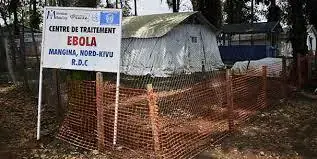
The Ebola epidemic in the Democratic Republic of Congo (DRC) has grown exponentially, reaching 10,000 cases of infection and nearly 5,000 deaths, with no end in sight to this global public health problem. According to the Congolese Ministry of Health, the Ebola virus continues to spread, particularly in the eastern region, with tentacles already in neighboring countries, including Uganda, Nigeria, and Kenya. Efforts to contain the outbreak have been ongoing, but the situation remains dire.
The National Institute of Public Health (INSP) released a report in Kinshasa, revealing that the epidemic is far from under control, with no effective vaccine or treatment announced for the Bundibugyo strain, which is currently active in the region. This strain, unlike more common ones, has no known treatment, contributing to the severity of the situation. The World Health Organization (WHO) and the African Union's Centers for Disease Control and Prevention (CDC-Africa) have declared this epidemic a severe international problem.
The epidemic, the 17th recorded since 1976, has affected eight of the DRC's 26 provinces, with Ituri and North Kivu being the most affected. The provinces of Tshopo, Bas-Uélé, Haut-Uélé, South Kivu, South Ubangi, and North Ubangi have also reported cases. The situation is further complicated by social traditions, including fetishism and other phenomena that hinder the efforts of medical teams.
The current outbreak is the second most deadly and contagious in history, surpassing the one that occurred in the same Congolese region between 2018 and 2020. However, it is still far from the most severe, which caused around 11,000 deaths and 28,000 infections in West Africa between 2014 and 2016. The Bundibugyo strain, which causes the current epidemic, has no specific treatment, but the WHO is working on two vaccines that have shown promise in phase 1 human trials.
The DRC launched an immunization campaign against Ebola in late August, using the Ervebo vaccine, which is available in large quantities. Although initially developed for the more common Zaire variant, the vaccine has shown promising results against the Bundibugyo variant in animal trials. The WHO has also announced the start of a clinical trial in the DRC to evaluate several potential vaccines against this strain.
The Ebola virus is transmitted through direct contact with bodily fluids of infected people or animals, causing severe hemorrhagic fever, vomiting, diarrhea, and internal bleeding. The situation remains critical, with the international community working to contain the outbreak and find an effective solution. The WHO and other health organizations continue to monitor the situation and provide support to affected countries.
The international community remains concerned about the spread of the disease, with neighboring countries taking measures to prevent the outbreak from spreading. The WHO and other health organizations are working closely with governments to enhance surveillance, contact tracing, and infection control measures. The development of effective vaccines and treatments is crucial to bringing this epidemic under control and preventing future outbreaks.
Key points
- The Ebola epidemic in DR Congo has surpassed 10,000 cases and nearly 5,000 deaths.
- The Bundibugyo strain of the Ebola virus has no known treatment or effective vaccine.
- The international community is working to contain the outbreak and develop effective solutions.