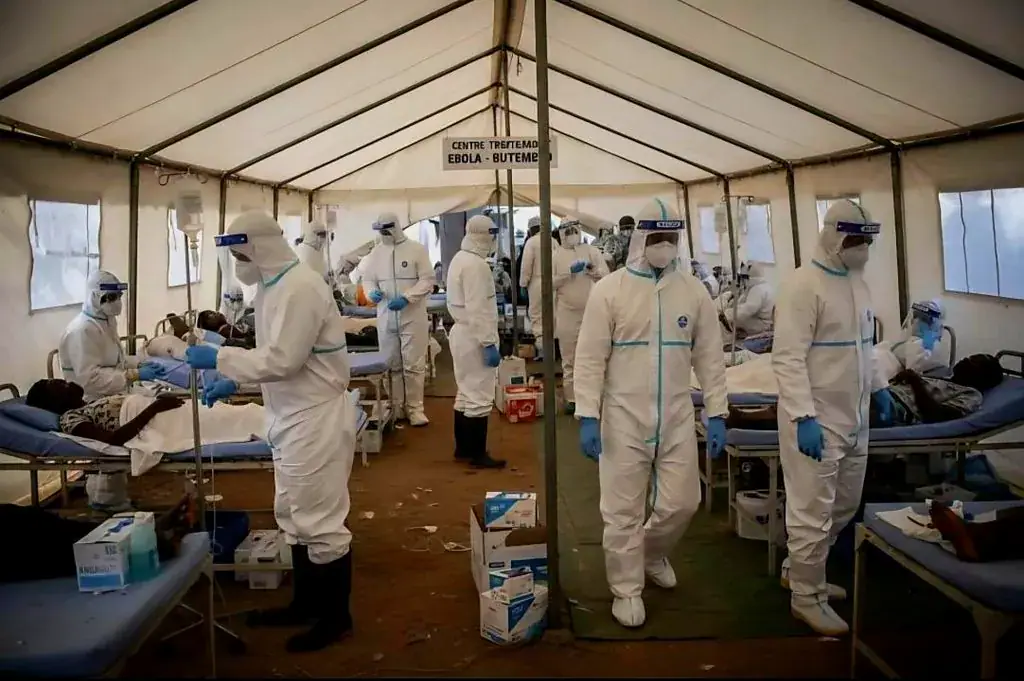
The Ebola epidemic in the Democratic Republic of Congo has been ongoing for six months, with the disease continuing to spread in the north-east of the country. Despite efforts to contain the outbreak, the epidemic has resulted in 5,471 deaths and 11,197 cases, according to the Congolese health authorities. The Ituri province remains the epicenter of the crisis, with cases and deaths also increasing rapidly in the neighboring territory of Beni, located in the North Kivu province.
The security situation in the region is a major challenge to containing the outbreak, with rebel groups, including the Allied Democratic Forces (ADF), carrying out attacks on civilians and health workers. In recent days, the ADF has perpetrated a series of attacks in the Ituri province, resulting in at least 110 deaths. The attacks have also led to the displacement of thousands of people, with many fleeing their homes and seeking shelter elsewhere.
The World Health Organization (WHO) has expressed concern over the security situation, with the organization's director of emergency operations, Chikwe Ihekweazu, warning that the insecurity is allowing the epidemic to "gain ground". The WHO has also reported that over 1,000 people who have come into contact with Ebola patients have fled the area, making it difficult to track and contain the outbreak.
The Congolese army has deployed troops to the region to combat the ADF, but the security situation remains volatile. The attacks have also resulted in the destruction of health facilities, with three structures pillaged and burned during a recent attack. The WHO has called for an end to the violence, warning that the insecurity is undermining efforts to contain the outbreak.
The epidemic has also highlighted the need for improved security measures to protect health workers and civilians. The WHO has reported that over 80 attacks and incidents have been recorded against health facilities in the past six months. The organization has also expressed concern over the lack of trust among the local population, which has led to several incidents and attacks on health workers.
The situation is further complicated by the fact that Ebola is a highly infectious and deadly disease, with a mortality rate of nearly 50%. The disease has already killed over 15,000 people in Africa over the past 50 years, and the current outbreak is the deadliest in the DR Congo's history. The WHO and other health organizations are working to contain the outbreak, but the security situation remains a major challenge.
The DR Congo government has declared a state of emergency in the affected provinces, and international aid organizations are providing support to contain the outbreak. However, the situation remains dire, with many calling for an end to the violence and improved security measures to protect civilians and health workers. The epidemic has also highlighted the need for sustained investment in the health sector to improve the country's ability to respond to outbreaks.
Key points
- The Ebola epidemic in the DR Congo has resulted in 5,471 deaths and 11,197 cases.
- The security situation in the region is a major challenge to containing the outbreak.
- The WHO has expressed concern over the insecurity, warning that it is allowing the epidemic to "gain ground".