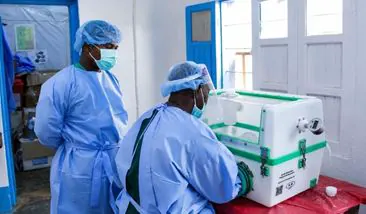
A new laboratory for analyzing samples from suspected Ebola cases is now operational in the Mambasa health zone, Ituri Province, in the northeastern part of the Democratic Republic of Congo. According to Jospin Paluku of the New Civil Society of Mambasa, the laboratory will significantly reduce the time it takes to receive diagnostic results, allowing for more timely and effective treatment of patients.
The laboratory's opening was announced by Jospin Paluku, an actor in the local civil society, who emphasized that it will enable healthcare workers to quickly confirm or rule out suspected Ebola cases. This will help prevent the spread of the disease and ensure that patients receive appropriate care. Previously, patients with suspected Ebola symptoms were often treated without confirmation of the disease.
With the new laboratory, patients who exhibit Ebola symptoms will be subjected to examinations, and if the result is positive, they will receive treatment. Jospin Paluku stressed the importance of rapid testing, stating that it will allow for prompt and effective management of suspected cases. This, in turn, will help prevent further transmission of the disease.
The laboratory's installation is expected to improve the response to Ebola outbreaks in the region. By reducing the time it takes to receive diagnostic results, healthcare workers can quickly identify and isolate infected individuals, thereby preventing further transmission of the disease. This development is a significant step forward in the fight against Ebola in the Democratic Republic of Congo.
Jospin Paluku urged the population of Mambasa and surrounding areas to seek medical attention promptly if they exhibit Ebola symptoms. He emphasized that delaying treatment can lead to severe consequences, not only for the individual but also for the community, as it increases the risk of transmission to others.
The civil society representative also highlighted the importance of adopting preventive behaviors to curb the spread of Ebola. This includes frequent handwashing, wearing protective gear, and avoiding close contact with individuals who exhibit symptoms. By working together, the community can help prevent the spread of the disease and protect vulnerable individuals.
The new laboratory is a significant development in the Democratic Republic of Congo's efforts to combat Ebola. With the ability to quickly and accurately diagnose suspected cases, healthcare workers can respond more effectively to outbreaks, ultimately saving lives and preventing further transmission of the disease.
Key points
- The laboratory will provide diagnostic results within 24 hours, enabling timely treatment of patients.
- The laboratory's installation will help prevent the spread of Ebola by quickly identifying and isolating infected individuals.
- The local community is urged to seek medical attention promptly if they exhibit Ebola symptoms and adopt preventive behaviors to curb the spread of the disease.