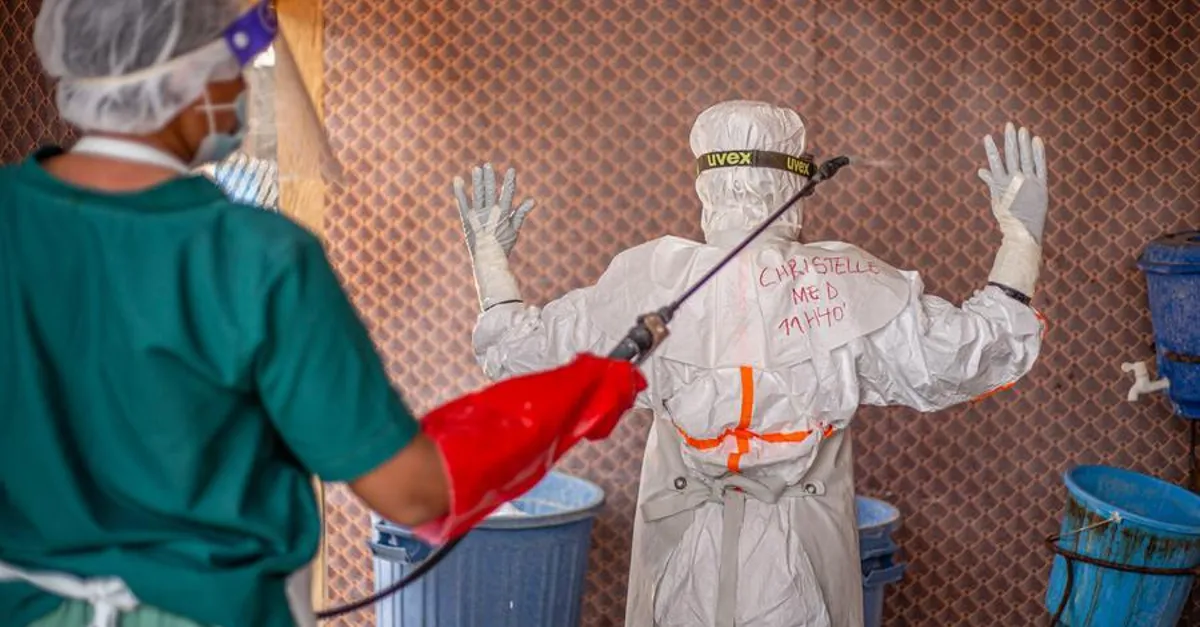
The Democratic Republic of Congo has reported a significant surge in Ebola cases, with the total number of confirmed infections surpassing 8,000 for the first time since the outbreak began. According to the latest report from the country's public health institute, the total number of confirmed cases has risen to 8,067. This outbreak, caused by the Bundibugyo strain of the Ebola virus, is the largest and most deadly in the country's history.
The situation in the affected areas is complex, with healthcare workers facing significant challenges in containing the outbreak. The ongoing movement of people, coupled with the country's security and humanitarian crises, has made it difficult for health teams to access some areas. The virus is highly contagious and can be transmitted through contact with infected bodily fluids. If left untreated, the disease can be fatal in a high percentage of cases.
The current outbreak was declared on May 15, and since then, it has become the largest and deadliest Ebola outbreak in the Democratic Republic of Congo's history. It is also the second-largest outbreak of the disease globally. The World Health Organization and other international partners are working closely with the Congolese government to respond to the crisis. Efforts are focused on enhancing surveillance, detecting cases, and tracking contacts.
The Ebola outbreak in the Democratic Republic of Congo has resulted in 3,901 reported deaths. The country's health authorities are working to strengthen prevention and infection control measures in affected areas. The situation remains a major public health concern, with the potential for further spread of the disease.
The Bundibugyo strain of Ebola has been responsible for this outbreak. This strain has been associated with high case fatality rates in previous outbreaks. The international community is providing support to the Congolese government to help bring the outbreak under control.
This is not the first major Ebola outbreak in West Africa. Between 2014 and 2016, a major outbreak occurred in Guinea, Liberia, and Sierra Leone, resulting in over 28,600 cases and more than 11,000 deaths. The current outbreak in the Democratic Republic of Congo is the largest and most deadly in the country's history.
The Congolese government and international partners are working to bring the outbreak under control. Key efforts include enhancing surveillance, detecting cases, and tracking contacts. The situation remains a major public health concern, with the potential for further spread of the disease.
Key points
- The number of confirmed Ebola cases in the Democratic Republic of Congo has exceeded 8,000.
- The outbreak has resulted in 3,901 reported deaths.
- The situation remains a major public health concern, with the potential for further spread of the disease.