A man who had been living in the Democratic Republic of Congo for seven years has tested positive for Ebola in Kenya, sparking concerns over the country's ability to detect and respond to the disease. The patient, whose name has not been released, arrived at Nairobi Hospital on October 3, critically ill and with symptoms including fever, chills, and bleeding under the skin. According to hospital sources, medical staff were initially unable to determine the cause of his illness or decide on a course of action.
The patient's travel history, which included passing through three countries' health systems, was not immediately apparent to medical staff, raising questions about how he was not flagged at airport screening. The man had traveled by road to Kampala and then flown to Nairobi on Jambojet flight JM 8523, landing at 1.10pm on October 3. A relative and a friend drove him from the airport to Nairobi Hospital, where doctors quickly isolated him.
The hospital's account of the patient's arrival and treatment differs from the official timeline provided by the health ministry. Hospital sources say there was a delay between the patient's arrival and the suspicion of a haemorrhagic fever, and that the travel history that should have triggered an alert only emerged once his condition had sharply worsened. This delay may have increased the risk of exposure to others.
The patient tested positive for Ebola Bundibugyo virus at both the National Virology Reference Laboratory and the Kenya Medical Research Institute (Kemri) laboratory. He died on October 7 and was buried under public health protocols. The health ministry has identified 28 contacts, including relatives and health workers who attended to the man, and is trying to trace 23 passengers and four crew members who were on the same flight.
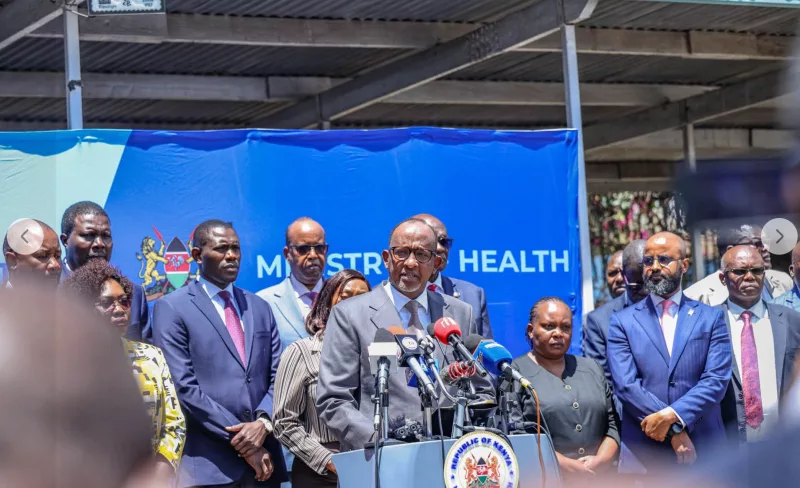
Health experts say the case highlights gaps in airport screening, particularly in the use of thermal scanners to detect travelers with fevers. Director General for Health Dr Patrick Amoth said the patient may have taken medication that lowered his temperature and masked symptoms, producing a false negative at airport screening. Pathologist Dr Ahmed Kalebi said the case exposed a gap that needed to be examined in both Kenya and Uganda.
The case has also raised concerns about Kenya's preparedness to handle Ebola cases, particularly in light of the controversy over a proposed quarantine facility at Laikipia Air Base. The facility was intended to hold American nationals exposed to the virus in the DRC outbreak, but was met with opposition from local residents and critics who argued that Kenya should not take in foreign Ebola-exposed people when it had no cases of its own.
Kenya is the fourth country to report a confirmed case in the current Bundibugyo outbreak, after the DRC, Uganda, and France. The World Health Organization says that by September 23, the DRC had recorded 7,890 confirmed cases and 3,799 deaths, a case fatality ratio of 48.1 per cent. The Kenyan government has urged calm and said it is working to contain the spread of the disease.
Key points
- The patient, who had been living in DR Congo for seven years, traveled to Nairobi and tested positive for Ebola Bundibugyo virus.
- The case has raised concerns over gaps in airport screening and Kenya's preparedness to handle Ebola cases.
- The health ministry has identified 28 contacts and is trying to trace 23 passengers and four crew members who were on the same flight as the patient.