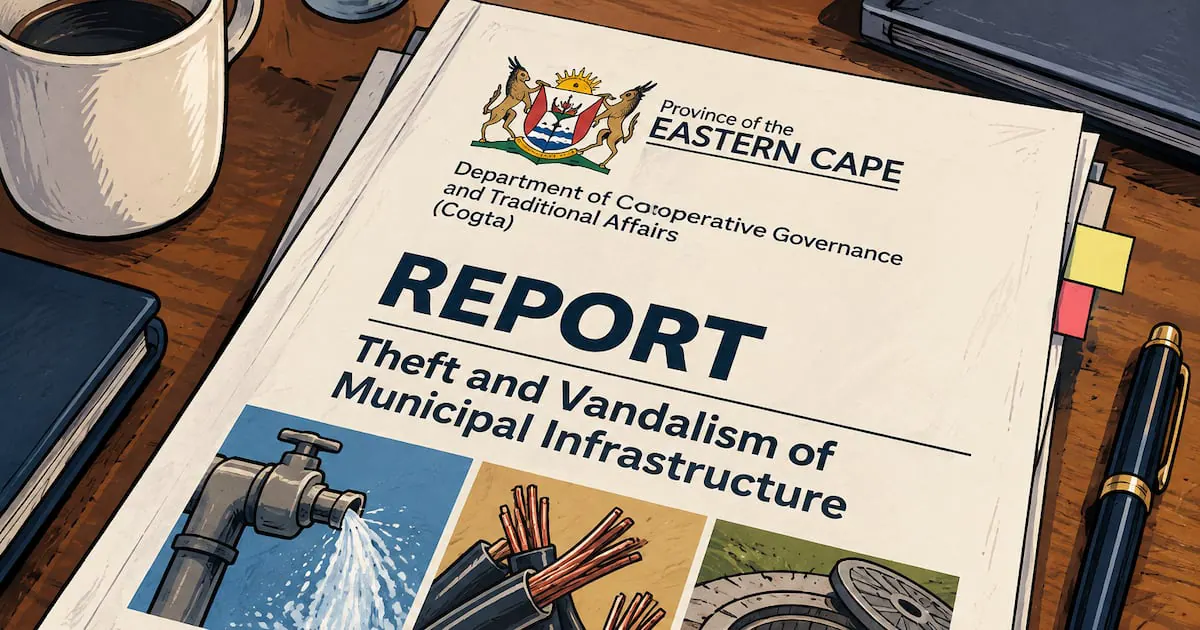
Eastern Cape municipalities are grappling with the persistent problem of infrastructure theft and vandalism, which has resulted in significant financial losses and disruptions to basic services. A report by the provincial department of co-operative governance and traditional affairs (Cogta) found that all 11 municipalities surveyed had been affected by theft and vandalism, including three district municipalities. The report highlighted that electricity, water, and sanitation infrastructure were among the main targets of these crimes.
The financial consequences of infrastructure theft and vandalism have been substantial, with losses exceeding R90m in the last financial year. The Cogta report, which was shared with the South African Human Rights Commission (SAHRC), revealed that the Chris Hani District Municipality was among the hardest-hit areas, with over 40 theft cases recorded, resulting in R6.3m in lost potential revenue, and 58 vandalism cases causing a further R9.9m in losses. The combined loss was more than R15m, excluding additional costs incurred to recover and secure damaged infrastructure.
The SAHRC is currently working on a policy brief calling for theft and vandalism of municipal infrastructure to be recognised as a human rights violation rather than merely a criminal act. Cogta official Tshitsho Majavu supported the SAHRC's position, arguing that the consequences of infrastructure theft went far beyond the financial losses suffered by municipalities. Majavu noted that the destruction of infrastructure had a ripple effect, impacting households, residential areas, and businesses.
Buffalo City Metro Mayor Princess Faku identified vandalism as one of the biggest challenges facing the metro, with some of its own workers allegedly part of well-resourced and knowledgeable cable theft syndicates targeting municipal infrastructure. Faku stated that vandalism affected the metro's operations, including its ability to deliver water, while creating opportunities for syndicates to exploit communities. According to Faku, infrastructure was sometimes deliberately vandalised to create a demand for water tankers among residents.
Other municipalities, such as Amathole District Municipality, have also reported significant losses due to infrastructure theft and vandalism. The Cogta report showed that Enoch Mgijima and Dr AB Xuma municipalities accounted for a large proportion of the incidents, with 11 theft cases recorded in each. Vandalism cases stood at 13 in Enoch Mgijima and 15 in Dr AB Xuma. The OR Tambo District Municipality recorded 25 theft cases, resulting in losses of R620,000, while no vandalism cases were recorded during the period covered by the report.
Municipalities are taking steps to address the problem, including intensifying community awareness campaigns and strengthening relations with security clusters. The Chris Hani district municipal spokesperson, Dr Sandiso Tyembile, stated that the municipality had employed 302 security guards to protect municipal assets and infrastructure, with a further 150 positions being filled. The municipality was also using ward and traditional council meetings to raise awareness about the consequences of infrastructure theft.
The continued targeting of infrastructure has raised concerns about whether municipalities and provincial government are doing enough to prevent the destruction of assets needed to keep basic services running. The EFF MPL Nokuthula Mlokothi stated that Cogta's admission that there was no structured monitoring programme dedicated to tackling the problem showed that the issue was not being adequately addressed.
Key points
- Municipalities have spent millions of rand on repairs, security, and replacement equipment to combat infrastructure theft and vandalism.
- The destruction of infrastructure has resulted in significant financial losses, with over R90m in damages reported in the last financial year.
- The SAHRC is working on a policy brief to recognise infrastructure theft and vandalism as a human rights violation.