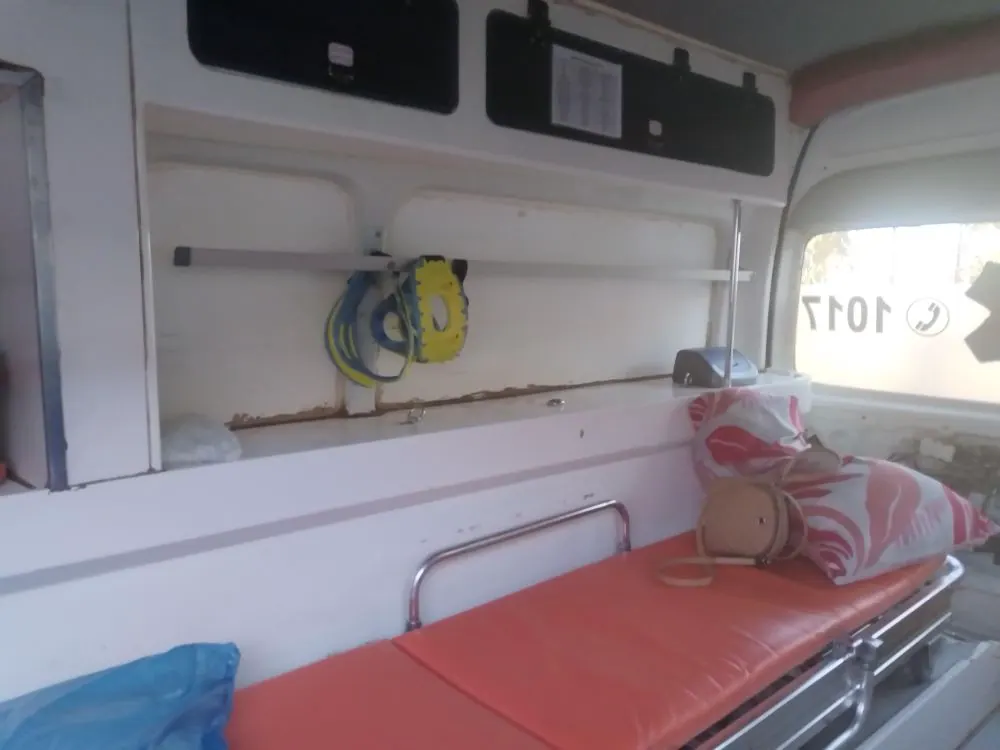
A severe shortage of ambulances in the Eastern Cape province of South Africa is compromising emergency medical services, leaving patients in rural areas at risk of not receiving urgent medical attention. The province's emergency medical services (EMS) fleet is ageing and in need of replacement, exacerbating the problem. Residents are being forced to endure lengthy waits for life-saving assistance, turning medical emergencies into life-threatening situations.
The latest incident highlighting the crisis occurred in Flagstaff, under the Ingquza Local Municipality, where a bakkie lost brake control and crashed into vendors and bystanders. Six people sustained serious injuries, including suspected leg fractures, while others were treated for less severe bruising. The injured were taken to a local clinic, where they waited for over 10 hours for ambulances that were reportedly in Mthatha, about three hours away.
In the aftermath of the crash, some injured individuals were transported from the scene in private and community vehicles, while members of the public assisted those in distress. Family members were left helplessly watching as their loved ones writhed in pain while waiting for ambulances to transport them to nearby Holy Cross Hospital. Others with more serious injuries had to be taken to hospitals in Mthatha.
Inkosi Ayanda Faku of the Ixabisolomntu organisation criticised the absence of ambulances, which left community members no option but to intervene and help transport the injured to hospital. Faku described the experience of carrying people with suspected fractures, causing them excruciating pain, while not being medically trained to handle such injuries. He also raised concerns about road safety and suggested constructing a safety barrier alongside the road to prevent vehicles losing control.
Faku recounted another horrific incident where a man was struck by a truck and thrown onto a woman, with both ending up beneath the vehicle. The situation became even more tragic when the woman's husband confronted the man who had been struck. Families of accident victims have pleaded with the government to urgently address the province's ambulance crisis, which is placing vulnerable patients at further risk.
Acting head of the Eastern Cape Department of Health, Dr Mthandeki Xamlashe, acknowledged the challenges with the ambulance fleet and outlined an ongoing programme to replace EMS vehicles, prioritising areas of greatest need. In August and September, 61 vehicles were replaced, and further replacements are scheduled over the coming months. The programme aims to replace a total of 195 vehicles.
The ambulance shortage is not the first controversy to hit the province's emergency medical services. In the past, the Eastern Cape government spent over R10 million on motorcycle "ambulances", a contract later found to be unlawful by the Public Protector. The procurement was particularly concerning given the province's largely rural character, with some areas inaccessible even to 4x4 vehicles.
Key points
- The Eastern Cape province faces a severe shortage of ambulances, compromising emergency medical services in rural areas.
- The province's EMS fleet is ageing and in need of replacement, exacerbating the problem.
- The government has embarked on a programme to replace EMS vehicles, prioritising areas of greatest need.