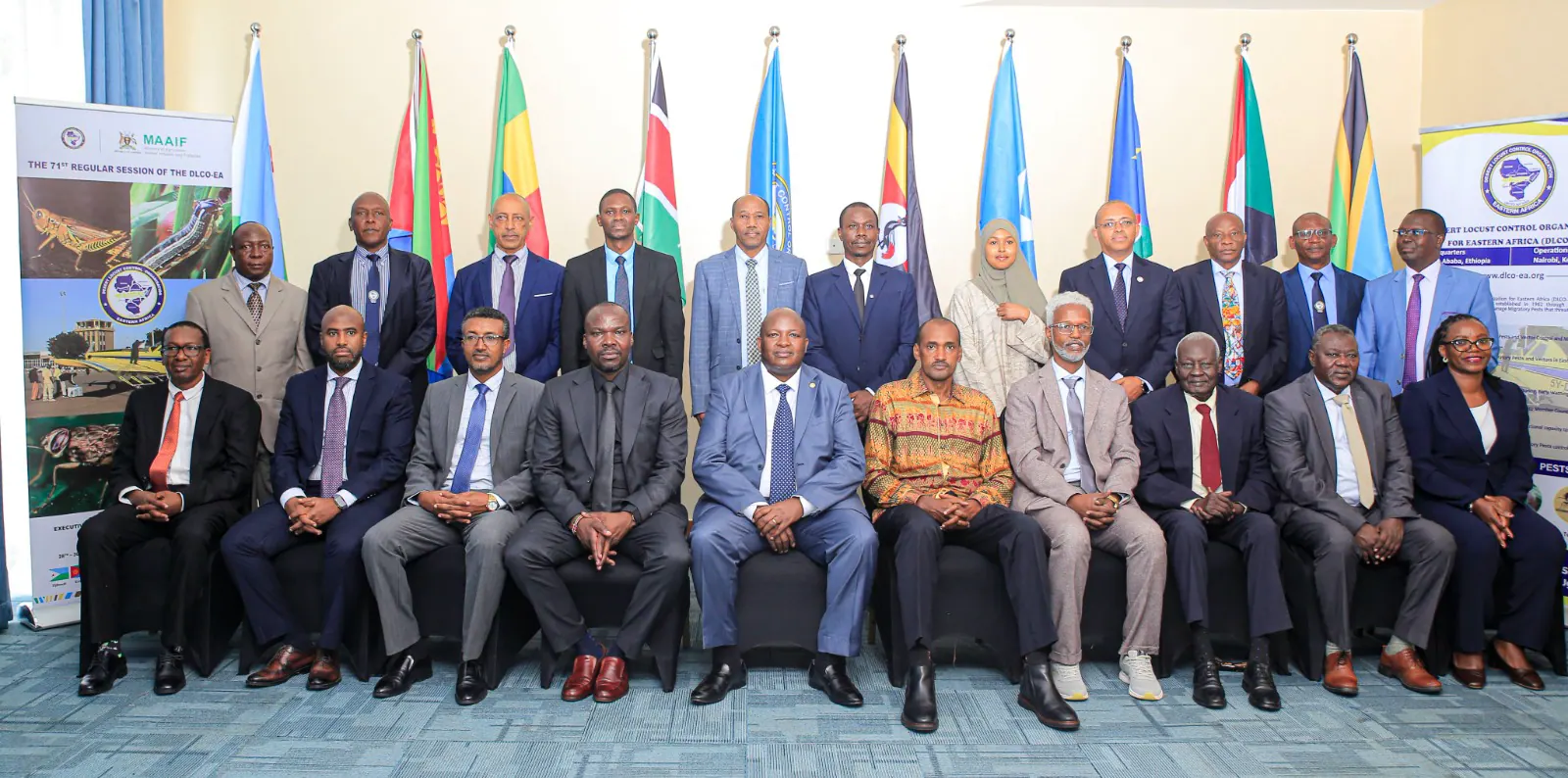
Eastern African countries are bolstering regional efforts to combat migratory pests that pose a significant threat to crops, livestock, livelihoods and food security. The renewed commitment was highlighted during the 71st Regular Session of the Executive Committee of the Desert Locust Control Organization for Eastern Africa (DLCO-EA), held in Entebbe, Uganda. Representatives from eight DLCO-EA member states attended the session in person, while a ninth participated virtually. The meeting aimed to review progress in pest management, assess emerging threats and enhance preparedness for outbreaks.
The session was officially opened by Uganda's Minister of Agriculture, Animal Industry and Fisheries, Frank Tumwebaze. He emphasized the need for a stronger commitment from member states and development partners towards early warning, surveillance and rapid-response systems. Tumwebaze cited Uganda's experience during the 2020 desert locust invasion as a reminder of the severe consequences migratory pests can have on agriculture. He stressed that early intervention, adequate financing and operational readiness are crucial to protecting farmers, agricultural production and food supplies.
Tumwebaze urged governments, technical agencies and development partners to strengthen cooperation to identify threats early and take appropriate measures before infestations become major crises. He noted that individual countries cannot effectively address the challenge alone, as migratory pests move freely across national boundaries. The Minister's remarks underscored the importance of regional collaboration in addressing the complex issue of migratory pests.
The meeting also examined the link between climate variability and the emergence and spread of migratory pests. FAO Country Director Ezana G. Kasesa addressed delegates, highlighting the increasingly complex environment in Eastern Africa. He noted that changing weather patterns, extreme events, ecological pressures and evolving agricultural systems are influencing pest behavior. Kasesa emphasized the need for continuous monitoring and the integration of climate information with surveillance and early warning systems.
Kasesa called for a shift from reactive pest control towards anticipatory action, using climate forecasts, ecological monitoring, surveillance and risk analysis to identify potential outbreaks. He stressed that closer collaboration is needed among DLCO-EA, the IGAD Climate Prediction and Applications Centre (ICPAC), national meteorological services and other partners. The FAO official also highlighted the growing role of digital technologies in pest management, including improved data collection, mapping and information sharing.
Kasesa emphasized the crucial role of communities in identifying pest threats at an early stage. He called for farmers, pastoralists, extension workers and local authorities to be incorporated into national and regional surveillance systems. This community-based approach is particularly important for pests that can move rapidly across borders. Delegates also discussed approaches to make pest control safer and more sustainable, guided by scientific evidence and integrated pest management principles.
DLCO-EA Director Moses Rwaheru Mwesigye highlighted the organization's central role in coordinating surveillance, forecasting, research and pest-control operations. He noted that predictable funding is essential for maintaining surveillance systems, equipment and rapid-response capabilities. The organization monitors several migratory and transboundary pests, including desert locusts, armyworms and tsetse flies, which can threaten major food and cash crops and cause substantial agricultural and economic losses.
Key points
- Eastern African countries are strengthening regional efforts to detect, monitor and control migratory pests threatening crops, livestock and food security.
- The 71st Regular Session of the Executive Committee of the Desert Locust Control Organization for Eastern Africa (DLCO-EA) was held in Entebbe, Uganda.
- FAO Country Director Ezana G. Kasesa called for a shift from reactive pest control towards anticipatory action, using climate forecasts and surveillance to identify potential outbreaks.