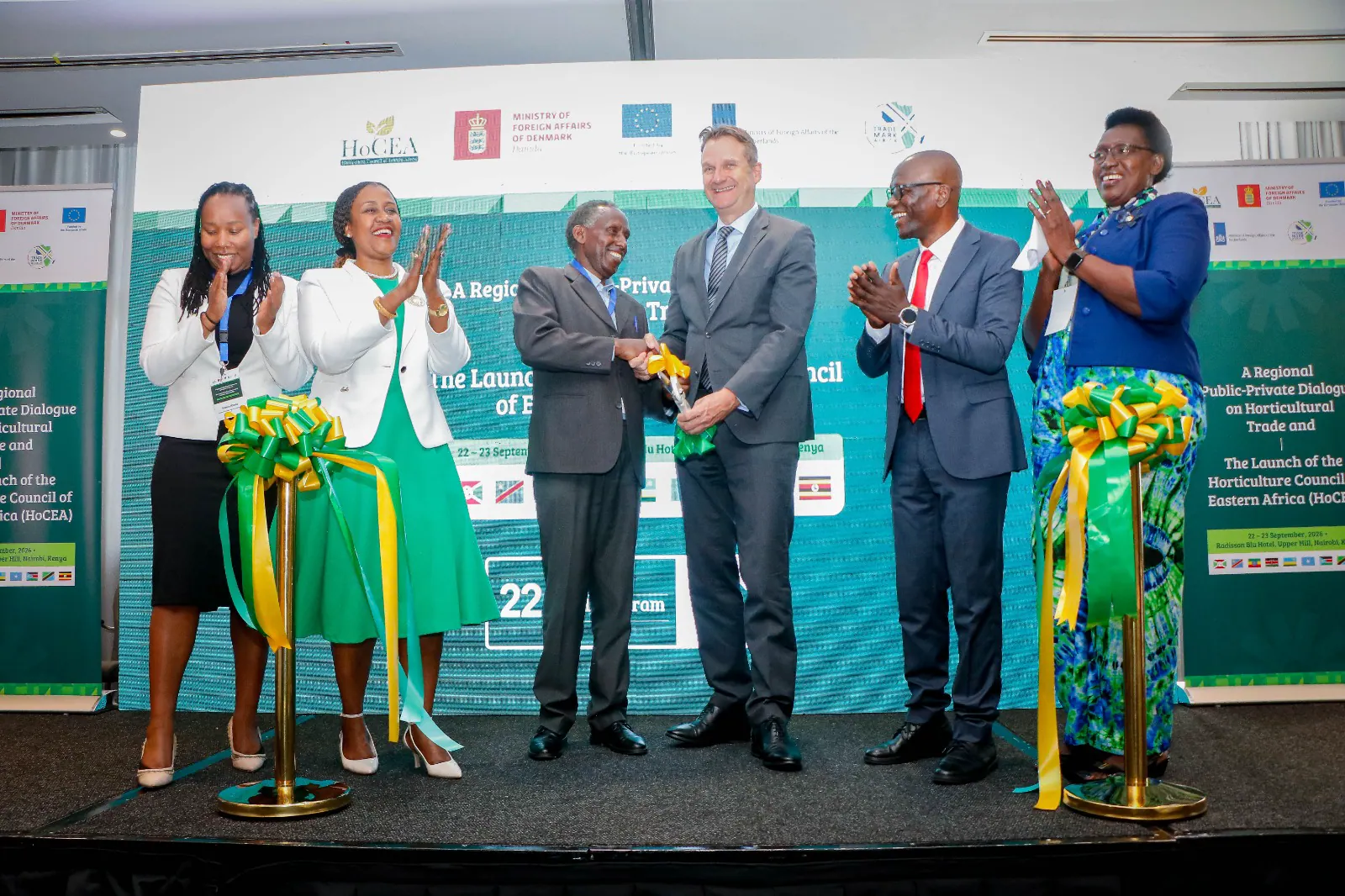
The Horticulture Council of Eastern Africa (HoCEA) was officially launched in Nairobi during a Regional Public-Private Dialogue on Horticultural Logistics and Trade Facilitation. The council brings together national horticulture associations from nine countries under the theme "Nine Countries. One Region. One Vision." The launch was attended by government officials, private-sector players, development partners, regulators, logistics operators, and regional institutions. HoCEA aims to address trade barriers, improve logistics, and strengthen the sector's access to international markets.
The council's Secretary General, Clement Tulezi, stated that HoCEA will focus on reducing trade barriers, improving logistics and cold chains, harmonizing standards, expanding market access, and promoting technology, sustainability, and inclusive value chains. He emphasized that the challenges facing the sector are regional and require a regional response. Tulezi added that the sector must produce nationally, connect regionally, and compete globally. The council's launch is expected to enhance cooperation and coordination among stakeholders in the region.
The Kenyan government has identified measures needed to improve horticultural trade, including increased cold-storage capacity along the Northern Corridor and at Inland Container Depots. The government also calls for stronger single-window systems, electronic cargo tracking, and wider use of Authorised Economic Operator programmes. Additionally, trade agreements, such as the EU-Kenya Economic Partnership Agreement and the African Continental Free Trade Area, are expected to translate into increased export opportunities. Kenya exports approximately 467,000 metric tonnes of horticultural produce annually, valued at about $1.143 billion.
HoCEA Chairperson, Dr. Jacqueline Mkindi, emphasized that the council will provide a collective platform for addressing challenges that extend beyond national borders. She called for a shift from fragmented national efforts to coordinated regional action. Mkindi urged stakeholders to use HortiLogistica Africa in Arusha as a platform to connect African horticulture producers and businesses with global buyers and investors. She also emphasized the need for unity and regional strength to invite the world to come to Eastern Africa.
Denmark reaffirmed its support for HoCEA, emphasizing the need for sustainable trade, stronger cold-chain efficiency, reduced post-harvest losses, and better coordination among development partners. The speech called on HoCEA to move beyond dialogue and deliver concrete, measurable outcomes for horticultural producers and exporters across Eastern Africa. Stakeholders also called for greater investment in cold chains, digital systems, and border infrastructure, as well as improved sanitary and phytosanitary standards.
The regional dialogue is expected to culminate in a Nairobi Horticulture Action Roadmap, setting out priority actions, institutional responsibilities, and timelines. A Nairobi Communiqué will also be considered as stakeholders seek to move from identifying trade challenges to implementing practical solutions. The council's launch marks a significant step towards addressing the challenges facing the horticulture sector in Eastern Africa.
The horticulture sector contributes significantly to foreign exchange earnings and employment, particularly among women and young people. The sector's growth is expected to be driven by coordinated public-private action at the regional level. Deputy Director for Internal Trade, Matthew Komen, representing the Principal Secretary for Trade, emphasized that the challenges facing horticultural trade require coordinated regional action.
Key points
- The Horticulture Council of Eastern Africa (HoCEA) has been launched to address trade barriers and improve logistics in the region.
- The council brings together national horticulture associations from nine countries to promote cooperation and coordination.
- The sector contributes significantly to foreign exchange earnings and employment, particularly among women and young people.