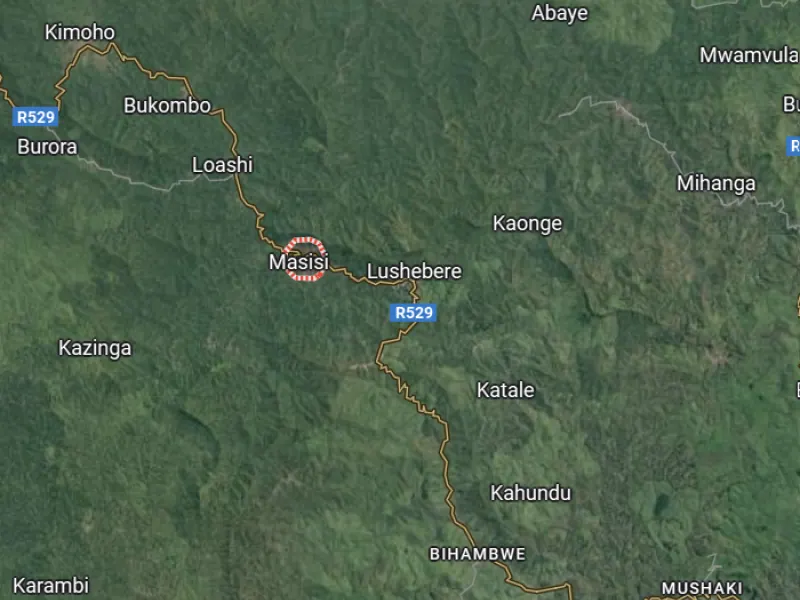
The International Conference on the Great Lakes Region (CIRGL) announced that two field missions were conducted by the Expanded Joint Verification Mechanism (MCVE+) in the Democratic Republic of Congo's conflict zones. The first mission took place in Minembwe, located in the South Kivu province, from August 24 to 25. A second mission was deployed to Masisi, in the North Kivu province, from September 10 to 12. These missions aim to verify the ceasefire and strengthen trust between the Congolese government and the Alliance Fleuve Congo/Mouvement du 23 mars (AFC/M23).
The missions were conducted as part of the Doha process, which focuses on managing the crisis between the Congolese government and the AFC/M23. The CIRGL Secretariat praised the successful deployment of these missions, stating that they mark a significant step towards reinforcing trust and achieving lasting peace in eastern DRC. The missions also demonstrate the effectiveness of the ceasefire verification mechanism, provided that political will is maintained.
The CIRGL expressed gratitude to the Congolese government and the AFC/M23 for their cooperation, which allowed the verification teams to access Minembwe and Masisi safely and without obstruction. The CIRGL also acknowledged the support provided by the United States, the Swiss Confederation, the State of Qatar, and the African Union, as well as the logistical support from the United Nations Mission in the Democratic Republic of Congo (MONUSCO).
The deployment of these missions follows the commitments agreed upon during the evaluation retreat held in Switzerland from August 17 to 21 between representatives of Kinshasa and the AFC/M23. The parties evaluated the implementation of the signed Framework Agreement and adopted a roadmap for continuing negotiations on the remaining protocols to achieve a peace agreement.
The choice of Minembwe for the first mission is significant, as the area remains marked by a fragile security situation and persistent tensions. The territory of Masisi, in the North Kivu province, also experiences violent clashes, leading to mutual accusations of violating commitments between Kinshasa and the AFC/M23.
The MCVE+ mechanism was established as part of the ceasefire agreement signed in Doha between the Congolese government and the AFC/M23 in October 2025. The mechanism's terms of reference, mandate, composition, and mode of operation were adopted on February 2, 2026, under the auspices of the State of Qatar.
The CIRGL vowed to regularly conduct verification missions in conflict-affected areas to reinforce trust and support the establishment of a lasting ceasefire.
Key points
- The successful deployment of the MCVE+ missions demonstrates the effectiveness of the ceasefire verification mechanism.
- The missions mark a significant step towards reinforcing trust and achieving lasting peace in eastern DRC.
- The CIRGL will continue to conduct verification missions in conflict-affected areas to support the establishment of a lasting ceasefire.