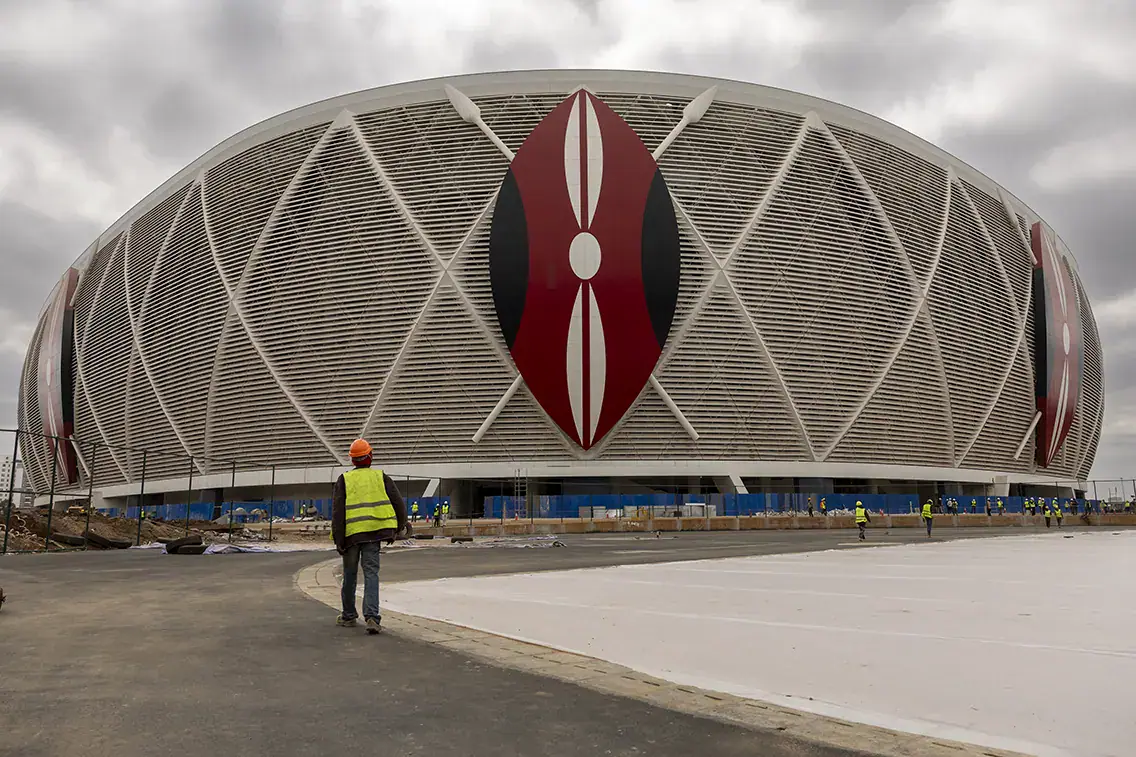
East Africa is set to host the 2027 Africa Cup of Nations (AFCON), with Kenya, Uganda, and Tanzania investing heavily in new stadiums and infrastructure. Kenya's new national stadium in Nairobi, built by a Chinese firm, is one of the main venues for the tournament. The 60,000-seat Raila Odinga International Stadium will host several high-profile matches, including a UEFA Champions League match between Bayern Munich and Ajax on January 5th, 2027.
The $345mn stadium was financed through a bond listed on the Nairobi Securities Exchange with a 15-year tenor. This innovative financing model aims to avoid piling more debt onto Kenya's constrained national budget. The stadium will also host an HSBC SVNS rugby tournament, providing a test of its ability to host international fixtures. With a 70th anniversary edition, AFCON 2027 will be the first in five decades to be held in East and Central Africa and the last to be held in an odd-numbered year.
Uganda and Tanzania are also building new stadiums and renovating existing ones to host the continental tournament. Uganda is investing over $300mn in new infrastructure, including at least two new 20,000-seat stadiums and an expanded Mandela National Stadium. Tanzania is building the new Samia Suluhu Stadium in Arusha and will also host matches in Dar es Salaam and Zanzibar. These investments coincide with tight fiscal conditions across the region, as governments work to meet debt obligations without piling on too much new debt.
Despite the massive investments, there are concerns about the future use and revenue generation of the stadiums. Historical turnout figures for domestic matches suggest that filling the stadiums consistently will be an impossible task. According to Paulo J. Cruz, CEO of African Collaborations Group, the pattern across the continent is consistent: a government builds a stadium for a tournament, and it becomes a public liability after the event.
To address this challenge, the African Collaborations Group is pushing East African countries to draw up commercial plans ahead of the continental tournament. The plans involve integrated, mixed-use development, combining different types of assets, including retail, residential, and commercial spaces to boost revenue flows. This approach would view the stadiums as the core of a planned sports and entertainment ecosystem, rather than standalone projects.
The region is also investing in new transport links to ease movement during the tournament. Kenya is building a dedicated railway connection and rehabilitating an existing 13.3km line between the Nairobi Central Station and the new stadium. However, cross-border travel in the region is still a hassle, with high airfares being a particular sticking point. Uganda's state minister for tourism, Susan Nsambu, recently highlighted the need to address these challenges.
The success of AFCON 2027 will provide a solid test case for whether East Africa can host a single tournament and draw lasting value from its investments. What happens after the tournament will decide whether the stadiums remain assets or become white elephants. The region, which draws significant revenue from tourism, is optimistic about its preparedness to host the matches and spectators.
Key points
- East Africa's governments are investing heavily in new stadiums and infrastructure for AFCON 2027.
- The future use and revenue generation of the stadiums are major concerns.
- The region is exploring innovative financing models and commercial plans to ensure the stadiums remain assets after the tournament.