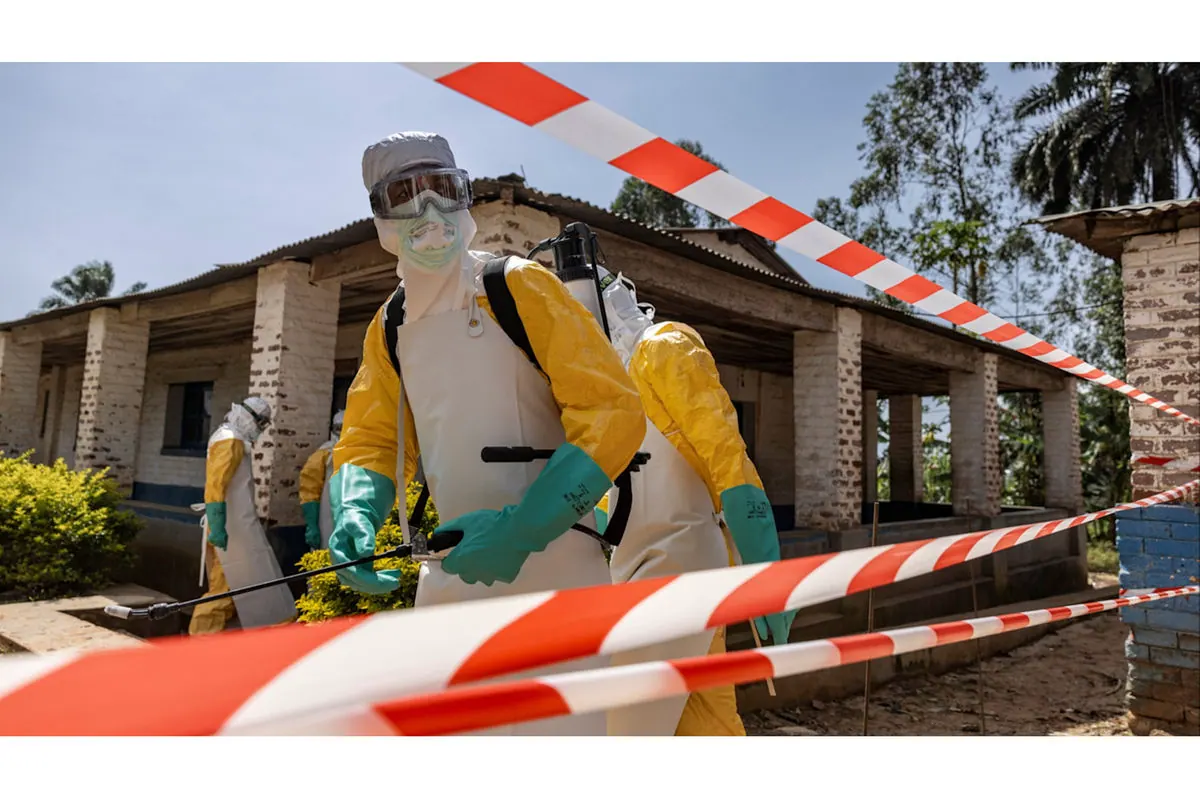
The East African Community (EAC) is seeking approximately $45 million from development partners to enhance regional preparedness and response to Ebola and other viral haemorrhagic fever outbreaks. This funding will support various initiatives, including training frontline health workers and community awareness programs. The EAC aims to strengthen its response to public health emergencies in the region.
The funding will be used for several key initiatives. These include training 500 frontline health workers and community awareness programs that will reach 15,000 people in eastern Democratic Republic of Congo (DRC). Additionally, the EAC plans to procure 20,000 sets of personal protective equipment (PPE) and register new Bundibugyo Ebola vaccines in EAC Partner States once approved by the World Health Organisation (WHO).
The EAC is also expanding its mobile laboratory network. Currently, there are 10 laboratories across seven Partner States, but the goal is to have 34 by the end of 2027. This expansion will strengthen rapid diagnostic capacity at strategic locations and points of entry. The mobile laboratories have already supported responses to various diseases, including Ebola, Marburg, Covid-19, and Mpox.
Dr Dorcas Omukhulu, EAC Acting Director of Social Sectors, emphasized the importance of these measures in strengthening regional preparedness. She spoke during a specialized training session for over 120 doctors, nurses, and other frontline health professionals from all eight EAC Partner States. The training is part of the Training in the East African Community for High-Consequence Infectious Diseases (tEACh) program.
The tEACh program is implemented by the EAC in partnership with the German Agency for International Cooperation (GIZ). It aims to strengthen the capacity of Partner States to detect, contain, and clinically manage high-consequence infectious diseases, including Ebola. Dr Omukhulu highlighted that the regional training is building a common pool of health professionals with practical skills to detect, manage, and contain outbreaks.
Germany has committed an additional €4.8 million to scale up the EAC’s Ebola preparedness and response efforts. Participants in the training, such as Dr Pius Mutuku, a medical epidemiologist at Kenya’s National Public Health Institute, noted that the practical nature of the training is strengthening their readiness and confidence to respond safely and effectively during an outbreak.
The EAC’s renewed preparedness efforts are crucial as the region responds to the Bundibugyo virus outbreak in the DRC. According to a WHO situation report published on September 20, the DRC had recorded 7,733 confirmed cases and 3,732 deaths, with the outbreak affecting 63 health zones. Dr Miriam Stegemann, Head of Infectious Diseases and Antimicrobial Stewardship at Charité – Universitätsmedizin Berlin, emphasized that participants are expected to transfer the knowledge and skills acquired to colleagues in their respective countries.
Key points
- The EAC is seeking $45 million to enhance Ebola preparedness and response efforts in the region.
- The funding will support training 500 frontline health workers and community awareness programs reaching 15,000 people in eastern DRC.
- The EAC aims to expand its mobile laboratory network from 10 to 34 by the end of 2027 to strengthen rapid diagnostic capacity.