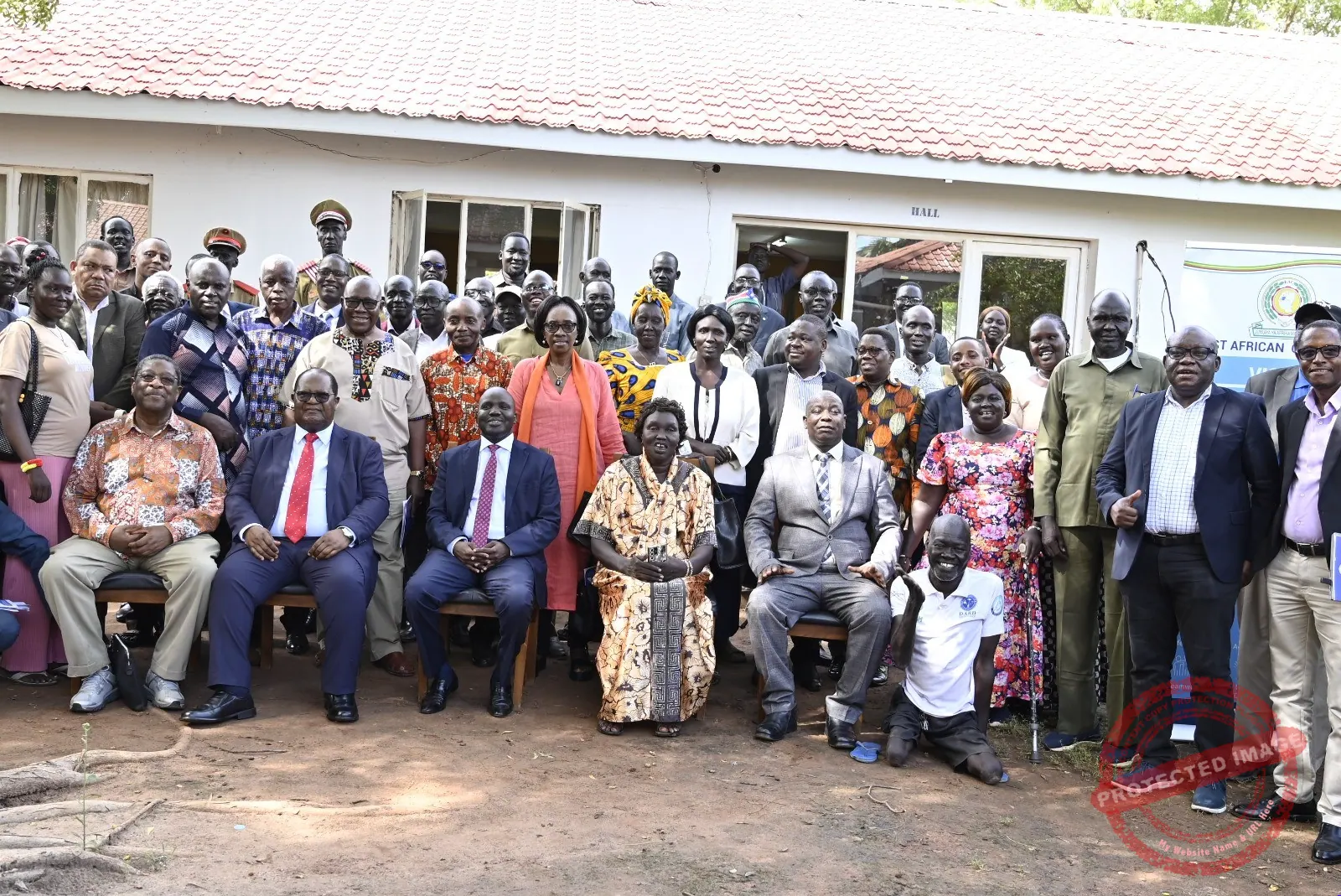
A team of experts from the East African Community has held a one-day national consultation in Rumbek on the proposed EAC Political Confederation. The consultation brought together stakeholders from Lakes State, including government officials, women’s groups, civil society organizations, people living with disabilities, academics, youth and church representatives. The goal was to gather public views to help shape the constitution of the proposed political confederation. Discussions focused on governance, decision-making, cooperation, authority, funding, security, infrastructure, education and health.
Andrea Aguer Ariik, Deputy Secretary General of the East African Community, led the delegation to South Sudan to gather views on structuring the proposed confederation. He explained that the views collected will be presented to the bloc’s heads of state summit for consideration in drafting the constitution. Ariik emphasized that the confederation model would allow member states to retain sovereignty while cooperating in specific areas. The EAC aims for deeper regional integration through political integration via a confederation.
The consultation process is part of a broader effort to gather input from all EAC member states. South Sudan is the fifth country to undergo this process, following Burundi, Kenya, Uganda and Rwanda. Once all member states have been consulted, the findings will be submitted to the EAC Summit of Heads of State for consideration. This process aims to ensure that citizens and stakeholders have a say in the proposed confederation’s constitution.
Women’s representatives at the consultation called for equal representation and non-discrimination under the proposed confederation. Akol James Malala, speaking on their behalf, emphasized the importance of equality and non-discrimination. The women’s group advocated for a principle of equal representation, where all people, regardless of nationality, are treated equally.
Civil society organizations also contributed to the discussion, prioritizing peace and security in the proposed confederation. Daniel Laat Kon, CEPO Coordinator in Lakes State, stressed the need for conflict prevention along the borders. The civil society’s input highlights the importance of addressing security concerns in the region.
The East African Community currently comprises eight partner states, including South Sudan, Uganda, Kenya, Tanzania, Burundi, Rwanda, Somalia and the Democratic Republic of Congo. The EAC is pursuing deeper regional integration, with a proposed political confederation as a key aspect. The consultation process allows citizens and stakeholders to contribute their views before the proposed confederation constitution is finalized.
The proposed confederation model would enable member states to retain their sovereignty and national governments while agreeing to transfer responsibility for specific areas of cooperation to a union-level government. This approach aims to balance national autonomy with regional cooperation. The EAC’s efforts to engage citizens and stakeholders in the consultation process demonstrate its commitment to inclusive decision-making.
Key points
- The EAC holds national consultations to gather public views on the proposed political confederation.
- The proposed confederation aims to balance national autonomy with regional cooperation.
- The consultation process will inform the drafting of the proposed confederation’s constitution.