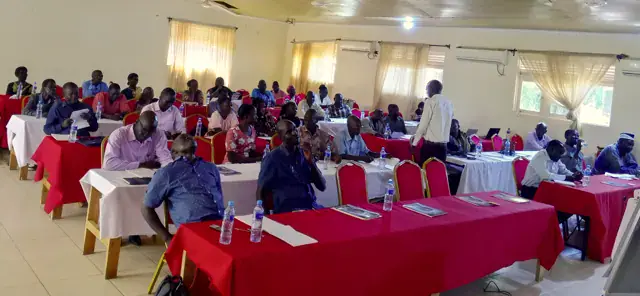
Stakeholders in South Sudan's Eastern Equatoria State have begun a two-day public consultation on a draft Anti-Gender-Based Violence (GBV) Bill. The consultation, organized by Itwak Women Empowerment Organization (IWEO) in partnership with Norwegian Church Aid (NCA), the Women-Led Network, and the State Ministry of Gender, Child and Social Welfare, aims to strengthen legal protection for survivors and establish mechanisms to address perpetrators. The proposed legislation seeks to prevent gender-based violence, protect survivors, and establish a stronger legal framework for holding perpetrators accountable.
Speaking at the opening of the consultation, Ochan Dominic, a representative of IWEO, emphasized the importance of public participation in the development of the bill. He said the process began earlier with support from the Women-Led Network but was delayed before partners revived it. Dominic noted that gender-based violence was not limited to physical assault, saying it could manifest through verbal abuse and other forms of mistreatment in families, schools, hospitals, workplaces, and other institutions.
Idwa Dominica Vitale, Director General in the State Ministry of Gender and Social Welfare, called on participants to openly discuss harmful cultural practices and gender stereotypes that have contributed to the normalization of violence in communities. She described the proposed GBV Bill as an important legal framework that should guide conduct in families, workplaces, and communities. Idwa emphasized the need for Eastern Equatoria to adapt the proposed legislation to its local realities, taking into consideration the state's diverse cultural practices and traditions.
The consultation aims to provide an opportunity for communities to move beyond discussing gender-based violence as a social problem and contribute to establishing a stronger legal framework for prevention, protection, and accountability in Eastern Equatoria State. Joshua Atem, NCA's GBV officer, called for improved communication during the consultation, particularly through translation between English and Arabic, to ensure that all participants understood the discussions and could contribute meaningfully.
The two-day consultation comes amid continuing efforts by women-led organizations and government institutions to strengthen the response to gender-based violence and improve protection mechanisms for vulnerable groups. Once consultations are completed, stakeholders are expected to incorporate relevant recommendations into the draft legislation before it proceeds through the remaining processes towards consideration by the state legislature.
Women's groups, government officials, and humanitarian partners have called for stronger community participation in the development of the Eastern Equatoria State Anti-Gender-Based Violence Bill. They warned that harmful cultural practices and deeply rooted gender stereotypes continue to expose women and girls to abuse. The bill's development is a critical step towards addressing the issue of gender-based violence in the state.
The consultation is expected to conclude on Friday, with stakeholders having examined and contributed to the provisions of the proposed legislation. The bill's consideration by the state legislature is pending, but the consultation process is an essential step towards securing public ownership of the proposed legislation and ensuring that it reflects the needs and concerns of the local community.
Key points
- The proposed GBV Bill aims to prevent gender-based violence, protect survivors, and establish a stronger legal framework for holding perpetrators accountable.
- Stakeholders are calling for stronger community participation in the development of the bill to ensure that it reflects local realities and addresses the root causes of gender-based violence.
- The consultation process is an important opportunity for communities to contribute to the development of the bill and ensure that it is effective in addressing the issue of gender-based violence in Eastern Equatoria State.