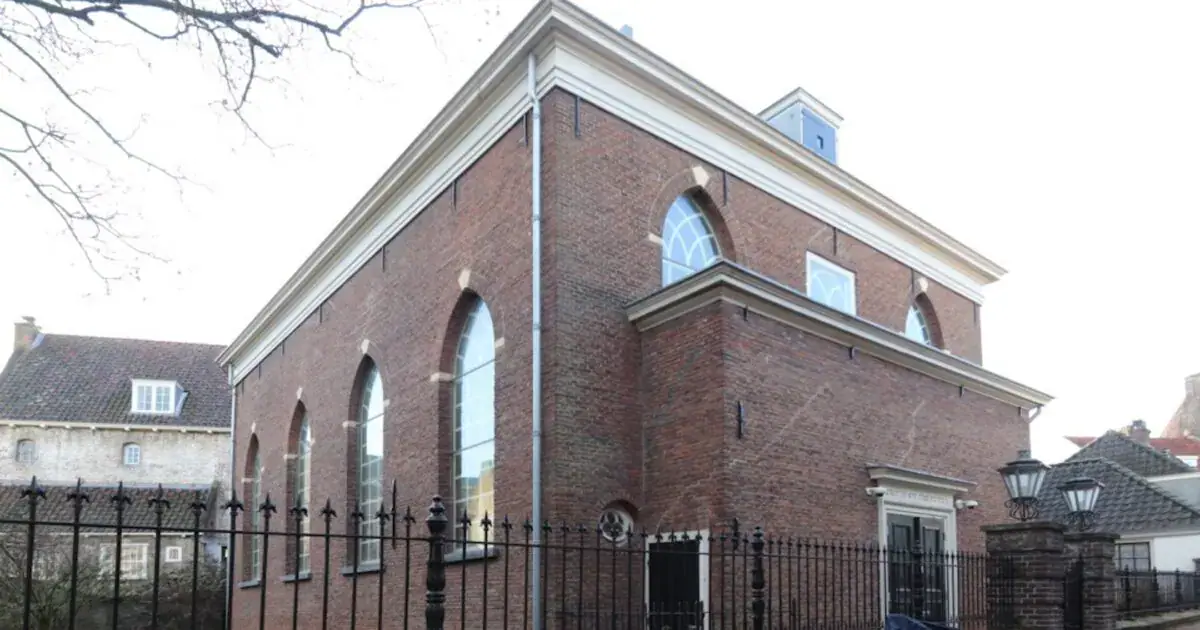
The Amersfoort Synagogue in the Netherlands, established in 1727, is the oldest Ashkenazi synagogue in Western Europe still in use today. To commemorate its 300th anniversary, a museum exhibition was planned but has been canceled due to concerns over potential confrontations by pro-Palestinian activists. The exhibition's cancellation has sparked debate and concern within the Jewish community.
The museum's director, Paul Baltus, stated that the cancellation was due to "pressure" and cited the changed social climate and tensions surrounding the Israeli-Palestinian conflict. He expressed concerns about the potential reactions of volunteers and the difficulty of managing the tension surrounding the exhibition. The museum had started planning the exhibition five years ago.
Jewish community leaders in the Netherlands have expressed shock and disappointment at the museum's decision, calling on city officials to ensure the exhibition goes ahead as planned. The city's mayor, Lucas Bolsius, has pledged to work with the museum and other stakeholders to find a solution. He acknowledged that the cancellation had caused "considerable pain" within the Jewish community.
The controversy has highlighted concerns about anti-Israel sentiment and its impact on Jewish cultural events in the Netherlands. Jewish leaders argue that the Israeli-Palestinian conflict should not overshadow the history and cultural significance of Jewish communities in the country. They emphasize that Jewish events and exhibitions should not be canceled or compromised due to security concerns.
Emile Schrijver, director-general of Amsterdam's Jewish Cultural Quarter, criticized the museum's decision, stating that it was made without consulting the Jewish community or relevant organizations. He rejected the notion that security concerns made the exhibition unmanageable, citing the experience of Jewish institutions in Amsterdam that frequently host events despite pro-Palestinian demonstrations.
Hans Weijel, vice-chairperson of the Centraal Joods Overleg, welcomed the mayor's intervention and emphasized that the Jewish community has played a significant role in Amersfoort's civic life since the mid-1600s. He accused the museum director of being "a coward" and argued that the cancellation is an example of antisemitism.
The museum's decision has sparked a broader debate about the intersection of culture, politics, and identity in the Netherlands. The outcome of the situation remains uncertain, but Jewish leaders hope that the exhibition will ultimately proceed, highlighting the importance of preserving Jewish cultural heritage and promoting understanding and tolerance.
Key points
- The cancellation of the exhibit has sparked concerns about anti-Israel cancel culture targeting Jews in the diaspora.
- Jewish leaders argue that the Israeli-Palestinian conflict should not overshadow the history and cultural significance of Jewish communities in the Netherlands.
- The controversy has highlighted the challenges faced by Jewish cultural institutions in navigating complex issues and ensuring the preservation of Jewish heritage.