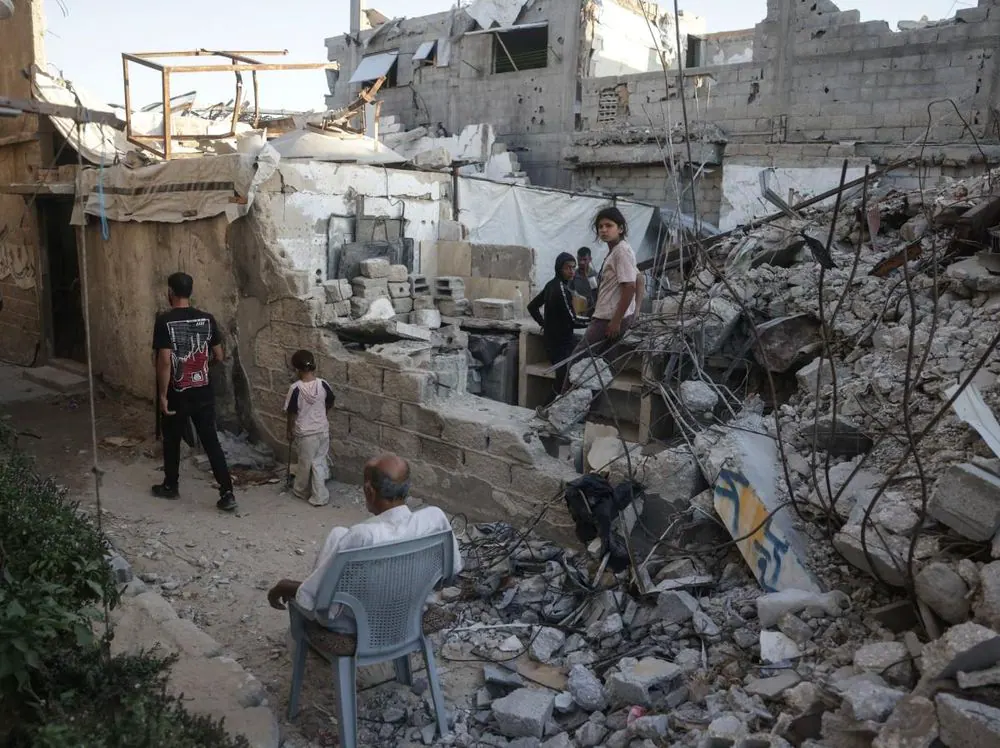
The United Nations General Assembly recently marked 25 years since the adoption of the Durban Declaration and Programme of Action, a key plan for combating racism. However, the Palestinian territory of Gaza is currently in its fourth year of what UN investigators have described as genocide. This situation began after a Hamas attack in Israel on October 7, 2023, which led to Israel's full-scale war on Gaza, significantly damaging much of the territory.
The Durban Declaration, adopted in 2001 in South Africa, was a historic document that recognized slavery and the transatlantic slave trade as crimes against humanity. It also acknowledged the plight of the Palestinian people under foreign occupation and their right to self-determination and an independent state. However, the declaration was divisive, with the United States and Israel walking out of the conference, accusing it of singling out Israel.
The Gaza Strip, a 365 square kilometer coastal territory in Palestine, has been under Israeli blockade since 2007. By October 2023, it was home to over 2.1 million people, mostly refugees or descendants of refugees who were displaced in the 1948 Nakba. Since October 2023, nearly 74,000 Palestinians have been killed by Israel, with a UN commission of inquiry, chaired by South African jurist Navi Pillay, concluding that Israel had committed genocide.
South Africa has taken a significant step by filing a genocide case against Israel at the International Court of Justice in December 2023. The outcome of this case will take years to decide. Meanwhile, there is a growing trend of people willing to speak out against Israel's actions in Gaza, including American rapper Macklemore, who faced backlash for wearing a keffiyeh and performing a song in support of Palestine.
The reaction to speaking out against Israel's actions can be severe, with some individuals facing punishment, including Israeli filmmakers who have made films critical of Israel's actions in Gaza. The film "NAZA," which explores the AI-driven systems used to choose targets in Gaza, won a Special Jury Prize at the Venice Film Festival, but its directors faced threats from the Israeli Culture Minister.
The issue is not limited to Israel, as South Africa also faces challenges in speaking out against racism. Zionist lawfare has been used to silence activists, with some facing strategic lawsuits against public participation. In 2025, South African artist Gabrielle Goliath was chosen to represent the country at the Venice Biennale, but her work was altered after criticism from the Culture Minister, who objected to its mention of a Palestinian poet killed in an Israeli airstrike.
The situation in Gaza and the reaction to it highlight the challenges of speaking out against racism and oppression. The Durban Declaration's promise to fight racism is being tested, and it remains to be seen whether the international community will uphold its commitments.
Key points
- The Durban Declaration's 25th anniversary coincides with Gaza's fourth year of alleged genocide.
- South Africa has filed a genocide case against Israel at the International Court of Justice.
- Speaking out against Israel's actions in Gaza can have severe consequences, including punishment and backlash.