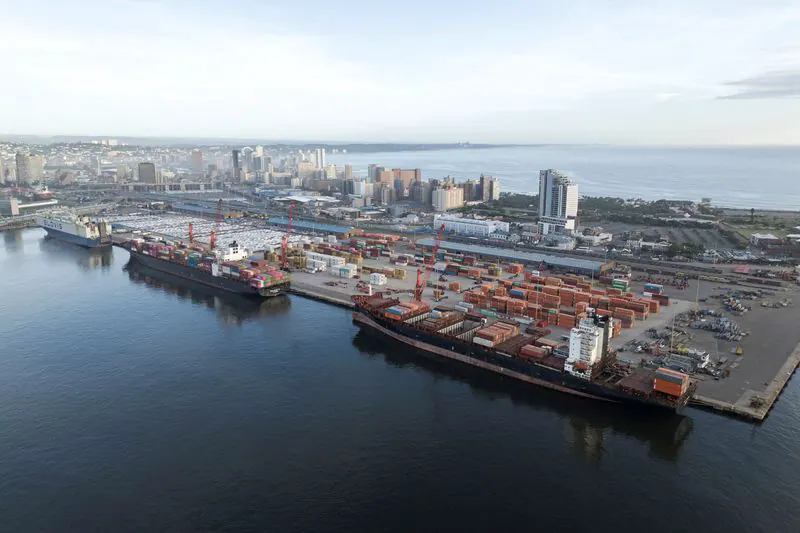
A recent switch to a new operating system at Durban harbour, South Africa's busiest container port, has resulted in significant delays, sparking doubts about the effectiveness of Transnet's partnership with the private sector. The harbour, which is a major gateway into Africa and the rest of the world, has been experiencing a crisis, with cargo handling volumes significantly lower than usual. According to data put together by the Southern African Association of Freight Forwarders (Saaff), between August 14 and September 10, the volume of cargo handled by the terminal was about 30% lower than the average for the previous four months.
The delays began when Durban Gateway Terminal (DGT), one of the harbour's major terminals, moved to a new operating system called Navis N4 in mid-August. The process was expected to be simple, but it resulted in cargo coming to a standstill, with ripples felt across the harbour. Saaff described the disruption as "one of the most serious periods of operational constraint at Pier 2 in recent years". This is not exactly an endorsement for the new partnership between Transnet and Philippines-based International Container Terminal Services Inc (ICTSI), which was meant to enhance terminal productivity and increase throughput.
The impact of the delays is significant, with estimates suggesting that almost all containers going through Durban harbour go through Durban Gateway Terminal, which handles more than 60% of the total number of containers handled at all South African ports. Shipping volumes have recovered somewhat since the initial bottleneck, but a Saaff report noted that the vessel backlog remains substantial and volatile. In the week to September 13, volumes picked up by about 35% to 4,742 twenty-foot equivalent units a day, which is roughly 85% of the target.
Despite the recovery, underlying landside throughput remains below pre-crisis levels, with gate activity and rail evacuation averaging lower than usual. Durban Gateway Terminal attributed the continued delays to equipment availability constraints, warning that a full return to normal fluidity would take some additional time. This has caused frustration among transporters, logistics firms, and companies with time-sensitive cargo that has not been unpacked or has been re-routed to other ports.
The crisis has raised questions about the effectiveness of Transnet's partnership with ICTSI, which was meant to unlock efficiencies through leveraging private sector expertise. Transnet has described its KZN Eastern Ports Master Plan as a flagship project, pointing directly to port and rail reforms as top of the agenda for government. However, the current crisis has highlighted long-running concerns about the lack of refurbishment for port equipment and the reliance on trucks over rail, which exacerbates congestion issues.
To address the crisis, Durban Gateway Terminal has introduced measures such as dedicated helplines, working with Transnet Freight Rail to get more goods out by train, and introducing a group import code collection process. However, these measures have not been without challenges, with some companies reporting that their bookings have been cancelled despite being made in advance. This has raised concerns about the reliability of the system and the need for more effective communication and planning.
The crisis has also highlighted the need for a more comprehensive approach to addressing the challenges facing Durban harbour, including inland capacity constraints and rail limitations. Expanding port infrastructure without addressing these bottlenecks risks shifting congestion rather than solving it. As the government reviews the situation, it remains to be seen how Transnet's partnership with ICTSI will be affected and what steps will be taken to prevent similar crises in the future.
Key points
- Delays at Durban harbour have resulted in significant losses, with cargo handling volumes down 30% in the period between August 14 and September 10.
- The crisis has raised questions about the effectiveness of Transnet's partnership with ICTSI and the need for more effective communication and planning.
- The government is reviewing the situation, with a focus on addressing inland capacity constraints and rail limitations to prevent similar crises in the future.