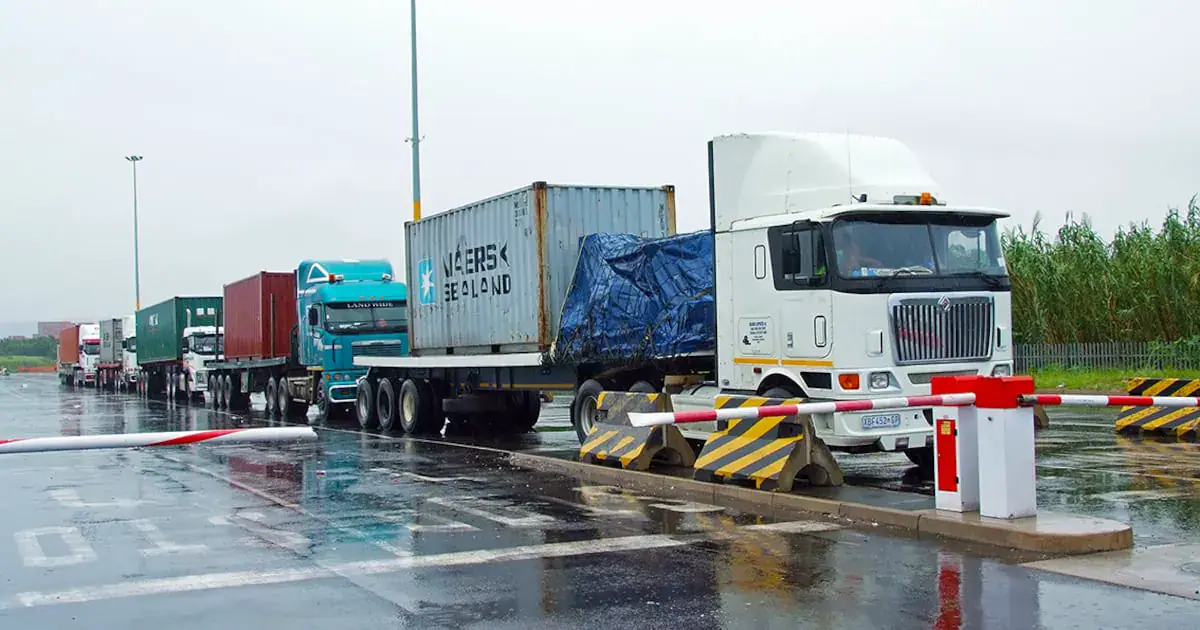
The backlog at Transnet's Durban Gateway Terminal is expected to persist into January, causing further delays in the delivery of critical medicines and festive season consignments. The congestion has left businesses counting the cost of delays in getting crucial imports and exports processed. According to Transnet group COO Solly Letsoalo, even once the backlog is cleared, it will take up to three years for the terminal to be fully functional due to new equipment and refurbishment.
The build-up at the terminal has raised concerns about the effectiveness of opening the door for private sector participation in South Africa's port system. Several business groups, including the Citrus Growers' Association of Southern Africa, have cited the problems at the Port of Durban as hurting their members. The association recently reported that logistics backlogs had resulted in missed market supply windows, contributing to a worse-than-anticipated 2026 export season.
Pepkor has warned that operational problems at South African ports and delayed stock deliveries could undermine trade in the coming months, including festive season sales. While the retail giant has fast-tracked the delivery of priority stock, it said persistent port bottlenecks and supply chain delays were likely to remain a headwind in the near term. The problems at the Port of Durban were partly related to serious delays at ports of origin, particularly in China, as well as shipping difficulties in Pakistan and India.
ICTSI started managing the terminal in January under a 25-year concession, in which it has a 49% stake while Transnet retains 51% ownership. However, the Gateway Terminal has been grappling with a pile-up of vessels since August, when a new operating system glitched. The terminal handles 65% of South Africa's container volumes with a combined capacity of 3.6-million 20-foot equivalent units (TEU) a year.
Transnet has made progress in clearing urgent shipments, with 18 of 41 medicine shipments identified by the health department as requiring urgent processing successfully cleared and delivered. Seven more shipments are expected to arrive in South Africa by next Wednesday. According to Letsoalo, there are no ships carrying urgently required pharmaceutical products stuck or waiting to be handled or berthed in the port system.
The terminal is currently sitting on a backlog of roughly 10 or 11 vessels a day, which are not able to berth as soon as they arrive. Letsoalo expects it to take about two months to clear the additional backlog created by the retail sector. He added that things have improved since August, but it won't take them out of the backlog in December, and they expect a drop in the backlog in January.
Longer term, it will take up to three years for DGT to get up to full speed as ICTSI brings in new equipment, including new ship-to-shore cranes, and reconcretes the terminal surface to allow for the use of rubber-tyred gantry (RTG) cranes. The ongoing challenges at DGT have reinforced the importance of "getting South Africa's port reform agenda right," according to the Southern African Association of Freight Forwarders and Business Unity SA.
Key points
- The Durban Gateway Terminal is expected to take up to three years to be fully functional after new equipment and refurbishment.
- The backlog at the terminal has caused delays in the delivery of critical medicines and festive season consignments.
- The problems at the Port of Durban have raised concerns about the effectiveness of private sector participation in South Africa's port system.
Reporting sources
- # 1 Durban port backlog to last into January, Transnet says · The Sunday Times