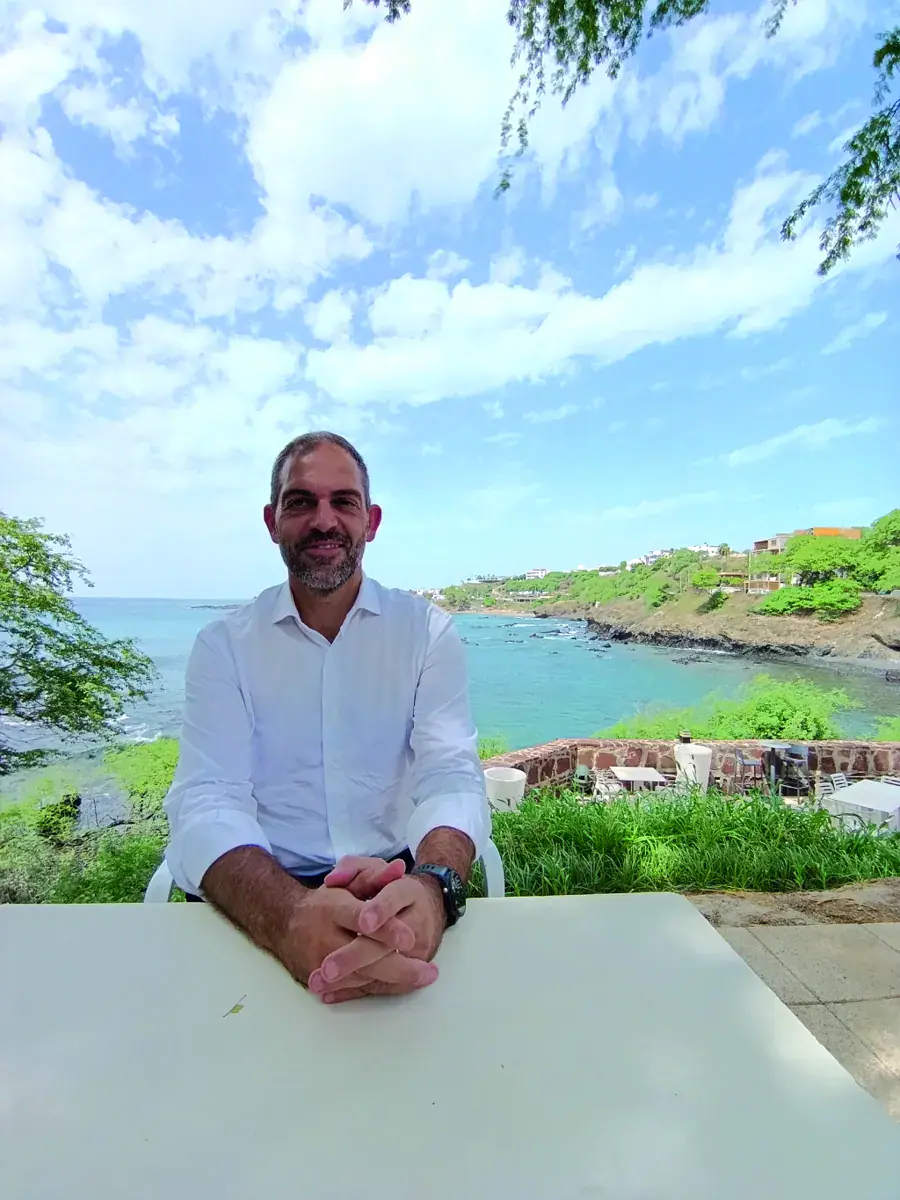
Duarte Cordeiro, former Portuguese Minister of Environment and Climate Action, advocates for Cabo Verde to accelerate investments in renewable energy, water security, and coastal protection. In an interview with Expresso das Ilhas, Cordeiro highlighted the potential of converting debt into climate investments, a model initiated between Portugal and Cabo Verde. This approach can be expanded to other CPLP countries, offering opportunities in blue carbon, green jobs, and clean energy industries.
Cabo Verde, a small island developing state, faces challenges such as water scarcity, high import dependence, and exposure to extreme climate events. Cordeiro emphasizes three key challenges: coastal erosion, access to potable water, and energy. Investing in renewable energy can reduce dependence on fossil fuels and exposure to international market fluctuations. Portugal and Cabo Verde have converted €12 million in debt into climate investments, with plans to increase this amount to €42 million.
The conversion of debt into climate investments can help Cabo Verde achieve its sustainability goals while reducing its dependence on fossil fuels. Cordeiro notes that this approach can also provide opportunities for green jobs and new industries associated with clean energy. The Portuguese government has created a platform for voluntary carbon markets, including a methodology for blue carbon. This cooperation between Portugal and Cabo Verde can be extended to other areas, such as soil regeneration and reforestation.
Small island developing states like Cabo Verde are disproportionately affected by climate change, despite being low emitters. Cordeiro stresses that the international community must address this inequality through financial commitments. The operationalization of the Loss and Damage Fund is crucial, and Portugal has been advocating for its implementation. The debt-to-climate investment model can serve as an example for other countries, particularly in the CPLP.
The tourism sector is a significant contributor to Cabo Verde's economy, and Cordeiro emphasizes the need to make it more sustainable. This can be achieved through decarbonization plans and projects that link tourism to sustainability. Additionally, Cabo Verde can explore opportunities for economic diversification and industrialization, leveraging its strategic location to attract integrated investments in logistics, industry, and energy.
Cordeiro identifies potential sectors for Cabo Verde's economic diversification, including green hydrogen, ammonia, and fertilizers. These industries rely on two primary resources: water and sunlight. By ensuring the availability of these resources at competitive prices, Cabo Verde can attract investments and participate in new value chains. The global economy will need to reduce its dependence on fossil fuels, and Cabo Verde can play a role in this transition.
The debt-to-climate investment model has the potential to be replicated in other countries, and Cordeiro encourages Portugal to continue supporting Cabo Verde's access to multilateral mechanisms, such as the Green Climate Fund and the World Bank. By working together, countries can transform the problem of debt into an opportunity for sustainable development and climate resilience.
Key points
- Portugal and Cabo Verde have converted €12 million in debt into climate investments, with plans to increase this amount to €42 million.