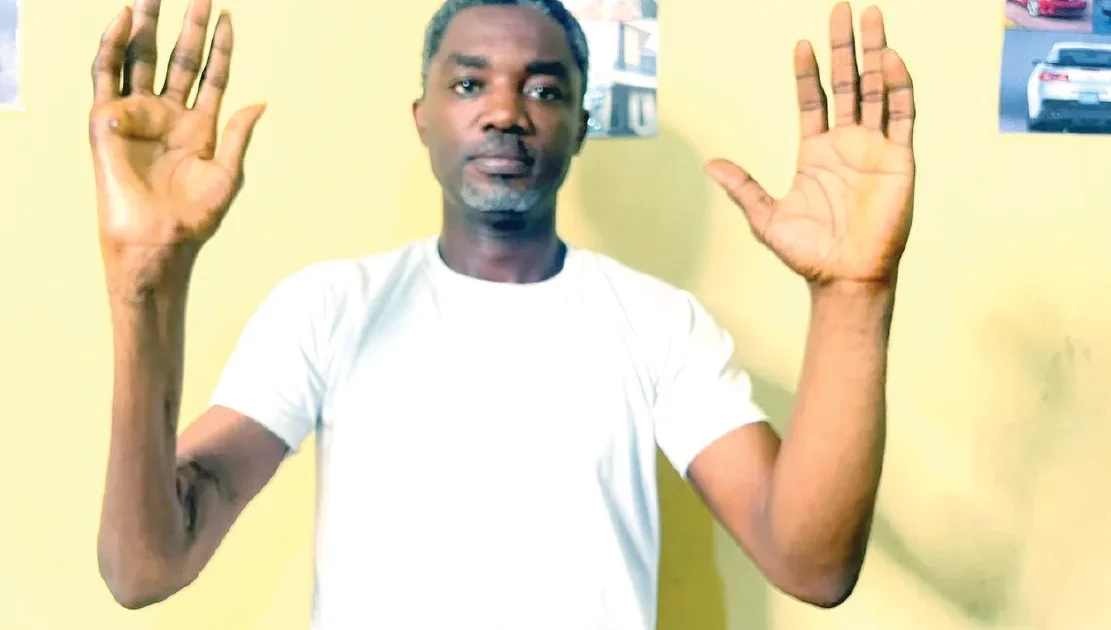
Emmanuel Tomori, a 47-year-old videographer from Ogun State, has shared his ordeal of being shot by a drunken policeman at a checkpoint in Lagos on September 30, 2011. The incident occurred when Tomori, then 32 years old, was driving home from work with a friend on the eve of Nigeria's Independence Day. As they approached the police blockade around 10:30 pm, an officer stopped them and asked for identification.
According to Tomori, the officer seemed intoxicated and started shouting, leading to a series of gunshots being fired. One of the bullets pierced the boot of Tomori's car and shattered his right hand. His friend quickly took cover, and Tomori, still trying to process what was happening, asked the officer for help. However, the police officers at the scene quickly disappeared, leaving Tomori and his friend to seek assistance.
Tomori and his friend rushed to the nearby Dopemu Police Station, where they reported the incident. However, instead of receiving immediate help, Tomori was questioned about his identity and whether he was an armed robber. As he tried to put pressure on his wound, he blacked out due to blood loss. His friend later revealed that he had been left for dead, but was revived after being slapped and doused with water.
Tomori was subsequently rushed to the Lagos State University Teaching Hospital, where he spent a month undergoing treatment. Despite efforts to save his hand, the damage was too severe, and he had to undergo two operations. The incident had a profound impact on Tomori's career as a video editor and motion graphics expert, which was on an upward trajectory at the time.
Prior to the incident, Tomori was working with Wale Adenuga Productions, the producers of popular Nigerian TV shows such as Super Story and Papa Ajasco. He was managing the brand called Nnenna and Friends and was aspiring to become a video director in Nollywood. However, due to his disability, Tomori was no longer able to pursue his career goals and was stigmatized.
The shooting incident has had long-lasting effects on Tomori's life, both emotionally and physically. He has had to adapt to working remotely and using his left hand for tasks that require computer use. Tomori has been seeking justice and compensation for the incident, including efforts to enforce a court judgment against the police, but has faced challenges.
Fourteen years after the incident, Tomori is still grappling with the psychological trauma of being shot by a drunken policeman. He described the experience as fearful and traumatic, which has left him exhausted and struggling to cope. The incident serves as a reminder of the need for accountability and responsible policing in Nigeria.
Key points
- The incident had a profound impact on Tomori's career and livelihood.
- Tomori has been seeking justice and compensation for the incident.
- The shooting incident has had long-lasting effects on Tomori's life, both emotionally and physically.