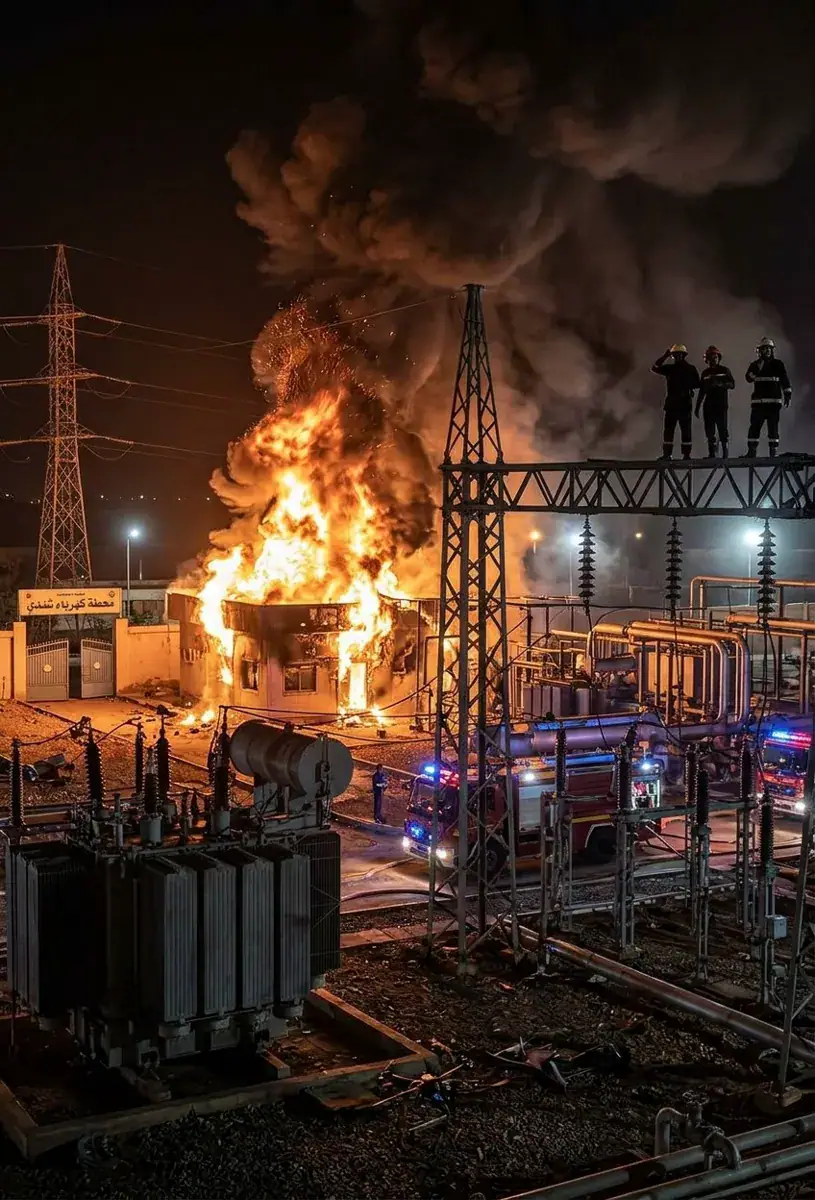
The city of Shendi in Sudan's River Nile state recently witnessed the presence of unidentified drones, believed to be affiliated with the Rapid Support Forces (RSF). This development coincides with a series of escalating attacks on power infrastructure across various Sudanese states. Reports indicate that Shendi's power station was targeted, although details regarding the extent of the damage and potential casualties remain scarce.
This incident in Shendi follows a string of drone attacks on power generation and transmission stations, as well as energy facilities, in multiple states. These attacks have resulted in widespread power outages and significant damage to key components of the national grid. On October 20, the Tindalti power station in White Nile state was hit by a drone, causing a fire and rendering the station inoperable.
The Sudanese Electricity Company reported that on October 26, five transmission stations in different areas were targeted, including locations in Sennar, Gezira, and White Nile states. The company stated that these attacks caused substantial damage to the stations and led to power outages in several states. Furthermore, on October 27, the Merkhiyat transmission station in Omdurman was attacked by a drone, resulting in technical damage and power disruptions in large parts of the capital, Khartoum.
The attacks have continued, with the main power station in the city of Managil, Gezira state, being targeted on October 28, leading to its shutdown and a city-wide power outage. Additionally, fuel storage facilities and a pipeline near the city of Haya in the Red Sea state were attacked. On October 29, the Am Debaker thermal power station in Rabak, White Nile state, was hit by drones, affecting power supplies in White Nile and North Kordofan states.
These attacks have raised concerns about the potential consequences of targeting critical infrastructure, particularly as it relates to essential services such as hospitals, water treatment plants, and industrial facilities. International reports have highlighted warnings from the United Nations that attacks on civilian infrastructure, including power facilities, threaten the basic needs of millions of people.
The Sudanese authorities have accused the RSF of being behind several recent attacks, although the group has not issued a statement on the allegations. The extent of the damage and potential human losses in Shendi remain unclear, with the situation being closely monitored for further developments regarding the power station and the impact on the city's energy supply.
The ongoing attacks on Sudan's infrastructure have significant implications for the country's stability and the well-being of its citizens. As the situation continues to unfold, it is essential to verify the facts and assess the full extent of the damage to provide an accurate understanding of the crisis.
Key points
- Sudan's power infrastructure has been targeted in a series of drone attacks.
- The attacks have resulted in widespread power outages and significant damage to the national grid.
- The Sudanese authorities have accused the Rapid Support Forces of being behind the attacks.