The Democratic Republic of Congo has withdrawn its candidate, Juliana Amato Lumumba, from the race for the position of Secretary-General of the Organisation Internationale de la Francophonie (OIF). This decision was announced on November 14, during the 48th session of the Francophonie Ministerial Conference in Phnom Penh. According to the Congolese government, the withdrawal is due to tensions that arose during the designation process and a desire to favor the emergence of a consensus.
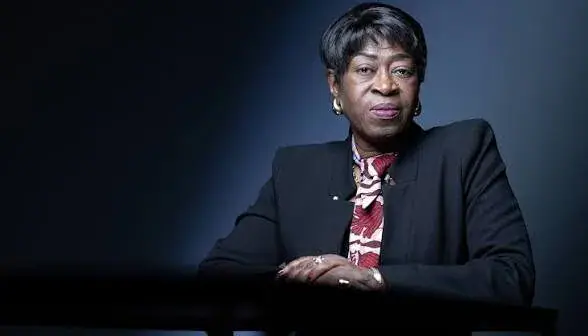
Juliana Lumumba, born in 1955, is the daughter of Patrice Emery Lumumba, the first Prime Minister of the DRC. She has a DEA in political science and sociology from the École des hautes études en sciences sociales (EHESS) in Paris. Her professional background includes working as a journalist, covering African news and human rights issues for several publications from Paris. She also served as Vice-Minister and Minister of Culture under President Laurent-Désiré Kabila from 1997 to 2001.
Lumumba's candidacy was built around the concept of "Francophonie des peuples" (Francophony of the people), which aimed to place citizens, particularly youth, at the center of the organization's actions. Her program, "Neuf projets neufs pour une Francophonie neuve" (Nine new projects for a new Francophony), focused on intercultural exchanges, economic integration, and the promotion of partner languages. This vision has been highlighted in various forums, including an audition by ministers in Paris in June.
The Congolese government's decision to withdraw Lumumba's candidacy was influenced by the geopolitical context, including the ongoing conflict in the east of the DRC. Kinshasa had criticized the OIF's relative silence on this issue, while Kigali supported the re-election of the incumbent Secretary-General, Louise Mushikiwabo. The DRC had even suggested it might reconsider its participation in the organization if Mushikiwabo were re-elected.
The withdrawal of Lumumba's candidacy has surprised some, but the Congolese government justifies it as a gesture to avoid diplomatic confrontation and promote a consensual outcome. The government has since announced its support for Dacian Cioloș, the Romanian candidate, and invited other candidates to show similar flexibility. The OIF's designation process prioritizes consensus, with a simple majority vote only considered in the absence of an agreement.
Despite the withdrawal, Lumumba's campaign has left a lasting impact. The DRC has reaffirmed its importance as a hub for the French-speaking world, with President Emmanuel Macron recently noting the shift in the center of gravity of Francophony towards the Congo Basin. The debate on the future and vocation of the Francophony has also taken on a new dimension, with a focus on the needs and concerns of citizens.
The legacy of Lumumba's candidacy will also be marked by her personal commitment to the role and her ability to navigate the diplomatic landscape with dignity. As a woman and a representative of the DRC, she carried a symbolic responsibility, particularly given her family name. Her campaign has ensured that the perspectives of the people, youth, women, and national languages are now part of the Francophony debate.
Key points
- The DRC's withdrawal of Juliana Lumumba's candidacy aims to promote a consensual outcome in the OIF Secretary-General election.
- Lumumba's campaign focused on the "Francophonie des peuples," emphasizing citizen-centered actions and development.
- The withdrawal has not diminished the impact of Lumumba's campaign on the Francophony debate, particularly regarding the organization's future and its role in promoting development and cultural exchange.