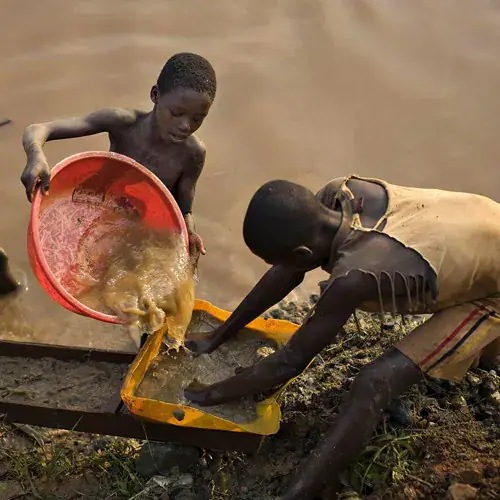
The Democratic Republic of Congo is struggling to address a severe food crisis, with 28 million people facing hunger across the country. Despite having vast arable land, enormous water resources, and favourable climatic conditions, the DRC continues to depend heavily on food imports and struggles to establish reliable domestic supply chains. The country's agricultural potential is being undermined by longstanding structural problems, including poor rural roads, inadequate storage facilities, and limited investment in farmers.
Congolese officials, including Minister of State for Social Affairs and Humanitarian Action Eve Bazaiba, have pointed to Rwanda as the cause of the country's food crisis. They claim that the war in the east is to blame for hunger spreading across every province of the country. However, critics argue that this rhetoric is a convenient scapegoat for the government's own failures. The country's agricultural sector has been neglected for decades, and the government has failed to implement effective policies to address food insecurity.
The DRC's public spending priorities have also come under scrutiny, with reports of questionable financial arrangements and hundreds of millions of dollars in payments involving companies active in the security and defence sectors. These payments have raised concerns about corruption and misplaced priorities, particularly when compared to the country's struggling health and agriculture sectors. The government has failed to provide adequate explanations for its actions, and Congolese citizens are demanding answers.
The pattern of blaming Rwanda for the country's problems has become a reflex for Congolese ministers, who invoke the neighbouring country whenever confronted with criticism or difficult questions. However, many Congolese are realizing that Rwanda cannot be held responsible for the country's corruption, poor infrastructure, weak institutions, and agricultural mismanagement. The government needs to take responsibility for its own failures and address the root causes of the food crisis.
The humanitarian crisis in the DRC requires urgent attention, and the government needs to develop an emergency logistics plan to stabilize supply chains and prevent shortages. If barges supplying Kinshasa and other provinces with food and essential commodities are blocked or disrupted, the government needs to have alternative arrangements in place. However, no real answers have been provided, and the government's inaction is exacerbating the crisis.
The blame-shifting rhetoric is not only ineffective but also damaging, as it distracts from the real issues that need to be addressed. The Congolese government needs to focus on implementing policies that support the agricultural sector, invest in farmers, and improve rural infrastructure. It also needs to tackle corruption and ensure that public spending priorities are aligned with the country's development needs.
Ultimately, the DRC's food crisis requires leadership, accountability, and action from the government. The country's citizens are demanding answers, food, and leadership capable of addressing their daily struggles. If Kinshasa is serious about tackling this life-and-death matter, it should stop blaming Rwanda and start putting food on the Congolese people's tables. The government needs to take responsibility for its own failures and work towards finding solutions to the country's protracted humanitarian crisis.
Key points
- The DRC's food crisis is exacerbated by government inaction and corruption.
- Congolese officials have blamed Rwanda for the country's food crisis, but critics say this is a scapegoat for the government's own failures.
- The government needs to develop an emergency logistics plan to stabilize supply chains and prevent shortages.