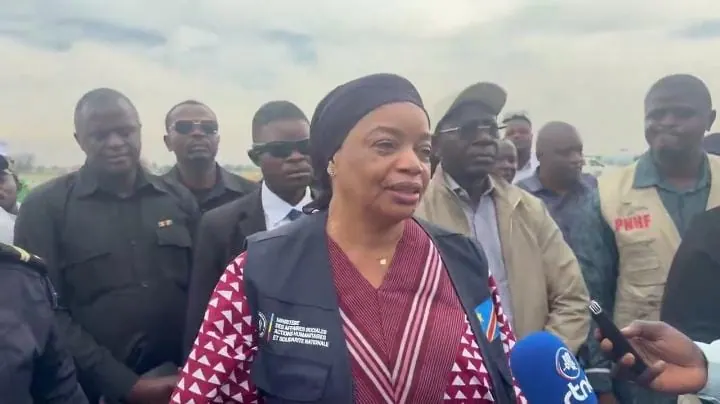
Democratic Republic of Congo's Minister of State for Social Affairs, Humanitarian Actions, and National Solidarity, Ève Bazaiba, has emphasized the urgent need to evacuate internally displaced persons (IDPs) from overcrowded camps in Ituri province. Her remarks came during a humanitarian mission to Bunia, the provincial capital of Ituri, in the northeastern part of the country. The minister's visit aimed to assess the situation and provide support to those affected by the ongoing Ebola outbreak.
The minister highlighted that the overcrowding in IDP camps poses a significant risk of Ebola transmission. She stressed that decongesting these camps is crucial to breaking the chain of transmission. According to her, this approach is part of a broader vision for sustainable humanitarian intervention, which seeks to enable displaced populations to gradually return to their places of origin. The minister's comments followed her arrival in Bunia from Beni, a city in the neighboring province of North Kivu.
Ève Bazaiba underscored that maintaining populations in emergency humanitarian conditions is not a viable long-term solution. She emphasized the need to provide displaced individuals with the opportunity to return home. To facilitate this, the minister announced the launch of an administrative process to identify IDPs willing to voluntarily return to their areas of origin. This process will be conditional on the availability of secure conditions.
The minister outlined that the return of displaced persons will be subject to two primary conditions: voluntariness and security. She further indicated that infrastructure rehabilitation will follow the return of IDPs. As part of her official mission in Ituri, the minister also plans to provide urgent humanitarian assistance, including food and non-food items, to internally displaced persons.
The Ebola outbreak in the region has prompted a multi-faceted response from the government and humanitarian partners. The situation in Ituri and neighboring provinces remains a concern, with efforts focused on containing the outbreak and mitigating its impact on local communities. The minister's visit and statements reflect the government's commitment to addressing the crisis.
Ève Bazaiba's mission in Ituri includes an assessment of the current situation and the identification of areas where humanitarian support is required. Her visit is part of a broader effort to respond to the crisis in a coordinated and effective manner. The government has called on humanitarian partners to support its efforts to address the Ebola outbreak and provide assistance to affected populations.
The DRC government continues to work with international partners to respond to the Ebola outbreak and address the humanitarian needs of affected populations. The situation in Ituri and other affected areas remains a priority, with efforts focused on containing the outbreak, providing humanitarian assistance, and supporting the return of displaced persons to their areas of origin.
Key points
- The DRC government is working to evacuate IDPs from overcrowded camps in Ituri province to prevent further spread of Ebola.