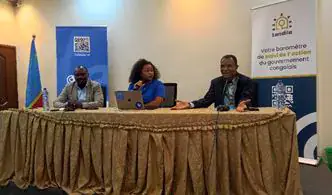
A workshop was held in Kinshasa on November 5, 2026, to discuss improving the legislative framework for protecting whistleblowers in the Democratic Republic of Congo. Organized by Ebuteli, a Congolese research institute, the workshop brought together stakeholders to review parliamentary initiatives and concerns. The event aimed to contribute to the development of effective whistleblower protection laws. Discussions focused on enhancing safeguards for individuals who report wrongdoing. The workshop was attended by National Member of Parliament Aldos Tshitoko and other experts.
National Member of Parliament Aldos Tshitoko highlighted key measures to protect whistleblowers. He mentioned the establishment of a reporting mechanism, as proposed in two bills aimed at ensuring whistleblower protection. Tshitoko emphasized that professional secrecy cannot be used to sanction whistleblowers for reporting wrongdoing. Whistleblowers should have the option to disclose their identity anonymously. This approach aims to encourage reporting of corruption and other malpractices without fear of reprisal. Tshitoko's remarks underscored the importance of creating a safe environment for whistleblowers.
Paulin Kibendelwa, an expert in the fight against corruption, explained the significance of whistleblower protection. He noted that the fight against corruption relies on prevention, detection, and punishment. Whistleblowers play a crucial role in detecting corruption, which often occurs in secrecy. Kibendelwa stressed that effective protection mechanisms are necessary to encourage individuals to provide information about corrupt practices. He called for the harmonization and consolidation of the two bills submitted to the National Assembly in June.
Two bills on whistleblower protection were submitted to the National Assembly on June 5th by National Members of Parliament André Mushongo and Prosper Tunda. An anti-corruption bill is also under discussion. The bills aim to provide a framework for protecting whistleblowers and promoting transparency. Experts believe that effective whistleblower protection laws can help combat corruption in the Democratic Republic of Congo. The workshop provided a platform for stakeholders to review and discuss the proposed legislation.
The workshop enabled participants to gather opinions and considerations regarding the two bills. Tshitoko noted that the event provided valuable insights into the concerns of stakeholders involved. The discussions will inform the development of effective whistleblower protection laws. The Democratic Republic of Congo has taken steps to combat corruption, including the establishment of anti-corruption agencies. However, more needs to be done to create a safe environment for whistleblowers.
Corruption remains a significant challenge in the Democratic Republic of Congo. The country has made efforts to address the issue, including the creation of anti-corruption agencies. However, corruption continues to undermine governance and development. Effective whistleblower protection laws can help address this challenge. By providing a safe mechanism for reporting wrongdoing, the laws can promote transparency and accountability.
The workshop concluded with a call for swift action to finalize the whistleblower protection laws. Experts emphasized the need for the National Assembly to prioritize the bills and ensure their passage into law. The Democratic Republic of Congo needs effective mechanisms to combat corruption and promote good governance. The protection of whistleblowers is a critical component of this effort.
Key points
- The Democratic Republic of Congo is taking steps to improve whistleblower protection laws.
- A workshop in Kinshasa brought together stakeholders to review parliamentary initiatives and concerns.
- Effective whistleblower protection laws can help combat corruption in the Democratic Republic of Congo.