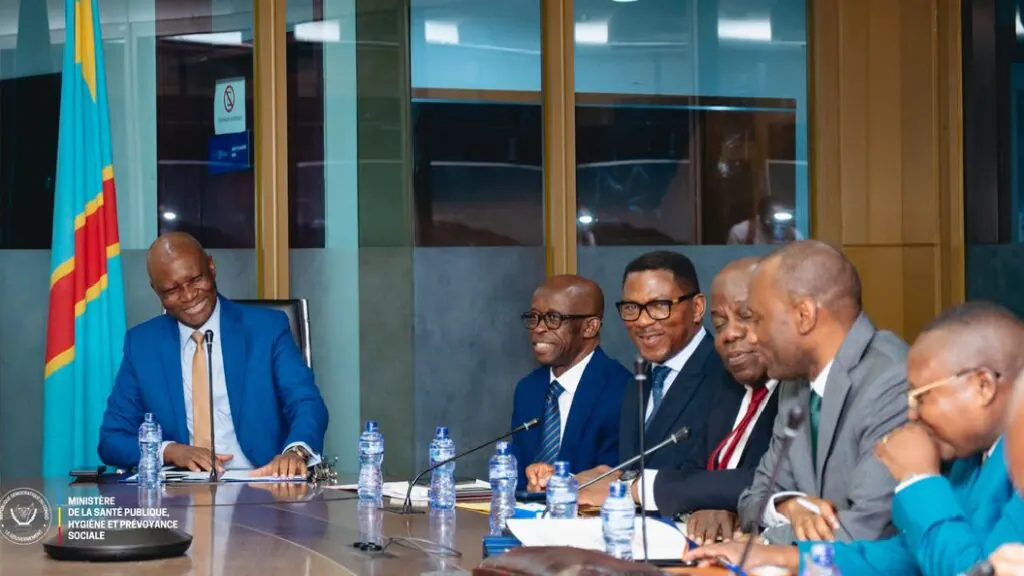
The situation with the Ebola virus in the Democratic Republic of Congo is showing positive progress in the provinces affected by the disease in the east of the country. As of the latest reports, only North Kivu remains under surveillance due to a rising trend. This update came from the weekly strategic coordination meeting led by Health Minister Dr. Samuel Roger Kamba. The meeting was attended by the Director-General of the National Institute of Public Health (INSP), Dieudonné Mwamba, and other partners.
During the meeting, health authorities and partners reviewed the evolution of the epidemic, the preparedness of provinces at risk, and the next steps in the response. According to the Director-General of INSP, Dieudonné Mwamba Kazadi, the overall trend in the affected provinces is downward. However, he noted that certain provinces, particularly North Kivu, are still experiencing an upward trend.
A new 180-day response plan was presented and officially signed by the Health Minister. This plan, developed consensually between the government and its partners, aims to enhance the response to the epidemic. The plan includes the continuity of care and the implementation of free healthcare services in Ituri, contingent upon the availability of essential medicines and inputs.
The authorities are working to make essential medicines available by the end of the month. Once available, free healthcare will be implemented progressively, starting with areas where prerequisites are already met, such as Bunia and Rwampara. The Director-General of INSP emphasized that the implementation of free healthcare services will depend on the availability of medicines and other essential inputs.
The issue of financing response activities was also addressed during the meeting. Out of nearly 80 organizations operating in the field, only about 20 have provided information on their financial commitments, receipts, and disbursed funds. Other partners will be required to communicate their data in the coming week. A new assessment is planned for the next coordination meeting, which may lead to further measures.
The meeting also discussed the preparedness of Kinshasa, considered a high-risk province. The communication plan, already underway through radio and television channels, will be accelerated to enhance the dissemination of prevention messages and information on the evolution of the situation. Authorities also plan to involve religious leaders, churches, and pastors in this awareness campaign.
The strategic coordination meeting around the Health Minister takes place every Wednesday, allowing health authorities and partners to assess the evolution of the epidemic, monitor ongoing actions, and make necessary decisions to continue the response. The government and its partners are working together to strengthen the response to the Ebola epidemic and improve healthcare services in affected areas.
Key points
- The DRC government has developed a new 180-day response plan to combat the Ebola epidemic.
- Free healthcare services will be implemented in Ituri province, starting with areas where prerequisites are already met.
- The government is working to involve religious leaders and communities in the awareness campaign to prevent the spread of the disease.