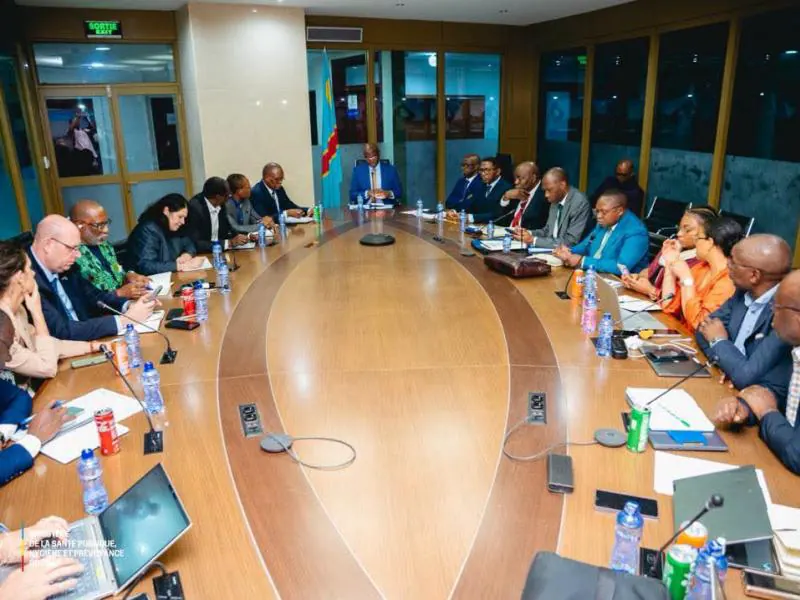
The Democratic Republic of Congo's government has approved a new plan to prepare for and respond to the Ebola outbreak. The plan, launched in September 2026, is a multisectoral "One Health" approach to combat the Bundibungyo strain of the Ebola virus. The plan was signed by the Minister of Public Health, Hygiene, and Social Protection, along with response teams. It will serve as a common framework for prevention and response interventions.
The plan's launch comes as the country reviews the epidemiological situation in affected areas. According to data from the strategic coordination, a downward trend has been reported in affected provinces, except for North Kivu, which continues to record cases. The government, through the Ministry of Health, has announced the gradual introduction of free healthcare in Ituri during the Ebola epidemic. The free healthcare will initially target the city of Bunia and Rwampara.
The introduction of free healthcare in Ituri will be implemented in phases, depending on the availability of human resources, medicines, and necessary devices. Dieudonné Mwamba, Director General of the National Institute of Public Health, stated that partners have committed to providing medicines by the end of the month. This will enable the launch of free healthcare in Ituri, starting with Bunia and Rwampara, and gradually expanding to other areas.
The city of Kinshasa is considered a high-risk zone, and participants have called for a reinforced preparedness plan to limit the spread of the disease. Particular attention will be given to religious leaders and churches to strengthen community engagement and awareness in the response efforts. This move aims to enhance the involvement of local communities in preventing the spread of Ebola.
The new plan aims to address the ongoing Ebola outbreak, which has seen cases reported in several provinces. The government has been working to contain the outbreak, with support from international partners. The World Health Organization and other organizations have been providing assistance to the DRC government in its response efforts.
The gradual introduction of free healthcare in affected areas is expected to improve access to medical care for those affected by the Ebola outbreak. The move is also aimed at reducing the transmission of the disease by encouraging people to seek medical attention early. The government has urged communities to remain vigilant and report any suspected cases of Ebola.
The DRC government has been working to strengthen its response to the Ebola outbreak, with a focus on community engagement, surveillance, and provision of medical care. The new plan is expected to guide the country's response efforts over the next 180 days. The government has called for continued support from international partners to help contain the outbreak.
Key points
- The DRC government has approved a new 180-day plan to prepare for and respond to the Ebola outbreak.
- The plan includes the gradual introduction of free healthcare in affected areas, starting with Ituri.
- The government has called for continued support from international partners to help contain the outbreak.