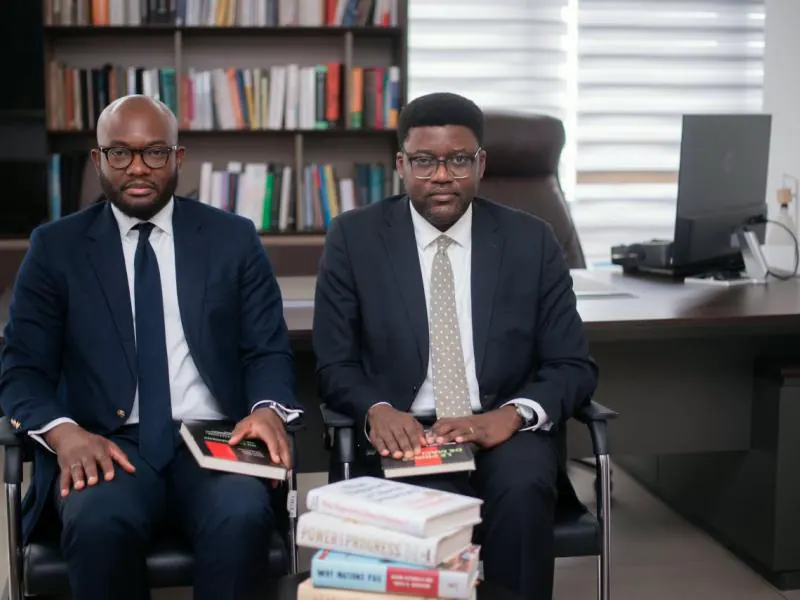
Economists Dandy A. Matata and Jean-Paul K. Tsasa, co-authors of the book "Du changement de la Constitution," argue that the debate on changing, revising, or maintaining the Democratic Republic of Congo's constitution should start with defining the type of state the Congolese people want. They made these remarks during a discussion on X, organized by journalist Stanis Bujakera Tshiamala. Their book, a result of the fourth series of Ateliers Ishango held in Kinshasa in November 2025, questions the current constitutional change debate.
The concept of an "État stratège" (strategic state) is central to their argument. According to Jean-Paul Tsasa, such a state must go beyond its traditional roles of security and authority, and orient resources—human, natural, and institutional—to ensure citizens' dignity through collective choices and structural transformations. This vision is summarized in three words: dignity, prestige, and progress. The authors emphasize that having a state is a prerequisite for discussing a strategic state.
Matata and Tsasa contend that the final decision on constitutional change will be determined by the balance of power, not doctrine. Dandy Matata stated that the constitution is a result of a balance and that discussing it should not be feared. He clarified that the balance of power refers to the ability to build broad coalitions to convince a wide audience that the proposed social contract is compatible with the collective ambition.
The authors warn against imposing a constitution through force, as it risks being contested and defeated by future majorities. They refuse to take a stance on whether they are for or against constitutional change, deeming the current debate "mutilated" and confined to narrow frameworks. Instead, they propose a "third way," focusing on the collective ambition and the type of state desired.
The book also highlights the risk of creating a "predatory or disorganized state" if administrative and control mechanisms are not established. Jean-Paul Tsasa noted that this danger arises when the right questions are not asked and the real debate is not tabled. The authors propose several measures for potential constitutional refoundation, including dissociating political representation from ethnic base and making merit a constitutional principle.
Other proposals include giving a differentiated role to local languages alongside French and involving youth in the decision-making process. The authors also suggest protecting development orientations from changes in government. Their theoretical model warns that clauses like article 220 can only protect if rules are respected in practice.
Ultimately, Matata and Tsasa do not advocate for a new constitution immediately. They believe it is essential to assess whether the current constitutional order allows for building a strategic state. Only if it proves incapable would a change be justified. The authors aim to contribute to a more informed and nuanced discussion on the future of the DRC's constitution.
Key points
- The economists emphasize the need to define the type of state the Congolese people want before deciding on constitutional changes.