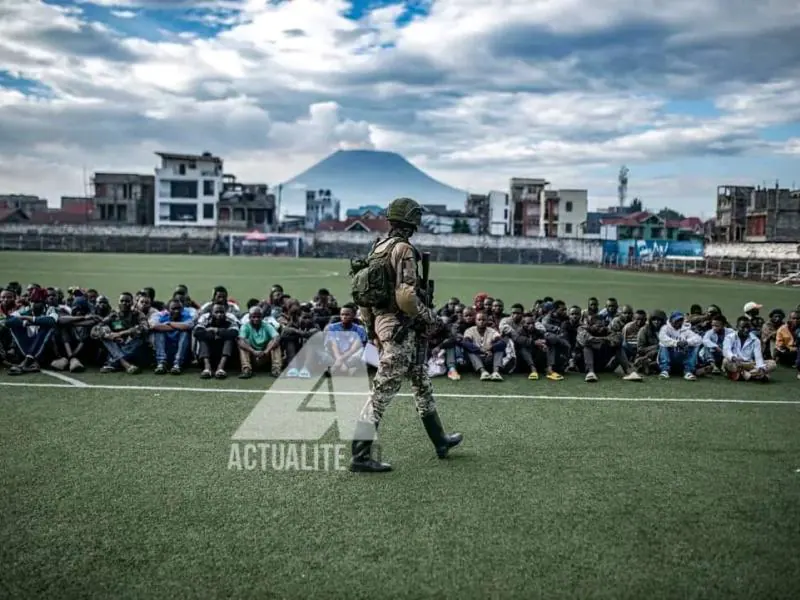
The situation in eastern Democratic Republic of Congo remains concerning, with ongoing hostilities between government forces and the AFC/M23 rebellion, which receives support from Rwanda. According to James Christopher Swan, the UN Special Representative and head of MONUSCO, these clashes have led to a deterioration in the humanitarian situation in North Kivu. The rebel group maintains extensive control over a large part of the province.
The conflict has seen the use of heavy weapons and drones by both sides, contributing to the persistent deterioration of the security situation. Key areas of conflict include Masisi and Walikale, with the rebels holding significant territory. In South Kivu, clashes have occurred in the Highlands of Mwenga, Fizi, and Uvira, particularly around Minembwe, where the FARDC and Wazalendo groups have faced off against AFC/M23.
The increasing use of heavy weapons has resulted in population displacement and disruptions to essential services and humanitarian aid. MONUSCO has been working to support efforts to address the crisis, including collaborating with the Congolese government to evaluate means of supporting a voluntary disarmament and cantonment process for the FDLR.
Diplomatic efforts to resolve the conflict have continued, including processes led by Washington, Doha, and the African Union. In July, the Congolese government announced a process for the voluntary disarmament and cantonment of FDLR forces, which will be implemented over the coming year. MONUSCO has been working closely with the government to support this initiative.
Progress has been made in the Doha process, with discussions resuming between the Congolese government and AFC/M23 in Switzerland in August. These talks resulted in the adoption of a roadmap outlining the next phase of negotiations. Additionally, 15 detainees were released and transferred from the Congolese government to AFC/M23 on August 7.
The deployment of joint verification missions has been a key step towards a permanent ceasefire. MONUSCO has provided logistical, communication, medical, and other support to these missions, which have taken place in Minembwe and Masisi. The missions have helped to build trust and facilitate further negotiations.
Despite these efforts, the situation on the ground remains challenging, with ongoing clashes and humanitarian concerns. The international community continues to call for the parties to honor their commitments and work towards a lasting resolution to the conflict. MONUSCO will likely continue to play a key role in supporting these efforts.
Key points
- The AFC/M23 rebellion maintains extensive control over a large part of North Kivu province.
- Diplomatic efforts, including the Washington and Doha processes, are ongoing to resolve the conflict.
- The humanitarian situation in eastern DRC continues to deteriorate due to ongoing hostilities.