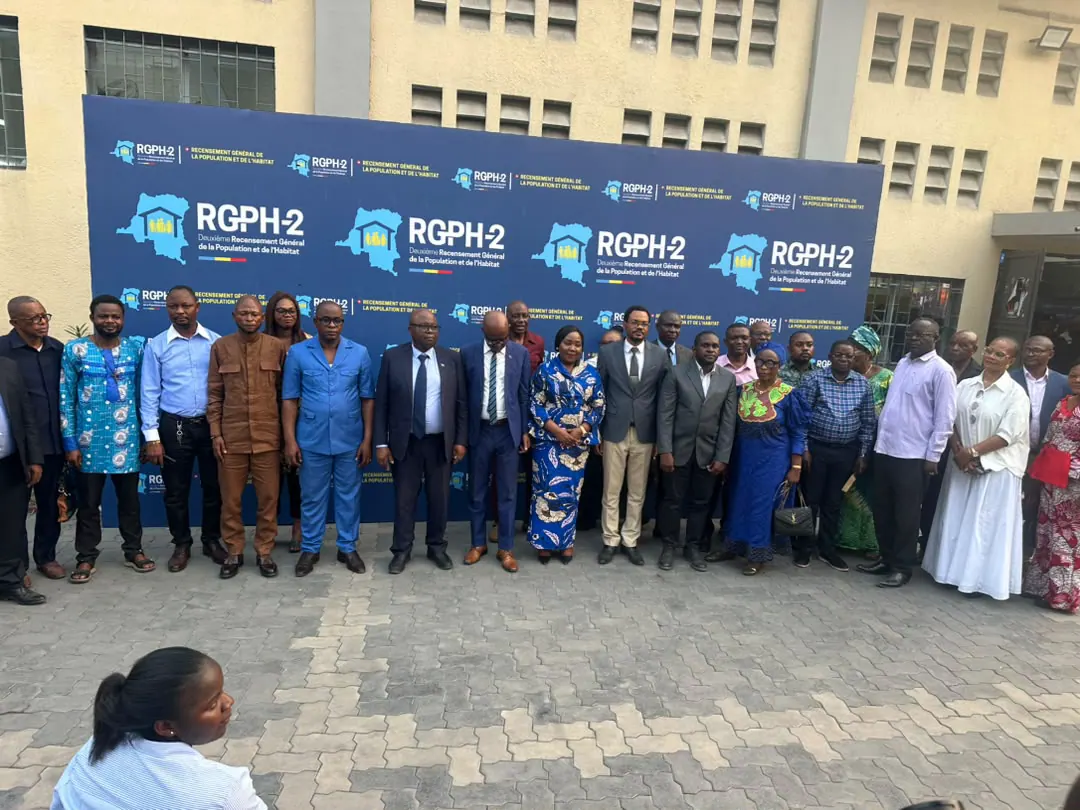
The national coordinator of the Central Bureau of Census (BCR), Henri Marie Kazadi Mutombo, and the general director of the National Institute of Statistics (INS), Elysée Chovu Alima, met with local authorities and security services in Kinshasa on September 24. The meeting, held at the Catholic University of Congo, aimed to sensitize them on their roles in the implementation of the second General Census of Population and Housing (RGPH-2). This is part of the preparatory phase of the RGPH-2, which includes the deployment of the census mapping in Kinshasa.
The meeting comes 42 years after the country's first general census of population and housing. Henri Marie Kazadi Mutombo recalled that the current census data is outdated, emphasizing the need for an updated population snapshot. He outlined the four main phases of the RGPH-2: preliminary, preparatory, general counting, and post-counting. The process is currently in its preparatory phase, which includes census mapping, testing, recruitment, training, and sensitization.
The preparatory phase aims to prepare for the general counting of the population by identifying and delimiting areas to be covered by teams on the ground. This phase is crucial in ensuring an accurate census. Elysée Chovu Alima called on local authorities and security services to accompany the operations, respecting their missions and contributing to the security of agents and equipment.
The general director of the INS emphasized the importance of collaboration between local authorities, security services, and census officials. She invited them to work together to prevent and manage potential challenges in the field. The RGPH-2 aims to provide an accurate and up-to-date snapshot of the population, which will inform development policies and programs.
The census mapping deployment is currently underway in Kinshasa, and will be rolled out to other parts of the country. This process involves identifying and delimiting census zones, and will help to ensure that all areas are covered during the general counting. Local authorities and security services play a critical role in this process.
The BCR and INS are working together to ensure the success of the RGPH-2. The two institutions are responsible for coordinating and implementing the census, respectively. They are working closely with local authorities and security services to ensure that the census is conducted in a secure and efficient manner.
The RGPH-2 is expected to provide valuable data on the population, which will inform development policies and programs. The data will also help to identify areas of need and allocate resources accordingly. The success of the census depends on the collaboration of local authorities, security services, and census officials.
Key points
- The DRC's second General Census of Population and Housing (RGPH-2) is currently in its preparatory phase.
- Local authorities and security services are being sensitized on their roles in the implementation of the RGPH-2.
- The census aims to provide an accurate and up-to-date snapshot of the population, which will inform development policies and programs.