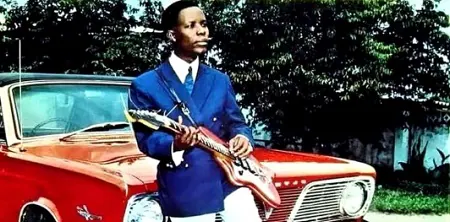
Dr. Nico, a virtuoso of Congolese guitar, left an indelible mark on the country's music scene. His unique playing style, characterized by tierces, glissés, and arpèges, continues to influence generations of musicians. According to Yves Kambala, a music analyst, Dr. Nico's innovative approach to guitar playing has had a lasting impact on Congolese music. "Listen to the sebene of any Kinshasa group today, and you'll hear Nico's influence," Kambala said.
Dr. Nico's influence can be seen in the work of many prominent Congolese guitarists, including Rigo Star, Caien Madoka, and Beniko Popolipo. These musicians have developed a vocabulary musical that is rooted in Dr. Nico's innovations between 1953 and 1970. Despite the introduction of new instruments and technologies in Congolese music, the sebene contemporary continues to draw on Dr. Nico's guitaristic writing.
Dr. Nico's technical and rhythmic innovations revolutionized the place of the guitar in Congolese music. His use of tierces, glissés, and arpèges, as well as his precision rhythm and finger playing, have been particularly influential. The "mi-solo," a passage intermediate between accompaniment and solo, is one of Dr. Nico's most notable innovations.
Dr. Nico's influence extends beyond the borders of Congo. Internationally renowned musicians, such as Alastair Johnston, have recognized his contribution to the development of African music. Johnston has placed Dr. Nico among the greatest guitarists in history.
Dr. Nico's legacy is also reflected in the many musicians who have been inspired by his playing style. Dizzy Mandjeku, a Congolese guitarist, has acknowledged that he sought to emulate Dr. Nico's style at the beginning of his career. This testament to Dr. Nico's enduring influence is a reflection of his status as a reference point in Congolese music.
Born on July 7, 1939, in Mikalayi, Dr. Nico, whose real name was Nicolas Kasanda, passed away on September 22, 1985, in Brussels at the age of 46. His career was marked by his work with the African Jazz, African Fiesta, and African Fiesta Sukisa, and his role in the evolution of modern Congolese guitar.
Today, 41 years after his death, Dr. Nico remains a celebrated figure in Congolese music. His legacy continues to inspire new generations of musicians, and his influence can be heard in the music of many contemporary artists. As a testament to his enduring impact, Dr. Nico's guitar playing remains a reference point in Congolese music.
Key points
- Dr. Nico's innovative guitar playing style continues to influence Congolese music 41 years after his death.
- His technical and rhythmic innovations revolutionized the place of the guitar in Congolese music.
- Dr. Nico's legacy extends beyond the borders of Congo, with internationally renowned musicians recognizing his contribution to African music.