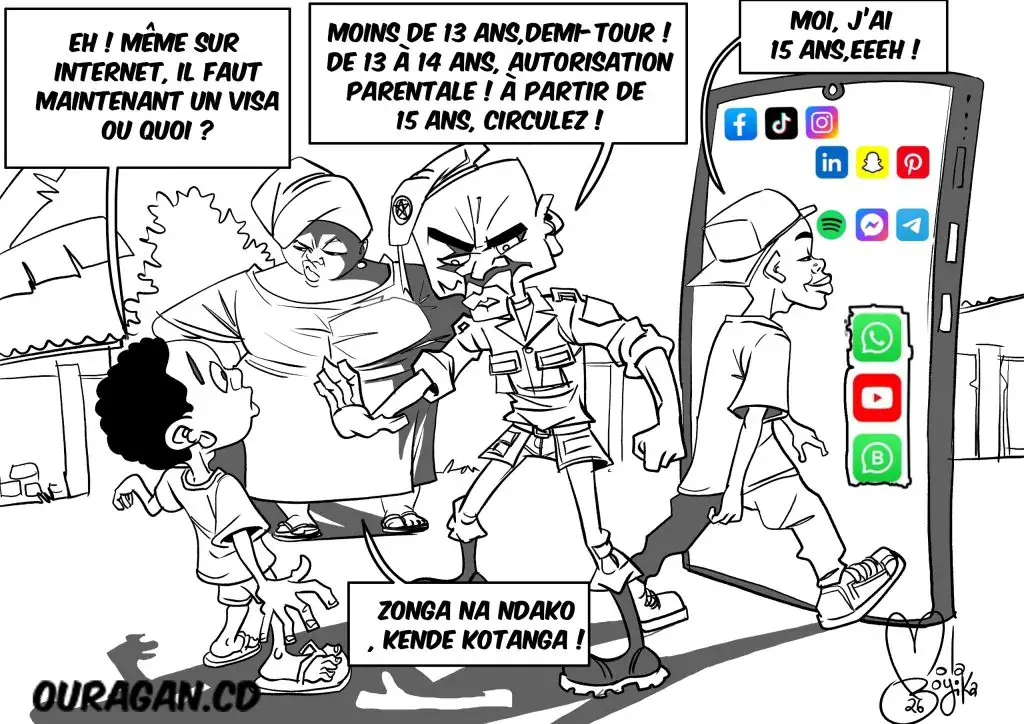
The Democratic Republic of Congo's Senate has unanimously adopted a bill that restricts minors' access to social media, with rules varying by age. The bill, which amends the country's digital code, aims to protect minors from online harm. It establishes three categories of users: those under 13, who are barred from opening accounts and accessing interactive social features; those between 13 and 15, who require parental consent and supervision; and those 15 and older, who can access social media autonomously with certain safeguards.
The new regulations also increase responsibilities for digital service providers. They must integrate protection mechanisms into their products, secure young users' accounts, and adapt their age verification and advertising systems. Platforms must prevent minors from being exposed to harmful content, strengthen reporting mechanisms, and ensure proper handling of content that may infringe on minors' rights. Additionally, data collection for age verification must adhere to necessity and proportionality principles.
For users between 13 and 15 years old, parental consent will not be a mere formality. Digital service providers must verify parental consent, making it a prerequisite for accessing interactive social features. This new obligation implies that platforms will need to adapt to comply with the regulations. A 12-month deadline has been set for implementation, including designating a legal representative, applying protection requirements, and deploying age restrictions and verified accounts.
The bill's adoption has sparked mixed reactions, with some welcoming the measures to protect minors and others expressing concerns about potential overreach. The legislation must still be examined by the National Assembly before it can be promulgated. If passed, it will mark a significant shift in how social media is regulated in the country, with implications for digital service providers and users alike.
The DR Congo is not alone in regulating social media use among minors. Several countries have implemented similar measures to protect young people from online harm. The new regulations reflect a growing concern about the impact of social media on minors' well-being and the need for governments to take action to mitigate these effects.
The restrictions on social media access for minors have significant implications for digital service providers operating in the DR Congo. Companies will need to review their technical systems, terms of use, and control mechanisms to comply with the new regulations. Failure to comply may result in sanctions under the country's digital code.
The implementation of age restrictions on social media access for minors in the DR Congo is a step towards creating a safer online environment for young people. However, the effectiveness of these measures will depend on their enforcement and the ability of digital service providers to adapt to the new regulations.
Key points
- The DR Congo's Senate has adopted a bill imposing age restrictions on minors' access to social media, with rules varying by age.
- The regulations aim to protect minors from online harm and increase responsibilities for digital service providers.
- The bill must still be examined by the National Assembly before it can be promulgated.