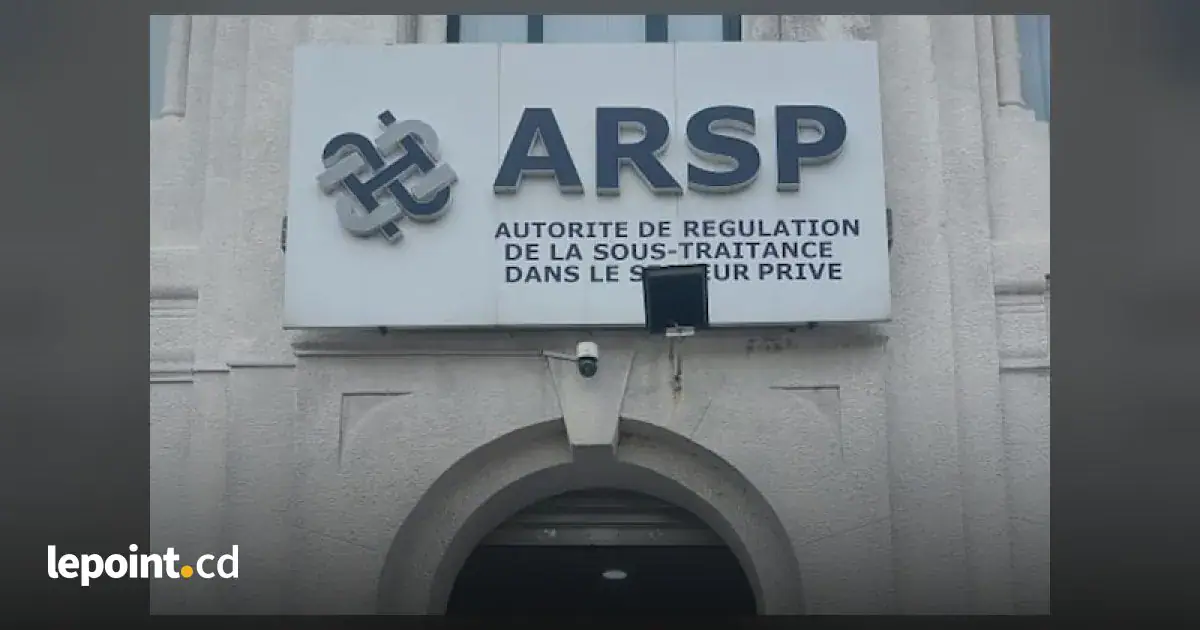
The Democratic Republic of Congo's Autorité de régulation de la sous-traitance dans le secteur privé (ARSP) has announced new regulations for subcontracting in the private sector. From December 1, 2026, companies will need to provide four key documents to obtain or maintain their subcontractor registration certificate. This move aims to increase transparency and accountability in the subcontracting industry. The new requirements are based on Article 9 bis of Law No. 26/017 of June 30, 2026.
The four required documents include a sworn declaration identifying the company's real owners, also known as beneficial owners. Companies must also provide a certified copy of any shareholder agreement or management pact. The third document is proof of actual dividend payments to Congolese shareholders, in proportion to their shares. These shareholders must hold at least 51% of the company's capital. Dividend payments must be made through bank accounts in the DRC.
The new regulations also require a valid tax clearance certificate as the fourth document. Companies that fail to provide these documents risk having their registration application rejected or their certificate withdrawn. The law considers it a practice of nominee lending to pay excessive management fees, royalties, or interest to foreign entities to empty the company of its profits before distribution.
The regulations not only focus on shareholder identity but also on the destination of funds. The law aims to prevent companies from evading taxes or hiding profits. The ARSP has already taken action, ordering three mining companies, including COMMUS, to terminate contracts with 45 subcontractors deemed ineligible in November.
The new regulations also affect main contractors, who must make subcontracting payments via transfers to a subcontractor's account in a DRC-licensed institution. Main contractors who fail to declare their subcontractors and annual turnover with each subcontractor to the ARSP will face fines of 300 to 600 million Congolese francs, doubling in case of repeat offenses.
Existing authorizations issued under the old law remain valid until their expiration date. The ARSP's goal is to increase transparency and accountability in the subcontracting sector. By requiring proof of dividend payments to Congolese shareholders, the government aims to ensure that profits are distributed fairly and that companies operate in a more transparent and responsible manner.
The new regulations are expected to have a significant impact on the subcontracting industry in the DRC. Companies will need to adapt to the new requirements and ensure that they comply with the regulations to avoid penalties. The ARSP will likely play a crucial role in monitoring and enforcing the new regulations, and it remains to be seen how effective the measures will be in achieving their intended goals.
Key points
- Companies must provide proof of dividend payments to Congolese shareholders holding at least 51% of the capital.