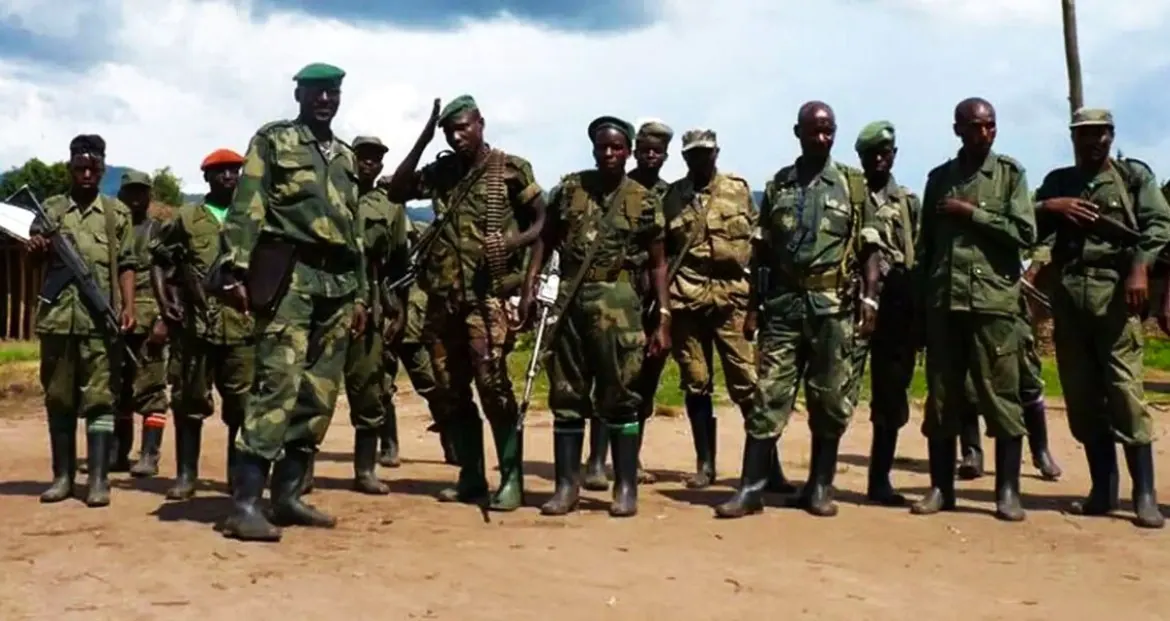
The Democratic Republic of Congo has requested help from the United Nations in disarming the Democratic Forces for the Liberation of Rwanda (FDLR), a militia founded by genocidaires. On July 28, 2026, the Kinshasa government announced a protocol on disarmament, demobilization, and cantonment. President Felix Tshisekedi has written to the UN chief asking for backing, which may be considered in the UN Organization Stabilization Mission in the Democratic Republic of the Congo (MONUSCO) mandate renewal.
The FDLR has been a point of contention between DR Congo and Rwanda for years. Rwanda's foreign minister has dismissed the protocol as a delaying tactic, while Kinshasa accuses Kigali of obstructing the FDLR neutralization protocol. The two countries have differing views on the mechanism for neutralization and verification. DR Congo and Rwanda have had a complex relationship, with Rwanda previously citing the FDLR as a reason for its military involvement in eastern DR Congo.
Rwanda's UN envoy, Ambassador Martin Ngoga, told the Security Council on September 29 that Kigali had taken steps to lift its "defensive measures" in eastern DR Congo. However, this does not necessarily mean Rwanda considers the FDLR threat resolved. Previously, President Paul Kagame stated that Rwanda would always remain involved in DR Congo until the FDLR problem is resolved.
The situation in eastern DR Congo remains fluid, with fighting and territorial shifts reported in areas including Masisi, Walikale, and Kalehe. The Allied Forces for the Congo (AFC/M23) has established parallel political and military structures and has a significant territorial presence, which could enable it to assume more of the defensive role previously attributed to Rwanda.
Western partners in the International Contact Group have urged Kinshasa to adopt a precise timetable and treat MONUSCO as a "key partner" in disarming the FDLR. The emerging logic appears to be that Kigali may believe AFC/M23 is capable of keeping FDLR fighters sufficiently far from Rwanda's borders, allowing Rwanda to reduce its direct military posture without abandoning its core security objective.
The sustainability of the situation remains a crucial question, with recent reports of FARDC retaking positions from AFC/M23. If Kigali can maintain its security objectives without visible defensive measures presence in eastern DR Congo, Rwanda could strengthen its case for easing international pressure and sanctions targeting Rwanda, its military leadership, and related entities.
The FDLR disarmament process is a critical aspect of the relationship between DR Congo and Rwanda. The UN's role in supporting the disarmament process will be crucial in determining the success of the protocol. The situation remains complex, with multiple stakeholders and interests involved, and the outcome is uncertain.
Key points
- DR Congo seeks UN assistance in disarming the Democratic Forces for the Liberation of Rwanda.
- Rwanda's foreign minister has dismissed the protocol as a delaying tactic.
- The situation in eastern DR Congo remains fluid, with fighting and territorial shifts reported.