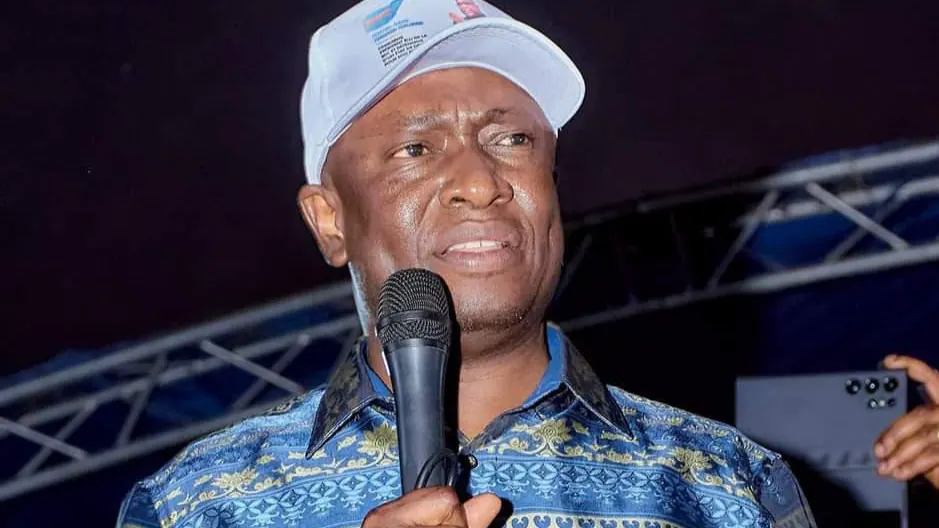
The UDPS party, led by Augustin Kabuya, organized a mass march across the Democratic Republic of Congo on September 22, in support of the national dialogue and referendum. The marches took place in several cities, including Kinshasa, where participants gathered at the 11th rue Limete and marched to the Kasa-Vubu cultural center. Kabuya described the opposition's recent march, led by the Coalition for the Defense of Article 64 (C64), as a failure and dismissed their concerns about the referendum and national dialogue.
The C64, a coalition of opposition groups and civil society organizations, had held a march on September 15, despite government attempts to ban it. The march was met with a heavy police presence, and over 100 people were arrested, according to the coalition. The opposition has accused the government of using excessive force and of trying to silence their voices. Kabuya, however, has downplayed the significance of the C64, describing them as a "handful of individuals" who are not representative of the Congolese people.
The current tensions are centered around three main issues: the proposed law on the organization of a referendum, the debate on constitutional reform, and the national dialogue announced by President Felix Tshisekedi. The opposition is concerned that the referendum and constitutional reform could be used to extend Tshisekedi's term in office beyond the two mandates provided for in the constitution. The government, however, insists that the reforms are necessary to strengthen the state and modernize institutions.
The UDPS has consulted with its allies and other stakeholders in preparation for the September 22 march. According to Jean Paul Mubiayi, adviser to Kabuya, the party has discussed the logistics of the march, including the route and the message to be delivered to supporters. The party has also invited participants from various sectors, including civil society, to join the march.
The opposition has criticized the government's decision to authorize the UDPS march while banning theirs. They argue that this is an example of the government's double standards and its attempts to suppress opposition voices. The C64 has also expressed concerns about the inclusivity of the national dialogue, arguing that it should include all stakeholders, including armed groups.
The government, however, has defended its position, arguing that the national dialogue should not include groups that have used violence as a means of political expression. The government has also emphasized the importance of the referendum and national dialogue in addressing the country's challenges and promoting national reconciliation.
The mass march by the UDPS has significant implications for the country's politics, as it seeks to demonstrate the party's influence and legitimacy. If the march is seen as a success, it could strengthen the government's position and undermine the opposition's claims. However, if the turnout is low, it could be seen as a blow to the government's credibility and legitimacy.
Key points
- The UDPS party's mass march is seen as an attempt to demonstrate its influence and legitimacy amid criticism from the opposition.
- The opposition has accused the government of using excessive force and of trying to silence their voices.
- The current tensions are centered around the proposed law on the organization of a referendum, the debate on constitutional reform, and the national dialogue announced by President Felix Tshisekedi.