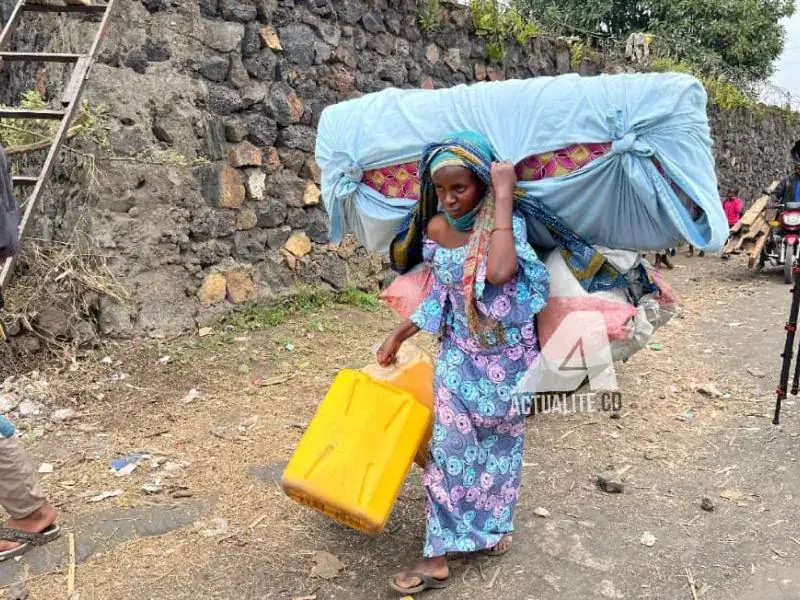
The humanitarian situation for populations returned to Mbinga Nord groupement in Kalehe territory, South Kivu, is concerning. These households face a severe food shortage, rising prices of essential goods, and a lack of financial means to meet their needs. According to Benjamin Mungazi, president of the New Civil Society in Kalehe territory, a measure of beans is now selling for 5,000 FC, up from 3,500 FC previously.
The situation particularly affects children, some of whom show signs of malnutrition and hunger-related illnesses. Pregnant women and elderly individuals are also among the most vulnerable. The most affected villages include Muganzo, Kabugizi, Mukwidja, Kanenge, Mulolo, Mweha, Kalangala 1 and 2, Makengere, Kazo, Kiniezire, Karango, Nyabwimba, and Nyamasasa. However, the exact number of households concerned remains unknown due to a lack of census data.
These populations returned from Katasomwa, Shanje, Numbi, Ziralo, Lumbushi, Mianda, and Bushaku, where they had sought refuge after fleeing insecurity in their original villages. Their return was motivated by the deterioration of the security situation in their displacement areas, despite insufficient improvement in their areas of origin.
Benjamin Mungazi is calling on well-meaning individuals, humanitarian organizations, and government partners to intervene quickly with food and non-food item distributions, as well as cash assistance. He also advocates for the identification of each returned household in the affected villages, without discrimination, to ensure equitable assistance to distressed families.
The current prices of staple foods have increased significantly, with a measure of cassava flour rising from 500 to 1,000 FC. This has further exacerbated the food crisis in the region. The situation requires immediate attention and response from humanitarian actors to mitigate the suffering of the affected populations.
The crisis in Mbinga Nord has significant implications for the well-being of the returned populations, particularly the most vulnerable groups. Efforts are needed to address the root causes of the crisis and provide sustainable solutions to the affected households. The humanitarian community is urged to provide urgent support to alleviate the suffering of the populations.
The situation in Mbinga Nord highlights the need for continued support to populations affected by conflict and displacement in the region. The humanitarian response must be coordinated and timely to address the evolving needs of the affected populations. Key stakeholders, including government partners and humanitarian organizations, must work together to provide effective assistance to those in need.
Key points
- DR Congo's Mbinga Nord returnees face a severe food crisis due to shortages, rising prices, and limited financial means.