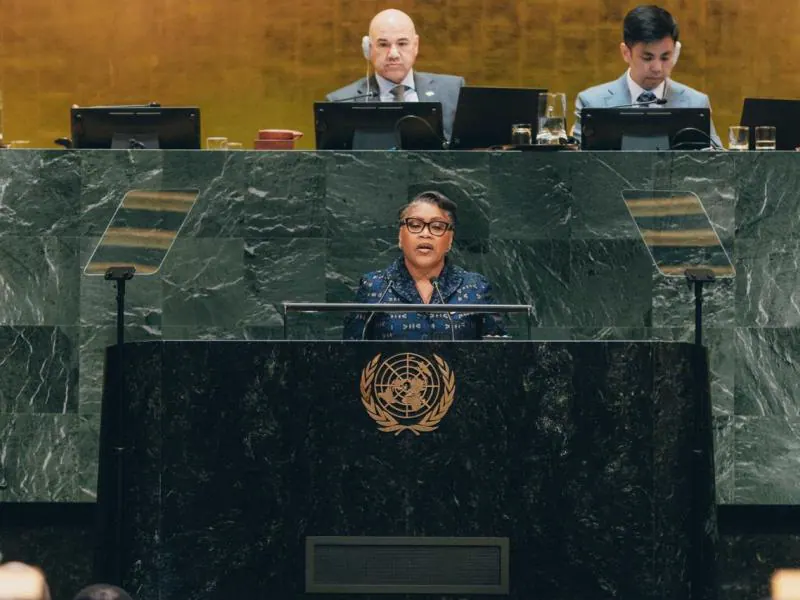
On September 23, Democratic Republic of the Congo Prime Minister Judith Suminwa Tuluka addressed the 81st session of the United Nations General Assembly in New York, representing President Félix Tshisekedi. She discussed measures to modernize the country's mining sector, combat fraud and child labor, and enhance mineral traceability. The Prime Minister emphasized the need for transparent governance in the mining industry, a crucial sector for the country.
Judith Suminwa outlined several reforms aimed at improving the management of the mining sector. These include transparency in contracts, extractive revenues, and beneficial ownership, as well as strengthening the mining cadastre and deploying traceability mechanisms. The government also plans to formalize artisanal mining, regulate traders, organize cooperatives, and secure mining areas. These efforts aim to increase the value created within the country and ensure responsible mining practices.
The issue of child labor in mines received particular attention in the Prime Minister's speech. Judith Suminwa emphasized the moral and national responsibility to combat this phenomenon, announcing enhanced mechanisms to identify, monitor, and support affected children. The government will collaborate with the International Labor Organization (ILO), UNICEF, and other partners to strengthen inspector training, promote child education, and provide economic solutions to families.
Judith Suminwa stressed that the responsibility to address child labor in mines extends beyond the Congolese state to all actors in the mineral supply chain. She proposed a global framework for critical minerals, under the auspices of the United Nations and in partnership with the African Union. This initiative aims to promote just, traceable, and resilient supply chains, involving producing, processing, and consuming countries.
The proposed global framework would be based on the sovereignty of producing states and ensure several key principles. These include mineral traceability, economic actor responsibility, worker and community protection, and a more equitable distribution of value through local processing and technology transfer. The Prime Minister emphasized that this framework would promote responsible and sustainable mining practices.
Judith Suminwa also highlighted the Lobito Corridor as a regional industrialization instrument. The DR Congo welcomes commitments from Angola, Zambia, the United States, the European Union, the African Development Bank, financial institutions, and the private sector to support the corridor's development. The project aims to rehabilitate railway connections, modernize infrastructure, facilitate trade, and stimulate regional commerce.
The DR Congo envisions the Lobito Corridor as a catalyst for regional industrialization, promoting investments and partnerships in raw material processing, infrastructure, and energy. The government seeks to establish transparent, sustainable, and mutually beneficial partnerships with investors to drive economic growth and improve future generations' well-being.
Key points
- DR Congo Prime Minister Judith Suminwa proposes a global framework for transparent mining governance and responsible supply chains at the UN General Assembly.