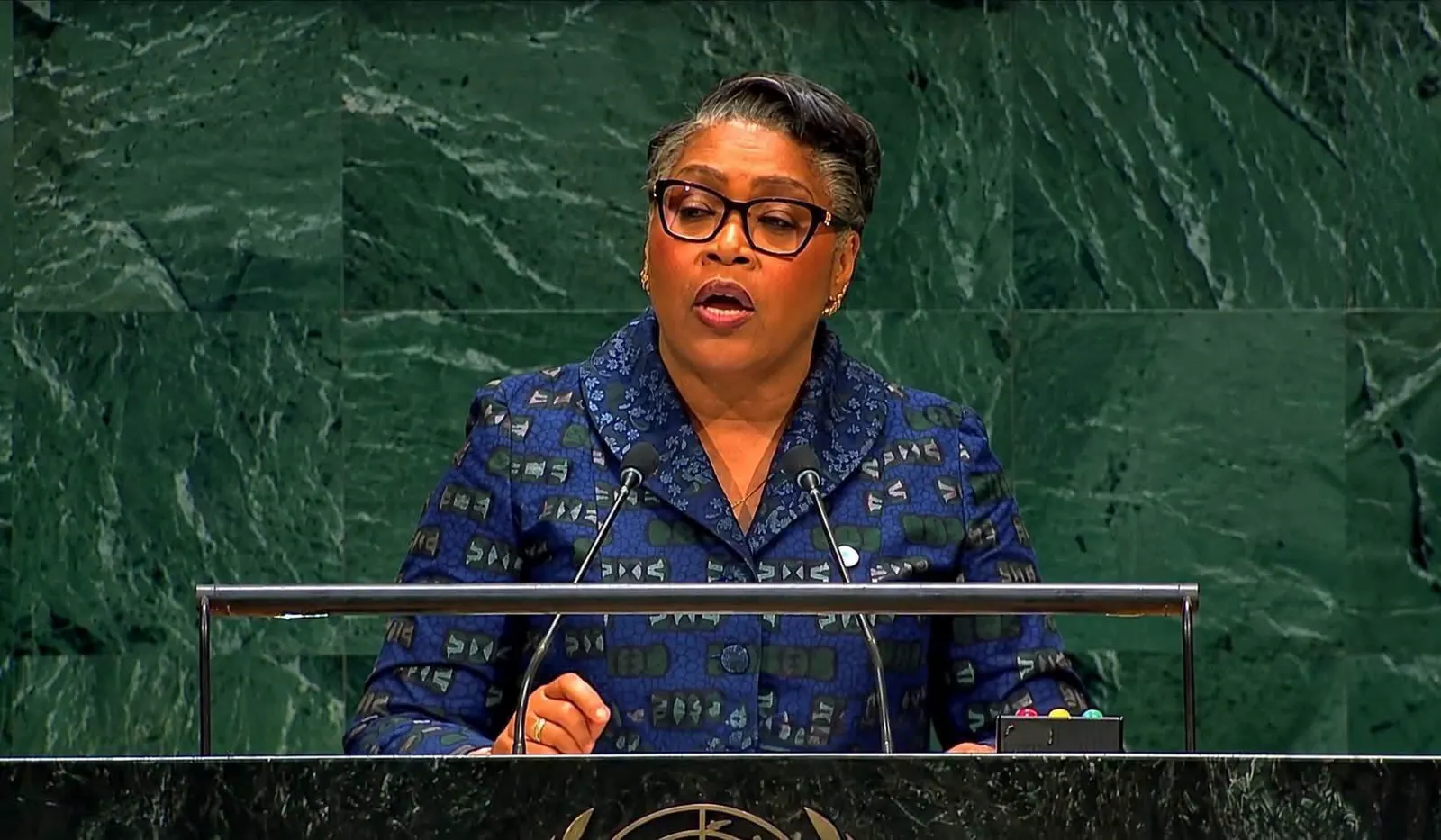
The Prime Minister of the Democratic Republic of the Congo, Judith Suminwa, has faced intense criticism for her recent speech at the United Nations. On September 24, 2026, Suminwa addressed the UN General Assembly, where she called for the protection of refugees and forests. However, her speech was met with skepticism and outrage from critics who argue that her government has failed to protect its own citizens, particularly the millions displaced internally due to conflict.
According to reports, the Democratic Republic of the Congo is home to over 9 million internally displaced persons, 5 million survivors of sexual violence, and 25 million people facing hunger. Critics argue that Suminwa's government has not done enough to address these humanitarian crises, making her UN speech hypocritical. The government has been accused of allocating resources to other priorities, such as providing homes to 64 members of the national football team and 40 million to a European team, while neglecting the needs of its most vulnerable citizens.
Suminwa's speech at the UN was also seen as contradictory to the actions of her government, which has been accused of human rights abuses and repression of opposition. The President of the Democratic Republic of the Congo, Félix Tshisekedi, also known as Mabundi 1er Fatschi Tshivube, has been criticized for his government's handling of protests and dissent. The President was recently denied a visa to attend the 81st UN General Assembly.
In contrast to Suminwa's speech, other world leaders at the UN General Assembly used the platform to address pressing global issues. Iranian President Massoud Pezeshkian delivered a defiant speech in response to accusations made by former US President Donald Trump. Pezeshkian defended his country's sovereignty and criticized the US for its actions in the region.
The backlash against Suminwa's speech has been severe, with many accusing her of hypocrisy and ignorance of her government's failures. Freddy Mulongo Mukena, a journalist and activist, wrote an article criticizing Suminwa's speech and calling for greater accountability from her government. Mukena argued that Suminwa's speech was an example of the government's disconnect from the realities faced by its citizens.
The controversy surrounding Suminwa's speech highlights the challenges faced by the Democratic Republic of the Congo in addressing its humanitarian and human rights crises. The government faces allegations of corruption, repression, and neglect of its citizens, which have been exacerbated by the country's ongoing conflict and instability.
As the international community continues to scrutinize the Democratic Republic of the Congo's human rights record, Suminwa's government faces mounting pressure to address its failures and prioritize the needs of its citizens. The incident has sparked a renewed debate about the role of world leaders in promoting human rights and protecting vulnerable populations.
Key points
- DR Congo PM Judith Suminwa faced criticism for her UN speech on protecting refugees and forests while her government faces allegations of neglecting its own displaced citizens.
- The Democratic Republic of the Congo is home to over 9 million internally displaced persons, 5 million survivors of sexual violence, and 25 million people facing hunger.
- Suminwa's government has been accused of human rights abuses, repression of opposition, and neglect of its citizens, making her UN speech hypocritical.