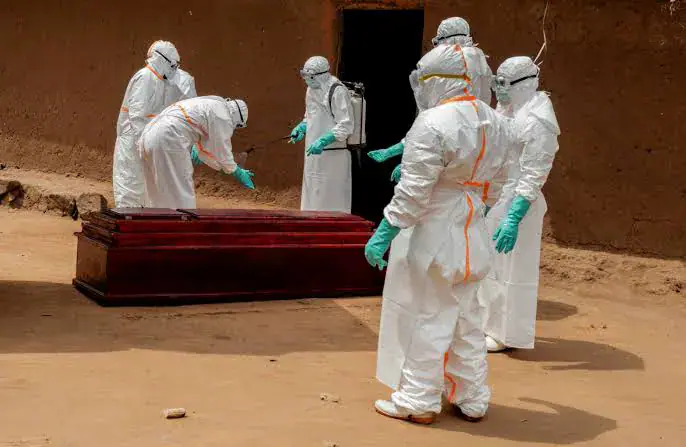
The Democratic Republic of Congo is grappling with its deadliest Ebola epidemic, which has claimed 5,026 lives out of 10,351 confirmed cases. The outbreak, declared in mid-May, has a case fatality rate of 48.6 percent. This outbreak is the 17th Ebola outbreak in DR Congo's history and the second-largest Ebola outbreak in world history, after the 2014-2016 West Africa epidemic.
The epicenter of the epidemic is concentrated in north-east Congo, specifically in the conflict-affected provinces of Ituri and North Kivu. These provinces account for 9,782 total confirmed cases and 4,792 deaths. The disease has spread to 67 out of 178 health zones across eight of the country's 26 provinces, with active cases reported in 50 health zones.
The outbreak has also crossed international borders into three African regions. In Uganda, two people died among 20 recorded cases shortly after the outbreak started, but no new cases have been reported since August. Kenya has confirmed eight to nine cases and two deaths, while Nigeria reported one case in October, and the patient was flown to Switzerland for further treatment.
Despite the regional spread, international health bodies stress that the wider geographic risk remains contained. The European Centre for Disease Prevention and Control confirmed that the likelihood of infection for people in the Europe area is "very low." However, public health officials face immense obstacles tracing contact chains, with roughly 80 percent of new cases stemming from outside monitored contact lists.
The World Health Organization's Dr. Patrick Otim described the situation as a "very tragic milestone" because it represents families and communities devastated by the outbreak. The United Nations warns that the current outbreak is taking lives at a much faster rate than previous epidemics. DR Congo's previous deadliest outbreak occurred between 2018 and 2020, recording 2,299 deaths.
Health authorities are working to contain the outbreak, but the situation is complicated by the fact that one-third of recorded victims died outside treatment facilities. This makes it challenging for health workers to track transmission chains and respond effectively to the outbreak.
The international community is providing support to DR Congo to combat the outbreak. The Africa Centers for Disease Control and Prevention and the World Health Organization are working with local health authorities to enhance contact tracing, improve treatment, and prevent further spread of the disease.
Key points
- The outbreak has claimed 5,026 lives, the highest toll in DR Congo's history.
- The disease has spread to 67 out of 178 health zones across eight of the country's 26 provinces.
- The outbreak is taking lives at a much faster rate than previous epidemics, with a case fatality rate of 48.6 percent.