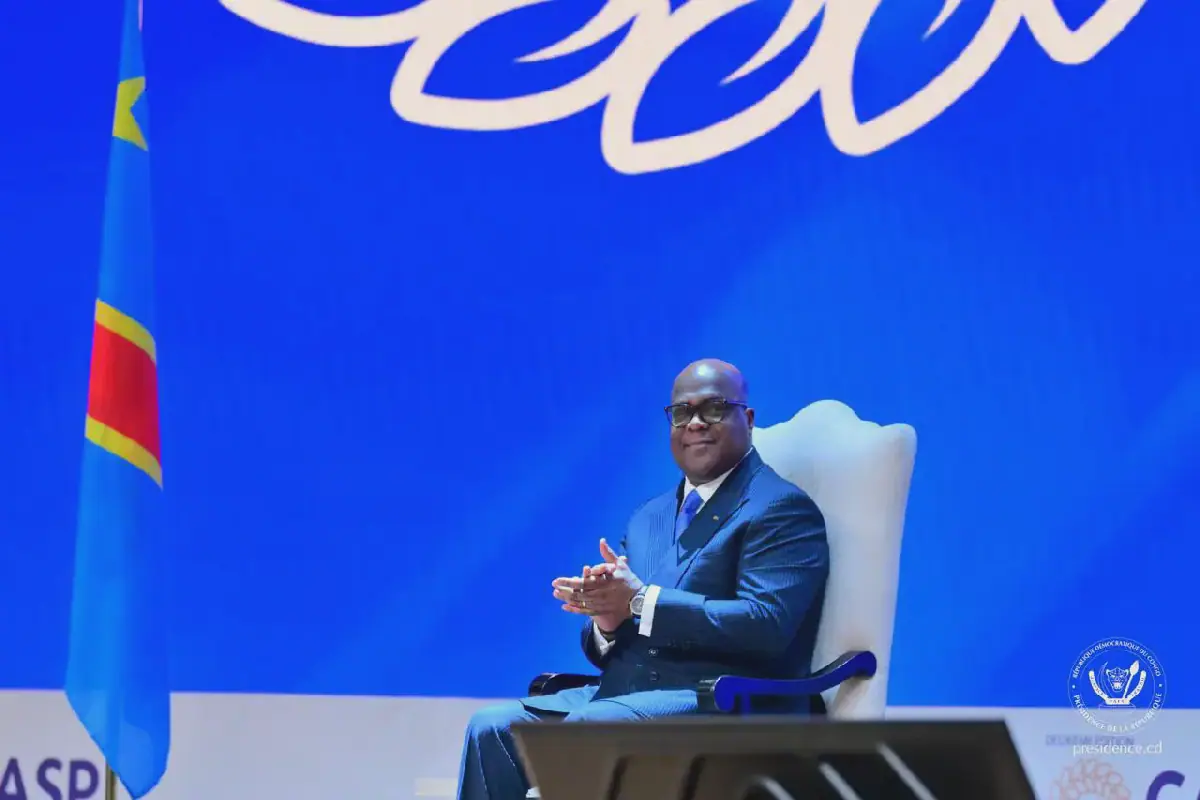
President Félix Tshisekedi of the Democratic Republic of Congo has officially opened the second edition of the country's Annual Public Service Conference in Kinshasa. The two-day conference, known as CASP, brings together government officials, public institutions, and development partners to examine how the country's public administration can better serve citizens. The theme of this year's conference is "Investing in Human Capital for Innovative, High-Performing and Ethical Public Services."
Tshisekedi emphasized the importance of treating citizens with dignity, responding to their requests promptly, and guaranteeing their rights. He also acknowledged the need to improve working conditions for government employees and instructed the government to accelerate the preparation of a National Occupational Health and Safety Policy. This policy aims to prioritize the welfare, safety, and professional development of public employees.
The conference is part of the Congolese government's efforts to reform public administration and move beyond discussions about administrative modernization. The inaugural edition, held in December 2025, focused on building public services around competence, integrity, and digitalization. This year's conference aims to examine the implementation of earlier recommendations, identify persistent administrative weaknesses, and establish practical measures for improving services.
One of the main developments presented during the opening ceremony was the unveiling of the e-Service digital platform. The system is designed to make administrative procedures more accessible by allowing citizens to consult official service charges, access information about government procedures, and complete certain formalities and payments online. This initiative addresses a longstanding challenge in public administration: the difficulty citizens face when trying to establish which office handles a particular service.
The e-Service platform's practical value will ultimately depend on the services available through it, its accessibility to people with limited internet access, and the ability of government institutions to process applications submitted through the system. The conference also featured the presentation of Public Service Awards recognizing government departments that have introduced improvements in their operations. The awards aim to encourage innovation, transparency, accountability, and better service delivery across public institutions.
The National School of Administration presented two African awards it had received, and participants visited exhibition stands showcasing initiatives aimed at modernizing government services. The two-day meeting is expected to provide further discussions on professional skills, institutional performance, ethical standards, and the role of human resources in public-sector reform. For the Congolese government, the challenge is to translate policy commitments into improvements that citizens can experience when accessing public services.
The introduction of e-Service, the proposed occupational health and safety policy, and the recognition of better-performing institutions represent different parts of the government's agenda. Their effectiveness will depend on implementation, adequate resources, and whether reforms reach public offices beyond the country's main administrative centres. As the conference continues, the central question remains whether these initiatives can help build an administration that is not only more modern in its systems but also more reliable, accessible, and accountable to the people it serves.
Key points
- President Tshisekedi calls for better working conditions and professional standards in public administration.
- The government unveils the e-Service digital platform to make administrative procedures more accessible.
- The conference aims to examine the implementation of earlier recommendations and identify practical measures for improving public services.